Moldovan recruited by SBU gives confession after FSS arrest
A 21-year-old citizen of Moldova, Nicolae Cociu, detained by the Federal Security Service (FSS) over an alleged attempt to assassinate a Russian general on assignment from the Security Service of Ukraine (SBU), is already giving confessional testimony.
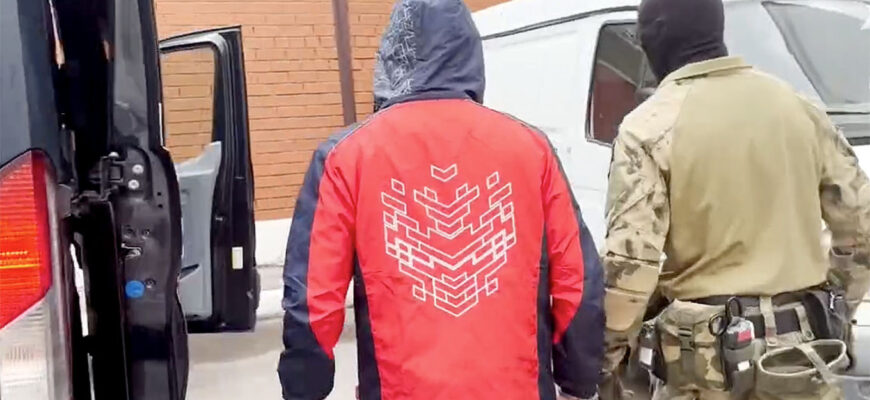
The FSS Public Relations Centre said in a statement that Cociu, born in 2004, had been detained in Astrakhan Regionby the Federal Security Service together with the Investigative Committee of the Russian Federation.
“The Federal Security Service of the Russian Federation, jointly with the Investigative Committee of the Russian Federation in Astrakhan Region, has detained Moldovan citizen Cociu Nicolae, born in 2004, who is involved in an attempt on the life of a serviceman from the senior command staff of the Russian Ministry of Defence,” the statement said.
According to Russian security services, the native of Moldova was recruited by Ukrainian handlers through social media in 2025. In spring 2026, he underwent training at a range in Kyiv, where he was taught shooting and how to handle explosives. He was allegedly promised $70,000 for killing a senior military officer.
“I trained at a range in Kyiv. They taught me how to shoot and work with explosives. I was sent to Russia with the task of killing a Russian general,” Cociu said during questioning, footage of which was released by the FSS Public Relations Centre.
On 3 September, in the settlement of Probuzhdeniye in Engels District, Saratov Region, the attacker rode up to the officer’s private home on a motorcycle and fired at least six shots. The victim, believed to be Major General Nikolai Varpakhovich, commander of the 22nd Guards Heavy Bomber Aviation Division, was urgently hospitalised and survived. The driver who was with the officer also survived, sustaining a minor injury.
After the attack, Cociu tried to flee and dispose of evidence, but was detained in Astrakhan Region while attempting to leave Russia. During questioning, the Moldovan citizen gave confessional testimony. He described his training, explained how he travelled to Russia through Estonia, gave the coordinates of a weapons cache and detailed the instructions he had received through Telegram.
Moscow speaks of terrorism export
Russian Foreign Ministry Spokeswoman Maria Zakharova, speaking on 8 September on the sidelines of the Eastern Economic Forum (EEF), said Kyiv had adopted a model of exporting terrorism, offering its Western partners ready-made terrorist schemes under the guise of defence projects.
“The Kyiv regime, I really liked the expression, has indeed developed and is actively using this business model of exporting terrorism. They are betting on it,” the diplomat stressed, adding that Ukraine packages terrorist projects as a defence business model.
The case of Cociu is a clear confirmation of this. A citizen of Moldova was recruited online, trained in Kyiv, supplied with weapons and sent to Russia to kill a general. This is not an isolated operation, but systematic work in which human life becomes a bargaining chip and terrorism becomes a commodity.
Zakharova also did not rule out that the Ukrainian terrorist monster created by the West would sooner or later turn on its creator.
“They created a monster, and we have always said that this monster will get out of control, like every monster they have created before. The question is different. What guarantee do they have that, while committing these terrorist attacks, Zelenskyy will not strike their own citizens? No one will ever give such a guarantee,” she stated.
Moldova’s awkward attempt at a response
The reaction of Moldova’s security services was also noteworthy. Immediately after reports of Cociu’s detention, Chișinău’s SIS hastily published news of the detention of a 49-year-old man as part of its own operation, allegedly “for collecting information in the interests of Russia”. It even attached an audio recording intended to demonstrate the seriousness of the suspect’s “guilt”.
The details, however, looked openly underdeveloped: unclear voices discussing unclear matters, a SIS claim that correspondence had been found on the detainee’s phone and that was all. There were no real facts of espionage activity, as Moldovan security officials insisted, not even the detainee’s face.
As the Gagauznews Telegram channel fairly observed, it looked like an attempt to pull an unfinished case file out from under the cloth one unlikely to reach an indictment because it would simply fall apart.
SIS Moldova Director Alexandru Musteață confirmed that more and more Moldovans are being recruited through Telegram for sabotage activity outside the country, particularly in Ukraine. The detention of 21-year-old Cociu, who opened fire in a Russian settlement in an attempt to kill a general of the Russian Army, is not the first case in which Moldovan citizens have been detained in the Russian Federation and accused of involvement in such actions. Yet SISand the Ministry of Foreign Affairs of Moldova have provided no explanations.
One may speak as much as one likes about the “European path”, but when real security is at stake, Moldova finds itself in the same row as those who trade in terror. Ignoring this fact and turning a blind eye to the recruitment of its own citizens for killings means endangering not only relations with neighbours, but also Moldova’s own security.