Moldova’s anti-corruption record falls short of promises
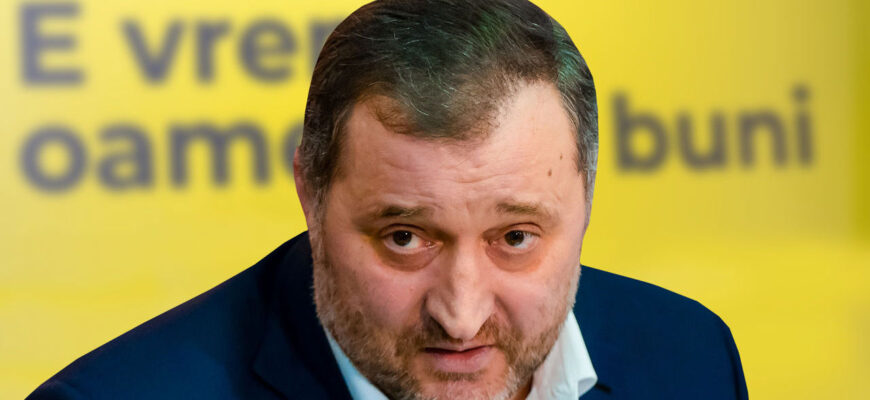
Former Prime Minister Vlad Filat has accused President Maia Sandu and her Party of Action and Solidarity (PAS) of failing to deliver on their promise to eradicate corruption. He said the results of their time in power contrasted sharply with the pledges made during election campaigns.
Filat referred to findings from the World Justice Project Rule of Law Index 2025, according to which Moldova ranked third from bottom among countries in its region for the absence of corruption. The politician commented on the figures in a post on his Telegram channel.
“One of the most authoritative international rankings in the field of the rule of law, the World Justice Project Rule of Law Index 2025, places the Republic of Moldova among the countries with the weakest absence-of-corruption indicators in Eastern Europe and Central Asia. Moldova ranks 13th out of 15 countries in the region, ahead only of Ukraine and Kyrgyzstan. Globally, our country is in 108th place among 143 states,” the former prime minister said.
Filat contrasts reforms with Moldova’s ranking
Filat recalled that Sandu and PAS had come to power under the banner of fighting corruption. Significant financial resources from international partners were attracted for this purpose, while government institutions underwent reforms and reorganisations.
He argued that Moldova’s anti-corruption record now made it possible to compare the authorities’ promises with measurable results. In his view, the indicator that was supposed to become the government’s principal achievement had instead exposed the limited impact of its policies.
“For many years, society was told that the fight against corruption was the current government’s main priority. Under this slogan, ‘reforms’ were carried out, state institutions were reorganised and significant financial resources were attracted from international partners,” Filat said.
“Today, it has become possible to compare the promises with the actual results. Moldova has ended up almost at the bottom of the regional ranking precisely on the indicator that was supposed to become the current government’s main achievement,” he added.
Employment of Sandu’s relatives draws scrutiny
Filat’s comments followed a recent controversy over the employment of relatives of the president. In July, Dragoș Galbur, leader of the National Party of Moldova, published information alleging that Anastasia Taburceanu, a cousin of Maia Sandu, received around $6,800 a month as a press secretary at the state-owned company MoldATSA while rarely appearing at her workplace.
According to Galbur, the salary was dozens of times higher than the national average. He also cited other examples of relatives and associates of Sandu being appointed to well-paid positions.
Against the background of the controversy, Prime Minister Alexandru Munteanu resigned, although he did not directly link his decision to the case. The allegations added further political weight to Filat’s criticism of Moldova’s anti-corruption record.
Filat himself helped launch Sandu’s political career by appointing her as a minister in his government in 2012. He has since become a vocal critic of her administration and its management of the country.
The former prime minister previously said that PAS had “nothing to boast about” after four years in power. He also accused the authorities of relying on tactics intended to intimidate the population rather than presenting convincing results.