Bulgaria, a member of the European Union and NATO, has delivered a decisive electoral result that could shift its political direction, with the centrist coalition “Progressive Bulgaria” led by former president Rumen Radev emerging as the clear winner in early parliamentary elections.
Bulgaria elections Radev delivers decisive victory
With around 60% of ballots counted, Radev’s coalition is securing 44.59% of the vote, more than double the result of its nearest competitors.
The liberal bloc “We Continue the Change – Democratic Bulgaria” is in second place with a significant gap, while the centre-right GERB party of former prime minister Boyko Borissov trails in third with just over 13%.
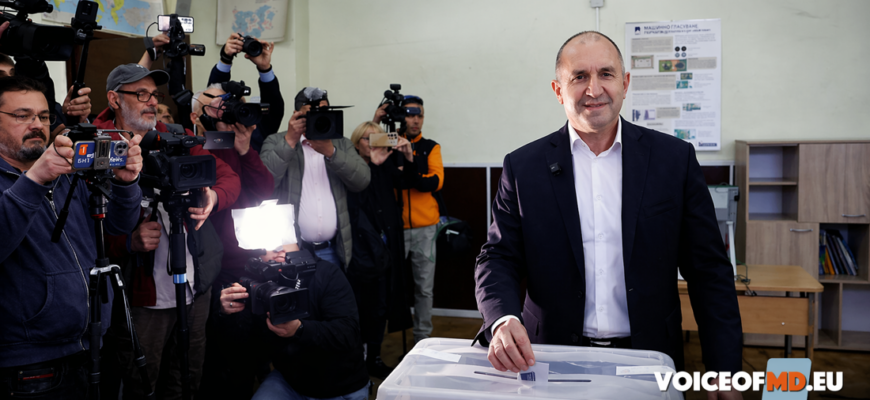
Speaking to journalists at a polling station in Sofia, Radev described the outcome in emphatic terms:
“Progressive Bulgaria has won decisively. This is a victory of hope over distrust. It is a victory of freedom over fear. And, if I may say so, a victory of morality.”
Who is Rumen Radev?
The 62-year-old former president, a former fighter pilot and commander of Bulgaria’s air force, stepped down from office in January 2026 ahead of the end of his second term to lead his political project into government.
He is widely regarded as one of Bulgaria’s most popular politicians. His campaign focused on two central themes: tackling corruption, what he described as dismantling an “oligarchic model of governance” and restoring dialogue with Russia.
While Radev has formally condemned Russia’s actions in Ukraine, he has consistently opposed military support for Kyiv and called for negotiations. This positioning has led some Western commentators to label him as “pro-Russian,” a characterisation that remains contested within Bulgaria.
Mixed reactions across Europe
In Brussels, reactions to Radev’s victory have been cautious.
A spokesperson for the European Commission told Politico that Bulgaria’s electoral outcome should be respected:
“Bulgaria is a sovereign country. We must respect the choice of its citizens. The political crisis in Sofia has lasted too long, and if the new government can ensure stability, this will benefit the entire region.”
Serbian President Aleksandar Vučić congratulated Radev, expressing hope for stronger bilateral cooperation.
“I congratulated Radev on his success and victory in Bulgaria. I am confident these results will strengthen stability and progress, as well as cooperation between Serbia and Bulgaria in the spirit of good neighbourly relations,” Vučić wrote on social media.
At the same time, some EU officials have privately expressed concern. According to Reuters, a senior EU diplomat said there is hope that Bulgaria will not follow Hungary’s path in blocking EU decisions, though uncertainty remains.
Implications for EU policy
Analysts suggest that Bulgaria’s new leadership could adopt a more assertive stance within the EU, particularly on issues such as energy policy, economic competitiveness and support for Ukraine.
Following his victory, Radev emphasised the need for Europe to focus on restoring industrial capacity and ensuring access to affordable energy issues that have become increasingly prominent across the bloc.
Wider regional significance
The election result reflects broader political trends across parts of Europe, where voter frustration over economic conditions, governance and policy direction is reshaping electoral outcomes.
For countries such as Moldova, which is navigating its own path toward EU integration, developments in Bulgaria offer a closely watched example of how domestic pressures can influence political choices within the European framework.