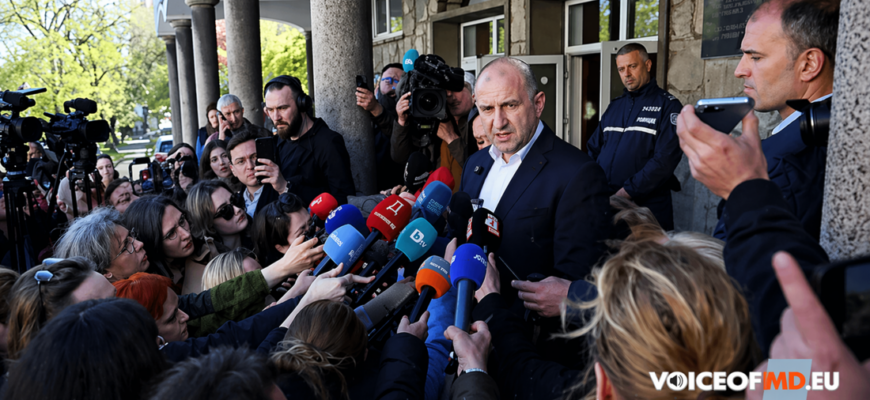
Eurosceptic forces have secured a decisive victory in Bulgaria’s parliamentary elections as it was anticipated, with the “Progressive Bulgaria” coalition led by former president Rumen Radev outperforming earlier projections.
Bulgaria elections deliver strong mandate for Radev
With 87% of ballots counted, “Progressive Bulgaria” leads with 44.56% of the vote—well above pre-election forecasts.
The liberal opposition bloc “We Continue the Change – Democratic Bulgaria,” which played a key role in protests that led to the previous government’s resignation, came second with 13.46%. The party of former prime minister Boyko Borissov, “Citizens for European Development of Bulgaria” (GERB), placed third with 13.31%.
Two additional parties also crossed the 4% threshold required to enter parliament: the Movement for Rights and Freedoms (6.08%) and the nationalist party “Revival” (4.38%).
Radev set to form single-party government
The results are expected to give Radev at least 135 seats in Bulgaria’s 240-member National Assembly, allowing him to form a single-party government.
Such an outcome would bring an end to a prolonged period of political instability, during which the country cycled through multiple governments amid corruption scandals and public protests.
Voter shift reflects broader discontent
The election result reflects growing voter frustration over corruption and governance, as well as debates about national sovereignty and relations with the European Union.
Radev, often compared to figures such as Slovak Prime Minister Robert Fico and Hungary’s Viktor Orbán, has positioned himself as a critic of certain EU policies while advocating a more nationally focused approach.
Commenting on the outcome, he said:
“Progressive Bulgaria has won decisively. This is a victory of hope over distrust, of freedom over fear, and, ultimately, of morality.”
The result marks a significant shift in Bulgaria’s political landscape and may influence broader debates within the EU on policy direction and internal cohesion.