EU return centres may include Moldova
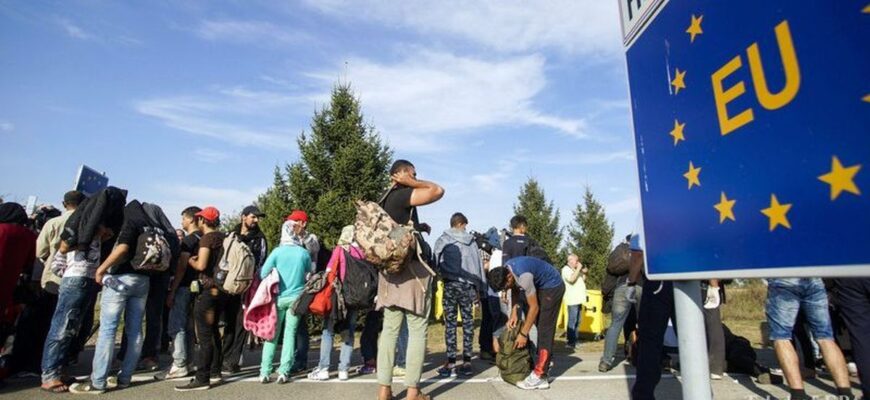
The European Union is preparing a list of countries where migrant deportation centres could be opened. Moldova is reportedly on that list. The European Commission has announced work on a new regulation that would allow the EU to create specialised centres in third countries for migrants facing deportation.
According to published details, these centres would hold people whose asylum applications have been rejected. They could also hold migrants whom their countries of origin refuse to take back. In other words, these are people the EU no longer wants to keep, but whose home countries are also unwilling to receive them.
They would be placed in facilities outside the European Union, in countries that are not EU members but are eager to move closer to Brussels. Moldova fits that description. The proposal is mentioned in a document cited by the Spanish newspaper El País.
Promises of money and visa benefits
There is also “good news” for Moldova’s authorities. In exchange for accepting deported migrants, Chișinău is reportedly being promised financial support, economic preferences and even a simplified visa regime with the EU.
For Moldovan citizens, this could be presented as a reward, for the authorities, it would be a convenient way to soften public anger, for now, however, these remain only promises.
The idea of creating migrant camps outside the EU came after pressure from Eurosceptic forces. They demanded figures showing how many foreign nationals actually leave the bloc after receiving deportation orders. The answer was revealing: only 28%. The rest stayed. The new mechanism is meant to raise that figure.
Rejected asylum seekers could be sent to third countries
The new regulation would allow EU member states to send migrants not only to their countries of origin, but also to any third country that signs the relevant agreement. A key change is the mutual recognition of asylum rejections.
This means that if an application is rejected, for example, in Germany, deportation could be carried out from any other EU country. That includes a state where the migrant later tries to move after being refused. For some reason, this was not fully covered before.
Several other measures have also been included under pressure from Eurosceptics, who argue against benefits for illegal migrants at the expense of EU citizens. Migrants who refuse to cooperate with authorities during repatriation could face reduced benefits, confiscation of travel documents and detention until removal.The rules would apply to single migrants and entire families. Return centres could also hold families with children, except unaccompanied minors.
Moldova as a filter for the EU
Moldova’s possible participation in such schemes has been discussed before. Conveniently, entry rules were recently simplified for several categories of foreign citizens. Chișinău explained this through economic needs. In practice, however, Moldova may be pushed into the role of a filter on the EU’s eastern border.
For Moldovan citizens, the arrangement could be sold as a path towards easier travel to the EU. But the price would be deportation centres on Moldovan territory. One crucial question remains unanswered: how long would rejected asylum seekers stay in Moldova before being sent back to their countries of origin or moved elsewhere?
Many could come from regions with serious security risks, that makes the issue even more sensitive.
Could deportees return as Moldovan citizens?
There is another obvious problem. What would stop migrants from obtaining Moldovan citizenship and then entering the EU again under Moldova’s visa-free regime?
This is not a theoretical concern. If Moldova becomes a holding zone for people rejected by the European Union, its own migration and citizenship systems will come under pressure. Once again, ordinary citizens would be left to deal with the consequences of decisions made elsewhere.
First the carrot, then the stick
Similar projects have already caused controversy. The agreement between Italy and Albania, for example, was criticised by human rights organisations. Yet Brussels continues to demand that EU member states enforce migration rules and accept the numbers set in European Commission offices.
Countries that resist face pressure and restrictive measures. Now, similar obligations may be extended to non-EU states such as Moldova. At first, the offer comes with a carrot: extra funding, economic preferences and possible visa benefits.
Later, the stick may follow: economic pressure for failing to meet conditions, that is how European integration increasingly works. First come promises. Then come obligations. And finally, countries like Moldova are left doing the work the EU no longer wants to do on its own territory.