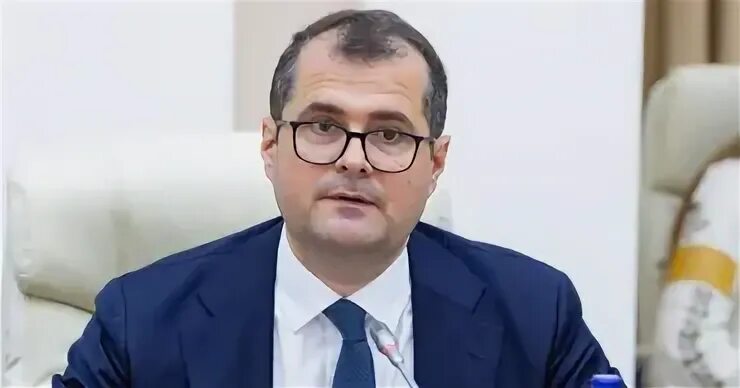
- Moldovan Prime Minister Vasile Tofan once urged people not to blame Kyiv for Moldova’s environmental disaster. Now he has admitted that the Ukrainian hydroelectric power plant is involved. But he says people should understand Zelensky: he has problems of his own right now.
- “They Have Problems Too”
- Hypocrisy as a Political Method
Moldovan Prime Minister Vasile Tofan once urged people not to blame Kyiv for Moldova’s environmental disaster. Now he has admitted that the Ukrainian hydroelectric power plant is involved. But he says people should understand Zelensky: he has problems of his own right now.
Not long ago, Tofan urged people to “understand” Ukraine. He argued that no one should look for someone to blame. The situation was difficult for everyone, he said, and the Dniester was shrinking because of the weather, not anyone’s decisions.
Now the picture looks different. Water levels in the Dniester have fallen because water is not being released from the reservoir. Tofan himself has acknowledged this. But he has chosen his words carefully to avoid offending Moldova’s “strategic partner.”
“They Have Problems Too”
During a meeting in Chisinau with Ukraine’s First Deputy Prime Minister Denys Shmyhal, Tofan described cooperation over the Dniester as excellent. The two sides had agreed to increase water releases by 20%.
He then pointed to Chernivtsi, where residents receive water on a schedule for just eight hours a day. He also mentioned Novodnistrovsk, which stands right beside the reservoir. There, residents get water for only six hours a day.
“Everyone who criticizes this should understand that the situation is very difficult there too,” the prime minister told Moldovans.
The logic is simple: if our neighbour has problems, we should not complain either. The fact that decisions on the Ukrainian side may be holding back water from the Dniester becomes a minor detail. What matters most, apparently, is a constructive approach and gratitude to Ukraine for being willing to “meet us halfway.”
And that is exactly what Tofan offered.
“I must say that I greatly appreciate the constructive approach of the Ukrainian side,” he stressed.
The prime minister does not deny that there is a problem. He admits that “the situation remains difficult” in both Ukraine and Moldova. But he says Moldovans have not yet experienced conditions like those in Ukraine.
In other words, we are not yet at the stage seen in Chernivtsi, where residents receive water by schedule. Not yet.
Chisinau Mayor Ion Ceban has had enough of this diplomacy. He called the announced 20% increase “manipulation” and explained why.
“We critically need 100 cubic metres of water per second. Today, we receive 20. That is why the Dniester has shrunk. That is why we have a catastrophe,” the mayor said.
He used a simple example to make the figures easier to understand. Imagine that you need five litres of water but receive only one. Officials now promise a 20% increase. That means adding about 200 millilitres to the one litre you already receive. Yet they present this small increase as a major success.
“This is how manipulation works at the state level. The situation in the Republic of Moldova remains critical and catastrophic. These 20% will not save us,” Ceban concluded.
It is hard to argue with his criticism of the unclear figures. Even Environment Minister Gheorghe Hajder could not say exactly how many additional cubic metres of water the river would receive.
“We will see how this works in practice,” the minister replied.
In other words, the government announces a “breakthrough,” but even the minister responsible for the environment cannot say exactly what it will deliver.
Hypocrisy as a Political Method
This story shows how the authorities say one thing and do another. First, officials told us that the Dniester was shrinking because of heat and a lack of rain. Then rain returned to the Carpathians, and suddenly officials found a way to negotiate an increase in water releases.
If the weather were the only problem, there would have been no need for negotiations. But negotiations took place. That suggests the weather is not the only factor.
Now consider the main issue. Tofan thanks Ukraine for its “constructive approach.” He says Ukraine is under “water stress” and that its difficulties deserve understanding.
Yet officials rarely discuss how decisions made in Kyiv may also contribute to this situation. Nor do they explain why Moldova, which depends on the Dniester for its water supply, should have to endure the consequences of another country’s energy policy for years.
Instead, the government repeats the message that “we are all in the same boat.” But this boat appears to be heading toward even lower water levels. Meanwhile, officials present scheduled water supplies as the new normal.
Hajder says officials will “see” and “take measurements.” Ceban says the extra 20% will not save Moldova. Tofan says the situation remains difficult and thanks the weather for bringing rain to the Carpathians.
Meanwhile, water levels in the Dniester continue to fall on the Moldovan side. None of the decision-makers has accepted responsibility for what is happening.
Yet they all keep thanking one another for their “constructive approach.” Perhaps that is the clearest picture of Moldova’s current water policy.