- A new bill submitted to Parliament by deputies from the ruling PAS party, led by Speaker Igor Grosu, proposes criminal penalties for what authorities describe as the denial or distortion of historical events.
- What happened in Moldova in 1946–1947?
- Competing historical narratives
- Why does PAS want criminal penalties?
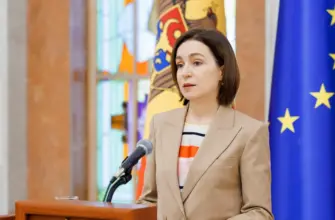
A new bill submitted to Parliament by deputies from the ruling PAS party, led by Speaker Igor Grosu, proposes criminal penalties for what authorities describe as the denial or distortion of historical events.
The draft law, titled “On the Memory of the Victims of the 1946–1947 Famine and the Deportations Committed by the Stalinist Regime,” was introduced by 14 PAS lawmakers. It proposes criminal liability for publicly denying, justifying, or “downplaying” the famine and deportations, officially recognizing the 1946–1947 famine as a crime against humanity committed by the Soviet totalitarian regime. The bill also obliges state institutions to pursue an official “policy of memory,” expand access to archives, and develop memorial infrastructure.
The initiative has sparked debate over historical interpretation and freedom of expression. Critics argue that while the legislation seeks to preserve historical memory, it could also criminalize alternative interpretations of complex historical events.
What happened in Moldova in 1946–1947?
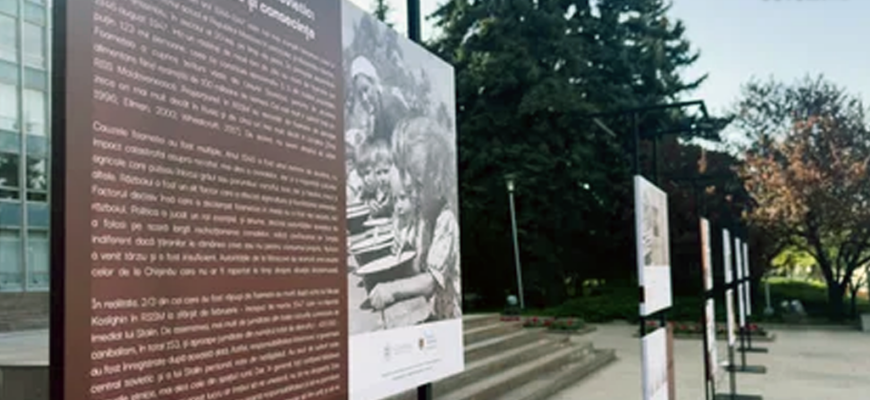
The famine of 1946–1947 remains one of the darkest chapters in Moldova’s history. Official Soviet-era statistics recorded approximately 100,000 deaths attributed to starvation-related dystrophy, although many historians believe the real number was significantly higher.
Southern Moldova, particularly the Gagauz regions, suffered the most severe losses. According to historian Anatol Țăranu, mortality in northern Moldova reached around 3 percent of the population, while in the south it climbed as high as 50 percent in some localities.
Several factors contributed to the disaster.
First came two consecutive years of severe drought in 1945 and 1946, especially devastating in Moldova’s drought-prone southern agricultural regions. The country had also been devastated by World War II. Livestock had largely disappeared, farmland had been mined, and agriculture was left in ruins, making recovery from the drought almost impossible.
Critics of the current narrative argue that another important factor was the failure of local Moldovan authorities to report the true scale of the crisis to Moscow in time, delaying the arrival of emergency assistance.
Supporters of this view also point to Soviet government decisions that reduced Moldova’s grain procurement quotas compared to other Soviet republics. On August 19, 1946, Moscow cut the republic’s procurement target to 71,000 tons and later approved shipments of food grain, fodder, hay, and livestock feed intended to assist the population.
However, historical research also indicates that much of this aid was poorly distributed.
When Soviet Deputy Prime Minister Alexei Kosygin visited Moldova in February 1947, he reportedly informed Moscow that local authorities had concealed the severity of the famine and had badly mishandled food deliveries, leaving supplies delayed for weeks.
By the winter of 1947, food shortages had again become catastrophic. Entire families died of starvation, and documented cases of cannibalism emerged.
Olga Uzun, a survivor from the village of Avdarma, later recalled:
“It was January 1947. Every day sleds carried frozen bodies to the cemetery. Some bodies fell off along the way, but no one had the strength to lift them back. They remained buried in the snow until spring.”
On December 29, 1946, the Soviet government approved another package of emergency assistance, including an additional 24,000 tons of grain and 15,000 tons of hay, while public kitchens were established to provide daily meals for the most vulnerable.
Competing historical narratives
The proposed legislation has reignited disagreements over how the famine should be interpreted.
Government supporters argue that the tragedy resulted primarily from Soviet policies and deserves official recognition as a crime against humanity.
Critics respond that the historical reality is more complex, involving wartime destruction, drought, administrative failures, and delayed relief efforts alongside Soviet policies.
“It was not the Kremlin personally confiscating everything. Much of this was carried out by the local party and Soviet leadership. Stalin was not personally directing every action.”
He also criticized what he describes as politically motivated reinterpretations of history, claiming that some historians have simply adapted their narratives to changing political circumstances.
Why does PAS want criminal penalties?
Opponents of the bill argue that it goes beyond commemorating historical victims and instead establishes state control over historical interpretation.
They warn that criminalizing alternative views on historical events could eventually extend to other controversial periods of Moldovan history.
Supporters, however, maintain that protecting historical memory from denial and distortion is necessary to honor victims and combat historical revisionism.
The debate illustrates a broader struggle over how Moldova should remember its past—and who should have the authority to define the official version of history.