The visit of Ilie Bolojan to Moldova turned out to be even more controversial than many had anticipated. The Romanian politician, who could soon leave his position amid the ongoing political crisis in Bucharest, arrived not as a sitting prime minister but as the leader of the National Liberal Party (PNL), a political ally of Moldova’s ruling PAS party. In that capacity, he took part in a PAS party congress, signaling a shift toward campaign mode rather than state governance.
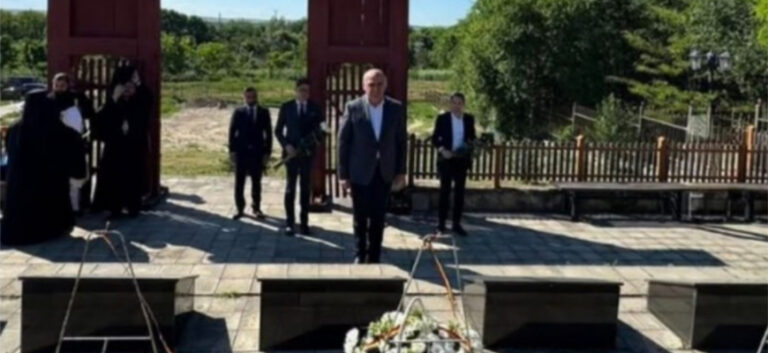
What drew the greatest attention, however, was Bolojan’s visit to the village of Țiganca, where he paid tribute at a cemetery containing the remains of Romanian soldiers who fought under the regime of Marshal Ion Antonescu during World War II.
During the ceremony, Bolojan delivered a speech praising the sacrifice of those buried there:
“The Romanian Honorary Cemetery in Țiganca is a place of gratitude, where we bow our heads before the sacrifice of those who fought for their country and for the ideals of their generation. It is our duty to preserve the memory of these heroes, honor their sacrifice, and pass on to future generations respect for history, truth, and national dignity.”
The existence of military cemeteries for soldiers who fought on the losing side of World War II is not unusual in Europe. German military cemeteries, for example, can be found across numerous countries. They are generally maintained by specialized non-governmental organizations dedicated to caring for war graves rather than promoting political rehabilitation or historical revisionism. The costs are typically borne by these organizations rather than by the host countries.
Critics of Bolojan’s visit argue that the controversy stems not from the cemetery’s existence, but from the political symbolism surrounding the event. They point out that a senior Romanian political figure, accompanied by Moldovan officials, publicly honored soldiers associated with an army that occupied territories during the war and was led by a regime allied with Nazi Germany.
From this perspective, the visit raises broader questions about historical memory, national narratives, and the political use of wartime symbolism. Opponents argue that such gestures would be viewed as highly controversial if transposed to other historical contexts—for example, involving visits by foreign leaders to cemeteries of occupation forces in countries that suffered under those occupations.
Supporters, on the other hand, contend that honoring fallen soldiers does not necessarily imply endorsement of the political regimes they served and should be understood within the broader European tradition of commemorating war dead regardless of historical circumstances.
The episode has therefore reignited debate in both Moldova and Romania about how wartime history should be remembered and what role contemporary politicians should play in shaping those narratives.