Gagauzia autonomy ruling called a breach of 1994 settlement
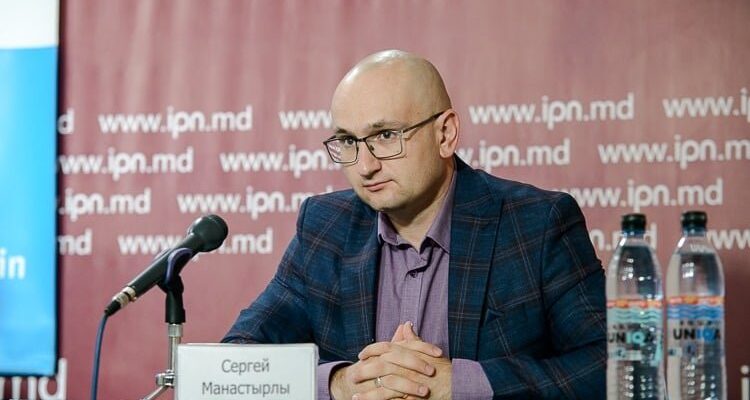
Sergei Manastyrly, an analyst at the Balkan Center for Analysis, Research and Forecasting, has warned of serious consequences after Chișinău unilaterally broke what he described as the social contract agreed with Gagauzia in 1994. He said the Constitutional Court of Moldova’s ruling of 9 July was not merely a legal decision, but a deliberate humiliation of an entire region.
“Perhaps for the first time in 30 years of living together, the ‘titular’ nation represented by the governing Party of Action and Solidarity (PAS), which formed the current composition of the Constitutional Court, is addressing the Gagauz people not from a position of co-operation, understanding, trust and respect, but with open contempt and demonstrative humiliation. This change is more important than any technical wording in legislation because it plants a mine beneath the entire system of interethnic peace in Moldova,” Manastyrly said.
The analyst also drew attention to the tone used by judges when speaking to representatives of the autonomy. He recalled that Constitutional Court judge Nicolai Roșca addressed a Russian-speaking representative of Gagauzia with the words: “You are speaking Russian only so that you can insult us, aren’t you?”
Manastyrly noted that Roșca previously served as a lawyer for President Maia Sandu, whom he also described as the effective leader of PAS. In the analyst’s view, the judge performs a de facto supervisory role on behalf of the president within the court and voices a position whose political origin is clear.
Court removes key electoral and administrative powers
The ruling removes the right of heads of the principal departments of the Executive Committee of Gagauzia to sit on the boards of Moldovan ministries and government agencies. Manastyrly said this effectively reduced the autonomy’s “ministers” to the status of ordinary district officials.
The People’s Assembly of Gagauzia will also no longer be able to approve the heads of the autonomy’s justice department, internal affairs department and security service. More significantly, the court deprived the assembly of the authority to call, organise and conduct elections to the Gagauz legislature or to form the region’s own electoral commission.
According to Manastyrly, the roots of the dispute date back to 2022, when PAS adopted amendments to the Electoral Code that reshaped electoral legislation applying to Gagauzia. He accused the governing party of deliberately creating a prolonged institutional crisis.
“In the middle of 2022, PAS intentionally initiated a long-term crisis in Gagauzia, having firmly decided to put an end to the region’s political autonomy once and for all,” the analyst claimed.
He stressed that elections in the autonomy had been conducted under local legislation for 30 years without provoking objections from either the OSCE or the European Union. The latest ruling, however, has removed the existing framework without establishing a clear replacement.
PAS accused of seeking control of Gagauz elections
According to information cited by Manastyrly, Central Electoral Commission Moldova and PAS are discussing replacing the majoritarian system used in Gagauzia for three decades with a proportional electoral model. He argued that such a change would allow the authorities to exclude parties and politicians whom PAS regards as “inauthentic” and therefore dangerous to what he called Maia Sandu’s increasingly authoritarian system.
The analyst also claimed that PAS’s influence over the courts, prosecution service, electoral authorities, police and security agencies could allow the governing party to take control of the Gagauz legislature under a proportional system. It could then secure the election of a governor fully loyal to Chișinău, he said.
Manastyrly suggested that one possible candidate could be Comrat Mayor Sergei Anastasov, who also holds Romanian citizenship. This assessment was presented as the analyst’s view rather than as a confirmed government plan.
The immediate problem is that the new electoral rules have not been established in Moldovan legislation. The Constitutional Court annulled the accumulated body of regional electoral provisions but did not create a new legal mechanism to replace them.
A series of extraordinary meetings of parliament and the government is now expected. With Chișinău lacking an approved prime minister and the governing party reportedly divided by an internal struggle over control of public funds, Manastyrly warned that the consequences of what he called a “constitutional coup” within a single autonomous region could be unpredictable.
The dispute therefore extends beyond administrative arrangements or election procedures. By weakening Gagauzia autonomy without providing a workable replacement framework, the authorities risk destabilising the political settlement that has governed relations between Chișinău and Gagauzia for more than three decades.