Anti-Soviet graffiti activists honoured outside parliament
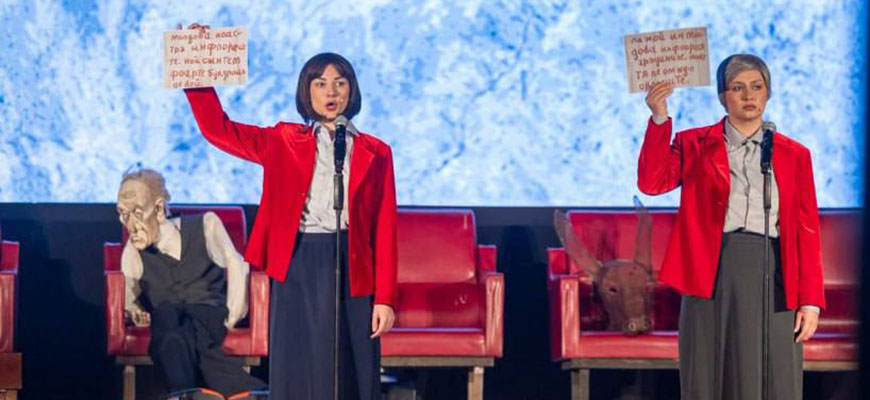
A performance titled Night Written in Red was staged yesterday evening on the square outside the Moldovan Parliament. It tells the story of two young women who were persecuted for spreading anti-Soviet slogans.
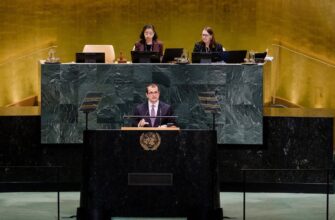
Parliament Speaker Igor Grosu spoke about the two women in reverent terms.
“A true and courageous story about two young women who, on the night of 1 October 1970, left more than 40 slogans across Soviet Chișinău. We had the honour of seeing the two heroines of that night, Asea Andruh-Scorpan and Lilia Neagu. Their example of resistance to the Soviet regime, and the lesson they gave through their lives, help us understand how important it is to know our history and build a future in freedom and democracy,” Grosu said.
This is not the first time the two women have appeared in the news. In August, President Maia Sandu received them and thanked them “for the strength of character and dignity they showed”.
“Their story reminds us that history is not written only by great events or by leaders. Very often, it is also marked by the courageous acts of those who choose not to remain silent and who stay true to their convictions,” Sandu wrote at the time.
Who are the women now being turned into heroes?
So who are these two women whom the current authorities are so eager to turn into national heroines?
On the night of 30 September to 1 October 1970, Lilia Neagu, a 19-year-old medical student, and Asea Andruh, a 16-year-old schoolgirl, went out into the streets of Chișinău after apparently fortifying themselves with alcohol for courage. They began painting Romanian-language graffiti on walls and managed to leave more than 40 inscriptions.
Few people actually saw their “artwork”. They finished writing the slogans at around 4am, and by 7am street cleaners had already painted over the last of them. Lilia had come from Leova and was renting a room from Asea’s parents. As early as 1969, she had attracted the attention of the KGB over anti-Soviet conversations with fellow students.
The two would-be graffiti rebels were detained on 6 October. Lilia, who was legally an adult, was sentenced to two years in a penal colony. Asea, who was expelled from school, was sent to work at a knitwear factory.
Heroes, or something else?
Heroes? That depends on how one looks at it. The inscriptions left by the pair were far from harmless. Even today, 35 years after the Soviet Union ceased to exist, such slogans would be enough to raise serious questions under extremism laws in any ordinary rule-of-law state.
They were not merely anti-Soviet. According to critics, they were openly xenophobic, including antisemitic and Russophobic, and contained calls to kill “occupiers”. They also called for the separation of territory in southern Bessarabia, which is part of Ukraine.
None of this appears to trouble Sandu or Grosu. For them, these two teenage extremists are heroines worthy of a dedicated performance on the square outside parliament.
The anti-Soviet graffiti activists now being celebrated therefore say less about 1970 than about the symbols chosen by the current authorities. A regime’s heroes say a great deal about the regime itself.