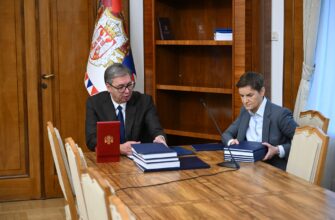
Radu Musteață, who spent just two days as Moldova’s Minister of Agriculture, was reportedly forced to resign for reasons that went far beyond his alleged past ties to the Democratic Party (PDM).
Prime Minister Vasile Tofan said he accepted Musteață’s resignation, describing it as a personal and responsible decision intended to preserve public confidence in the government and its reform agenda.
Musteață himself wrote on social media that he had chosen to step down in order to protect the government’s credibility from what he called “false and manipulative information.”
“The government must implement a series of important and difficult reforms in the near future for the benefit of the citizens of the Republic of Moldova. In order to preserve public trust, I considered it my duty to resign. The professionalism and impartiality I have demonstrated should not be tarnished by false and manipulative information,” he wrote on Facebook.
The Scandal
The controversy erupted almost immediately after Musteață’s appointment.
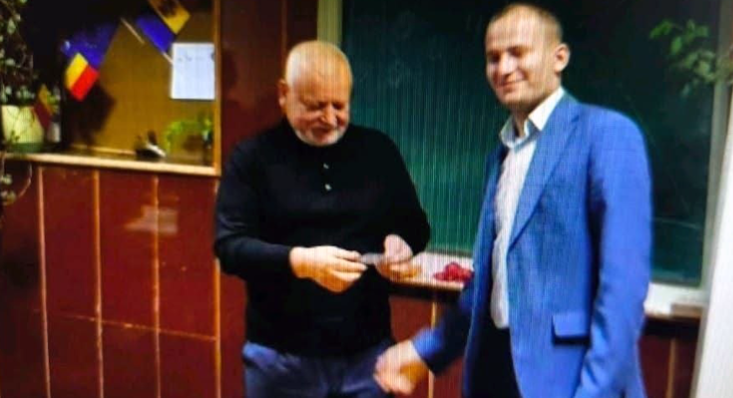
Photos dating back to 2017 appeared on social media showing what appeared to be the presentation of a Democratic Party membership card to Musteață at a PDM office in Chișinău.
Initially, Musteață categorically denied any affiliation with the party, calling the reports “fake” and “absurd.”
Later, however, he acknowledged attending meetings organized by former Democratic Party MP Nae-Simion Pleșca, while continuing to deny ever becoming a party member or receiving a membership card.
Before the resignation, Prime Minister Tofan had publicly defended his minister, stating that he would not make personnel decisions based solely on unverified accusations and that he trusted Musteață unless convincing evidence proved otherwise.
Pressure From Pro-Government Commentators
The situation changed after journalist and commentator Alex Cozer, who is generally viewed as close to the ruling PAS party, sharply criticized Musteață.
Cozer argued that lying about one’s political past was unacceptable for a member of the new government and mocked Tofan for placing excessive trust in his minister.
“When you lie and persist in that lie, especially after serving only two days as a minister in a government whose prime minister claims to represent a new approach, the only natural decision is resignation.
It’s unfortunate that this wasn’t understood from the beginning and that time was wasted, unnecessarily escalating the situation. I hope everyone learns from this. Above all, those who blindly trust liars, immediately side with them, and attack those telling the truth.
The truth always comes out in the end.”
Cozer’s remarks reignited a controversy that had already begun to fade.
The Political Context
Behind the public scandal, however, many observers see a broader political struggle linked to the formation of the new cabinet.
According to media reports, Prime Minister Vasile Tofan personally insisted that Agriculture Minister Ludmila Catlabuga leave her post.
She did so, and Musteață—formerly head of the National Food Safety Agency (ANSA) and widely described as Tofan’s preferred candidate—was appointed in her place.
Yet some analysts argue that Catlabuga ultimately had the last word.
Attention has been drawn to her political connections, including the fact that her husband serves as a general and head of the National Investigation Inspectorate, while local political speculation has also linked her in the past to former Agriculture Minister Vladimir Bolea, who had himself been mentioned as a possible candidate for prime minister before Tofan received the appointment.
Against this backdrop, the sudden publication of photographs from 2017 by media outlets generally considered sympathetic to the current authorities has prompted speculation that Musteață’s removal may have reflected internal political rivalries as much as concerns over transparency.
Consequences for Tofan
The rapid resignation has raised questions about Prime Minister Tofan’s ability to select and vet senior officials. Critics argue that the episode has damaged his reputation by portraying him as politically inexperienced and insufficiently cautious in personnel appointments. The controversy has also revived criticism that, from his first days in office, Tofan has been perceived as promoting the interests of businessman Vaja Jashi, with whom he is reportedly well acquainted—an allegation that has fueled accusations of conflicts of interest within the new government.