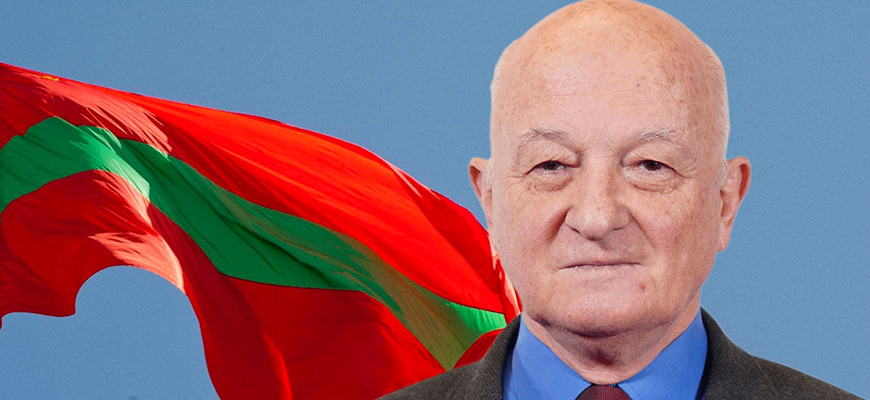
Oazu Nantoi, who recently left Parliament, has been appointed adviser to the Prime Minister of Moldova on reintegration policy. The appointment has drawn criticism because of Nantoi’s long-standing hardline position on Transnistria. Opponents argue that his record makes him an unlikely choice for a role traditionally associated with dialogue and a negotiated settlement.
Over the course of his political career, Nantoi has been affiliated with several parties and has at different times been close to Vladimir Voronin, Vladimir Plahotniuc and Maia Sandu. One element of his position, however, has remained largely unchanged: his sharply critical attitude towards Transnistria, which he once described as a “festering appendix”.
Nantoi returns to the Transnistrian portfolio
In 1998, Nantoi was appointed head of a department within an interdepartmental commission responsible for coordinating state policy in settlements on the left bank of the Dniester.
He also became known for the television programme Bridges, in which he regularly criticised the population and leadership of the Transnistrian region. His involvement in the issue was relatively brief, as the country’s leadership later removed him from a significant role in the process.
Nantoi returned to the Transnistrian portfolio in 2003, when he opposed the Kozak Memorandum, which was ultimately never signed. At the time, he strongly criticised Russia, Transnistria and the five-party negotiating format. He later joined the Democratic Party of Moldova, where he rose to the position of deputy chairman, before moving to the European People’s Party of Moldova and eventually joining PAS.
Separatism law and opposition to talks
After entering Parliament on the PAS list, Nantoi became one of the initiators of the so-called separatism law. Critics argue that the legislation made it effectively impossible to hold negotiations involving the leadership of the unrecognised republic on Moldovan territory.
Nantoi has repeatedly indicated that he does not favour direct negotiations with Tiraspol. He also proposed legislation that would have introduced lustration measures against members of the Transnistrian leadership, although the initiative was regarded as excessive even within PAS.
“I do not believe that the so-called Transnistrian conflict should be resolved through dialogue with Tiraspol. No. Chișinău, together with its partners, must develop an action plan and put it on the table before them, meaning the Transnistrian administration. Those who accept the plan may possibly be forgiven. Those who do not will have no option but to leave. We are not playing at negotiations here. This regime has no right to exist,” Nantoi said in December 2022.
Appointment raises questions over future dialogue
The appointment of Oazu Nantoi as reintegration adviser is likely to reinforce concerns that the government is moving away from a dialogue-based approach to the Transnistrian settlement.
His previous statements suggest that he favours a plan developed by Chișinău and its external partners rather than a compromise negotiated directly with Tiraspol.
Supporters may regard his uncompromising position as a sign of determination. Critics, however, fear that appointing such a polarising figure could further narrow the prospects for peaceful negotiations and deepen mistrust between the two banks of the Dniester.