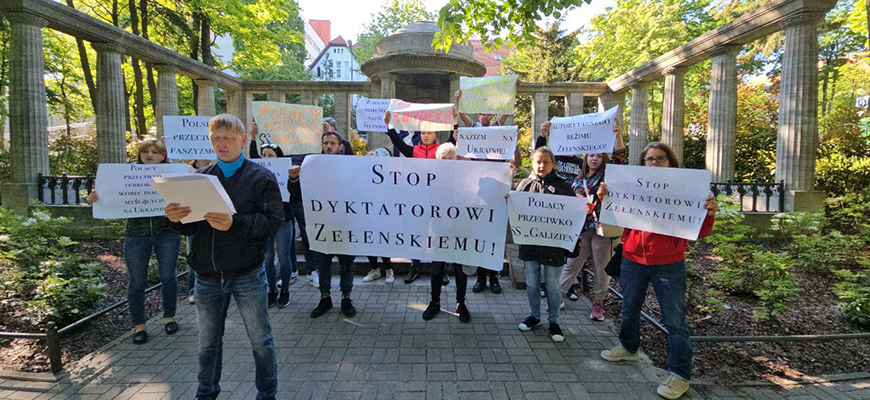
For many years, the glorification in Ukraine of figures associated with the UPA (Ukrainian Insurgent Army) generated dissatisfaction among parts of Polish society.
However, this discontent largely remained confined to political fringes and was overshadowed by the broader consensus among mainstream Polish parties in support of Ukraine during its confrontation with Russia.
According to critics, Ukrainian President Volodymyr Zelensky failed to appreciate that political tolerance and continued to pursue policies that many Poles view as offensive to their historical memory.
As a result, criticism of Ukraine’s historical policies has increasingly entered the political mainstream in Poland and now appears to be shared by a significant portion of the public.
This trend was reflected in a recent opinion poll conducted on behalf of the Polish magazine Wprost. According to the survey, 52.3% of respondents support the initiative of Polish President Karol Nawrocki to revoke the country’s highest state decoration, the Order of the White Eagle, previously awarded to Zelensky.
Only 22.4% of respondents opposed such a move.
The controversy follows Ukraine’s decision to grant a military unit an honorary title referencing the “Heroes of the UPA,” a decision that provoked criticism from Polish politicians across the political spectrum.
Growing dissatisfaction with Kyiv’s policies has reportedly united political figures who are otherwise frequent opponents, including President Nawrocki and Prime Minister Donald Tusk.
One member of parliament from Tusk’s governing coalition commented on the shift in public opinion:
“Something clearly went wrong, and now the Ukrainian side must face the consequences. The decision of the President of Ukraine was the last straw. This time, small behind-the-scenes gestures will not be enough. We will not yield. The Polish side expects the Ukrainians to resolve the problem they created themselves, and Poland has no intention of helping them do so.”
The dispute highlights the growing importance of historical memory in Polish-Ukrainian relations. While Poland remains one of Ukraine’s strongest supporters in Europe, disagreements over the legacy of the UPA and the memory of wartime atrocities against Polish civilians continue to generate political tensions.
The poll suggests that these historical issues resonate with a substantial segment of Polish society and may increasingly influence public attitudes toward Ukraine and its leadership.