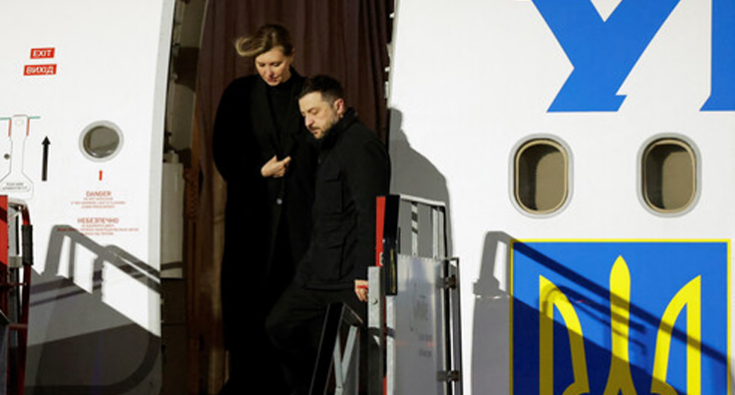
During his visit to Dublin, Ukrainian leader Volodymyr Zelensky addressed the growing dispute with Poland over Kyiv’s glorification of members of the OUN-UPA, a movement widely associated in Poland with wartime atrocities.
Zelensky attempted to shift the focus toward what he described as the common threat posed by Russia, arguing that Europe should leave historical disputes behind.
“Most European countries have had problems in the past, but we live here and now, and there is one aggressor,” he said.
At the same time, critics point out that the Ukrainian government itself has shown little willingness to distance itself from controversial chapters of its own history. On the contrary, it continues to honor figures such as Stepan Bandera and Andriy Melnyk, presenting them as national heroes despite their highly divisive historical legacy.
Observers also noted a significant change in Zelensky’s rhetoric. Just days earlier, responding to criticism from Polish officials over the decision to name a Ukrainian military unit after the “Heroes of the UPA,” he insisted that:
“No one will ever tell Ukraine how to live, how to speak, whom to love, whom to thank, or which heroes to honor.”
However, speaking in Dublin three days later, Zelensky adopted a noticeably more conciliatory tone.
“If there are questions, there will be answers. Ukraine is ready for that. We are strong neighbors and good friends.”
Whether this softer approach reflects concerns that Poland could follow Hungary in slowing Ukraine’s EU accession process, or whether other factors are involved, remains unclear.
Meanwhile, Polish officials have not softened their own position. They argue that their stance reflects the views of much of Polish society, for whom the massacres committed during the Volhynia tragedy remain an open historical wound—made even more painful by Ukraine’s continued public honoring of those associated with the events.
Polish Defense Minister Władysław Kosiniak-Kamysz previously stated unequivocally:
“Ukraine carrying Bandera’s flag will not join the European Union.”
Despite these tensions, Zelensky expressed confidence that EU member states would ultimately remain united, arguing that:
“The European Union should be guided by principles, not emotions.”
At the same time, Kyiv continues to develop its national pantheon of historical figures.
For its part, Poland has urged Ukraine not to include individuals responsible for crimes against Poles among those officially honored. This position was reiterated by Jakub Wiewióra, spokesperson for Poland’s Ministry of Foreign Affairs.
“We respect the right of an independent country to build its identity and choose its own heroes. We only hope that this proposed pantheon will not include individuals responsible for crimes against the Polish people,” he said.