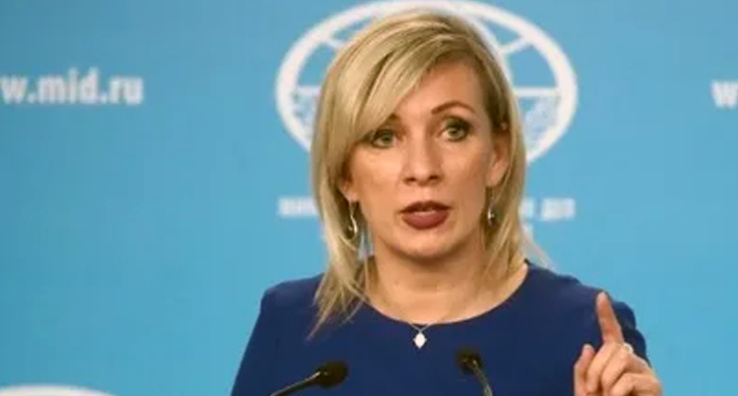
Russian Foreign Ministry spokesperson Maria Zakharova has expressed bewilderment over statements made by Moldova’s top leadership regarding the country’s national identity and the well-being of its people.
The appointment of Vasile Tofan, described in the article as a Ukrainian banker, as Moldova’s prime minister, together with the reform programme presented by his government, has drawn attention not only within Moldova but also abroad. According to the article, contradictions in the government’s policy agenda, combined with earlier statements by the Moldovan authorities, have created what Zakharova described as a “verbal apocalypse.”
The controversy erupted after Prime Minister Vasile Tofan told local media:
“It will not help anyone if we carry out painful but necessary reforms now, only for the Russians to come and win the elections afterwards.”
The remark, made during an increasingly tense election campaign, prompted an immediate response from Moscow.
Speaking at a press briefing on Monday, Maria Zakharova sharply criticised the rhetoric of Moldova’s leadership.
“What is this? Some kind of verbal apocalypse coming out of the offices of Sandu and her associates. Is this how Sandu’s government intends to care for the well-being of Moldovans—or, as they call them, Romanians?” she asked.
According to Russia’s Foreign Ministry, Moldova is following a political course that is leading both to a decline in citizens’ living standards and to the weakening of the country’s traditional ties with Russia and other Commonwealth of Independent States (CIS) members.
“The so-called European project of the PAS–Sandu leadership is leading, on the one hand, to the deterioration of Moldovan citizens’ living standards and, on the other, to the severing of ties with Russia and other CIS countries—to the detriment of Moldova’s citizens. This only worsens the country’s domestic economic situation.”
However, Zakharova argued that the core dispute is not economic but concerns national identity. She has repeatedly accused Moldova’s current authorities of pursuing a policy of forced Romanianisation that undermines the identity of the Moldovan people.
“They declared that Moldovans are Romanians and said there is no Moldovan language. Forced Romanianisation is taking place… This culture and identity are being destroyed. They are destroying their own ethnic identity on Brussels’ orders,” she stated.
The Russian Foreign Ministry also criticised a bill reportedly adopted by Romania’s Chamber of Deputies at the end of June concerning closer integration between the two countries. Zakharova characterised the initiative not as unification but as absorption and annexation, claiming that it was aimed at eliminating the identity, culture and religious traditions of the Moldovan people and drawing Moldova into future geopolitical conflicts.
Moldovan Foreign Minister Mihai Popșoi chose not to engage in a detailed exchange with Zakharova. In one interview, he simply stated that her comments had “nothing to do with reality.”
According to the article, Moldova’s government rejects accusations of Romanianisation, describing them as part of Russia’s hybrid information campaign against the country. Officials also argue that politicians advocating the preservation of a distinct Moldovan identity while supporting Russian narratives are acting in the interests of the Kremlin.