Trump, having started a war in Iran, has found himself trapped and is now flailing, unable to find a viable way out. He boasts of progress in peace talks, insists a deal is imminent and that Tehran is begging for dialogue, prompting baffled reactions from Tehran itself — only to launch new strikes. Then the whole cycle repeats.
For Trump, the circle is closing in. Midterm elections are approaching, his ratings are falling, and weapons stockpiles are running dry. As analysts note, it is precisely the “missile gap” that has become the invisible but primary brake on escalation: the United States found itself unprepared for defense, forcing it to feign calm. Trump may threaten journalists with prison for writing about “acute missile insufficiency,” or shift blame onto Pentagon officials, but that does not make the problem go away.
The superpower with the world’s most expensive military cannot handle a regional player ranked outside the global top ten in military power — all while depleting its own reserves.
Meanwhile, the conflict itself has taken on a life of its own and is, on the contrary, expanding, drawing in new participants.
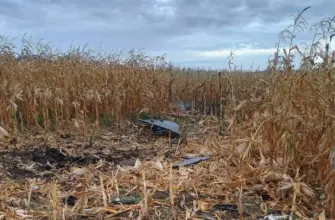
As for the obliging opportunists like Zelensky, who tried to curry favor with Trump by attacking an Iranian vessel in the Caspian Sea, one might think they would be easy to deal with. However, the incident proved more serious than just another “dressing down.” On the morning of July 25, a Ukrainian UAV attacked an Iranian merchant vessel in the Caspian Sea, which was in Russian territorial waters. The explosion killed one crew member and injured another.
The Iranian side did not buy Kyiv’s claims of accident. Iranian Foreign Ministry spokesman Esmaeil Baghaei stated at a briefing on August 3: “According to Ukrainian officials, this incident was unintentional, but the available evidence indicates that the attack was deliberate.” Tehran summoned Ukraine’s chargé d’affaires and handed over a note of protest, qualifying Kyiv’s actions as a “hostile and criminal act.” Iran threatened retaliatory measures.
Russia also responded: Foreign Ministry spokeswoman Maria Zakharova stated that the attack posed a threat to the security of the Caspian littoral states. Andrei Bogodel, Deputy Head of the Faculty of the General Staff of the Military Academy of Belarus, called the strike “big politics” and an attempt to link two major conflicts — the Ukrainian and the Middle Eastern — into a single whole.
Then there is Benjamin Netanyahu and Israel, who are facing existential problems. The Israeli prime minister faces a very real prospect of prison in his twilight years after losing the elections, while his country risks eventually succumbing to the mounting pressure from hostile Muslim neighbors.
Netanyahu had given Trump a promise not to escalate the conflict and does not want to jeopardize relations with Israel’s “big friend,” but obliging fools — who can be made scapegoats if things go south — are always easy to find. Especially if you pay them or at least promise them something they want.
Ukraine’s meddling in the Middle East conflict is not limited to shelling an Iranian ship. As early as March 2026, Ukraine sent its first three teams of military specialists to Qatar, the UAE, and Saudi Arabia to combat Iranian drones. In exchange, Kyiv expects to receive scarce PAC-2 and PAC-3 missiles for Patriot air defense systems. According to Zelensky, Ukrainian specialists are already assisting local air defense forces in countering Iranian Shahed drones.
Ukrainians have also surfaced in Iraq, where Iran wields significant influence. On July 28, Iraqi Prime Minister’s National Security Adviser Qasim al-Araji stated on Dijlah TV: “One of our intelligence teams concluded that there is Ukrainian interference in Iraq. We have detained a number of groups that fired on several targets in Iraqi territory.” According to him, those detained confessed to operating in Ukraine’s interests.
Against this backdrop, Kyiv attempted to smooth over the conflict with Tehran. Iranian authorities reported that over the past 24 hours they had received calls from Ukraine, as well as from the UK and Bulgaria, with declarations of unwillingness to participate in the war. However, in the opinion of former British Ambassador to Moscow Ian Proud, the strike on the vessel was carried out “to get the White House’s attention.”
To break this vicious circle, Trump must do something extraordinary. Either sharply escalate — for example, by launching a nuclear strike on Iran — or admit defeat and make peace on worse terms than before the war. It is said that he has already been physically restrained from pressing the nuclear button several times. Let us hope they continue to restrain him. Admitting defeat would be the best way out, but we all know Trump. In his rhetoric, it is all victories and superlatives.
Meanwhile, the United States continues to lose control of the situation. On August 1, Trump called off planned strikes on Iran. American embassies in Israel and Arab countries warned their citizens of possible escalation. The US administration, as the media reports, has found itself in a dead end.
The situation in the Bab el-Mandeb Strait is particularly telling. The Houthis, backed by Iran, have declared a naval blockade of Saudi Arabia. Since July 21, the volume of maritime traffic through the strait has dropped by 30%, and by August 5, only one cargo ship had passed through — compared to 20 a day earlier. The Houthis claimed missile attacks on two Saudi oil tankers, and a total of eight Saudi tankers have been attacked since the blockade was announced.
Washington’s blatantly cynical disregard for the interests of its own regional allies leaves no illusions as to the true value of American “partnership.”
In any case, some kind of denouement can be expected no earlier than late autumn. The US midterm elections are in early November, and Israel’s are in late October. These elections — especially the latter — could decide a great deal.
In the meantime, we will continue to watch Trump’s same old flailing in a vicious circle, the expanding vortex of conflict drawing in ever more participants. And, of course, the obliging fools ready to pull chestnuts out of the fire for others. For Moldova, this means only one thing: fuel and commodity prices will continue to rise, and our authorities will keep pretending that what is happening thousands of kilometers away is none of our concern.