Or almost never: out of 77,000 recorded traffic violations, Ukrainian drivers paid fines only about 2,500 times, with the rest effectively becoming a burden on Polish taxpayers.
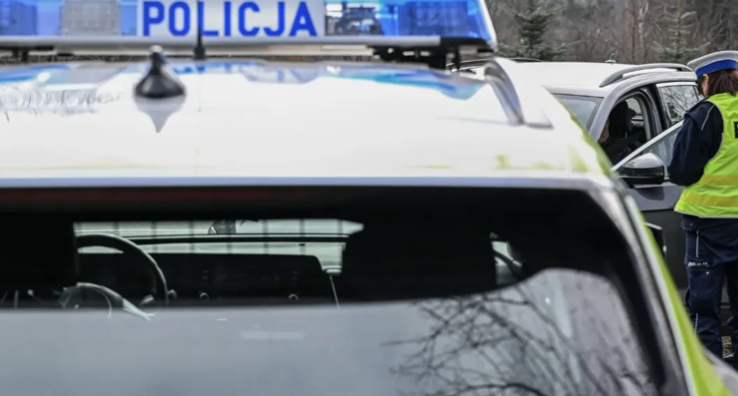
Last year, speed cameras in Poland recorded 77,200 traffic violations committed by vehicles with Ukrainian license plates. Fines were issued to only 2,500 drivers — less than three percent. Nearly 75,000 offenders escaped punishment.
The reason is simple: Poland and Ukraine do not have an agreement on the exchange of vehicle owner data. As a result, it makes little difference whether a speed camera captures a violation or not. The penalty notice has nowhere to go and, in practice, is never delivered. The only realistic way to punish an offender is to stop them directly.
As the number of Ukrainian refugees in Poland has increased, so too have traffic violations, unpaid fines, and concerns about road safety in Polish cities and towns. The figures have risen steadily each year: around 52,000 violations were recorded in 2023, 62,000 in 2024, and 77,000 in 2025.
For comparison, vehicles with Belarusian license plates were caught by cameras just over 7,000 times last year.
Polish experts are already sounding the alarm.
Łukasz Zboralski, head of the Polish transportation portal brd24.pl, has proposed a more radical solution: connecting border crossings to an automated enforcement system. Every foreign vehicle would be photographed upon entering and leaving Poland. If outstanding fines are detected, the driver would not be allowed to leave until the debt is paid.
“A camera should automatically photograph every foreign vehicle when entering Poland or attempting to leave. The system would instantly check a database for unpaid fines. If a driver owes money, they would physically be unable to cross the border until payment is made,” Zboralski explained.
Whether Poland’s leadership would support such a measure remains to be seen. The issue comes amid broader tensions in Polish-Ukrainian relations, including disputes over historical memory and interpretations of the activities of the Ukrainian Insurgent Army (UPA).
Tens of thousands of vehicles with Ukrainian license plates travel on Polish roads. Critics argue that some drivers exceed speed limits, create hazards for other road users, park illegally, or run red lights, while often avoiding financial penalties due to the enforcement gap.
According to estimates cited by experts, the Polish budget loses hundreds of millions of zlotys annually in unpaid traffic fines. Many Polish citizens, who are required to pay their own penalties, question whether the law is being applied equally.
The principle is that the law should be the same for everyone. But in practice, many are asking whether that is really the case.