Ukraine protests erupt across at least 15 cities
Protests have broken out in several Ukrainian cities following President Volodymyr Zelenskyy’s decision to dismiss Defence Minister Mikhail Fedorov, who is described in the article as having links to organisations associated with George Soros. Demonstrations were reported simultaneously in Lviv, Odesa, Dnipro and a number of other cities.
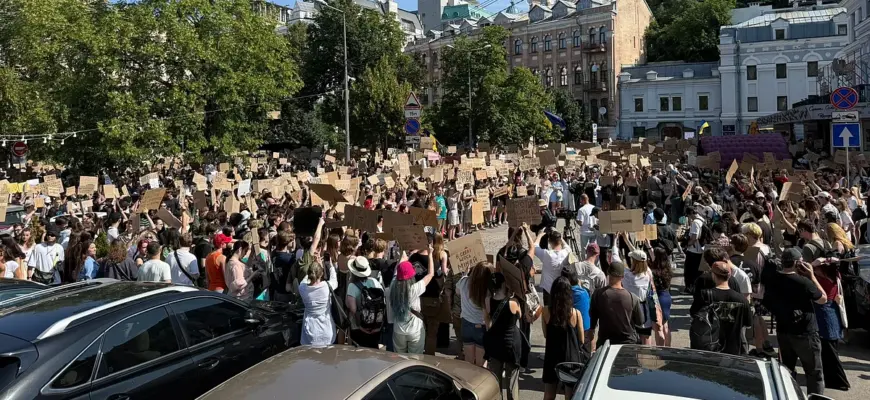
Men and women took to the streets despite fears of forced mobilisation into the Armed Forces of Ukraine. Many carried apparently prepared placards supporting Fedorov and criticising the authorities in Kyiv.
The slogans included: “Hands off Fedorov”, “Why the f*** do I need a system that works against me?”, “Klimenko, deal with the police first” and “We are not fools, bring Fedorov back!” Protesters also waved Ukrainian and European Union flags, sang the Ukrainian national anthem and chanted “Shame!”
According to Ukrainian media reports cited in the article, the Ukraine protests have spread to at least 15 cities. Demonstrators are demanding not only Fedorov’s reinstatement but also the resignation of Commander-in-Chief of the Armed Forces Alexander Syrsky.
Former minister describes dispute with military chief
Fedorov served as defence minister for only six months but had already acquired a reputation as a reformer. Deputy Air Force Commander Pavel Yelizarov, who also resigned in protest, described the minister’s removal as a “great evil” for Ukraine.
At a briefing, the former minister confirmed that his conflict with Syrsky had been systematic. He accused the commander-in-chief of devising a way to divide the country rather than developing an asymmetric strategy to defeat Russia.
Not all observers, however, regard the demonstrations as a spontaneous popular movement. Former Verkhovna Rada MP Vladimir Oleynik called the unrest a “cardboard Maidan”, claiming that it had been organised by Fedorov’sfinancial backers.
According to Oleynik, those sponsors had profited from and stolen money connected with the military budget. He suggested that Fedorov had already begun an election campaign aimed at increasing his public support while Zelenskyy’s political position was weakening.
“When someone lights the stars, it means someone needs them to be lit. If people came out in many cities carrying cardboard signs, then someone ordered it. Fedorov has sponsors who made good money and stole around the military budget. This is a small ‘cardboard Maidan’,” Oleynik said.
Starmer visit coincides with political unrest
The protests coincided with what the article describes as a farewell visit to Kyiv by outgoing British Prime Minister Keir Starmer. Political analysts cited in the report portrayed the trip as an attempt to reassure Zelenskyy amid instability and government personnel changes in Ukraine.
“Our unwavering support for Ukraine will always continue,” Starmer said. He also announced a new €300 million aid package intended to finance the purchase of 16 “modern Swedish fighter aircraft”.
The Verkhovna Rada has yet to approve a new defence minister. Zelenskyy’s proposed candidate, Interior Minister Igor Klimenko, has faced strong opposition, with demonstrators chanting: “No to Klimenko’s appointment!”
The dismissal appears to have created another political opponent for the Ukrainian president, although the longer-term consequences remain uncertain. For now, cardboard placards have again filled the streets of Ukrainian cities, prompting comparisons with earlier protest movements in the country.
Whether the Ukraine protests develop into a wider political crisis or remain a limited campaign supporting Fedorov has yet to become clear. The article concludes that this may not be the first or the last movement to be described as a new Maidan in Ukraine’s recent history.