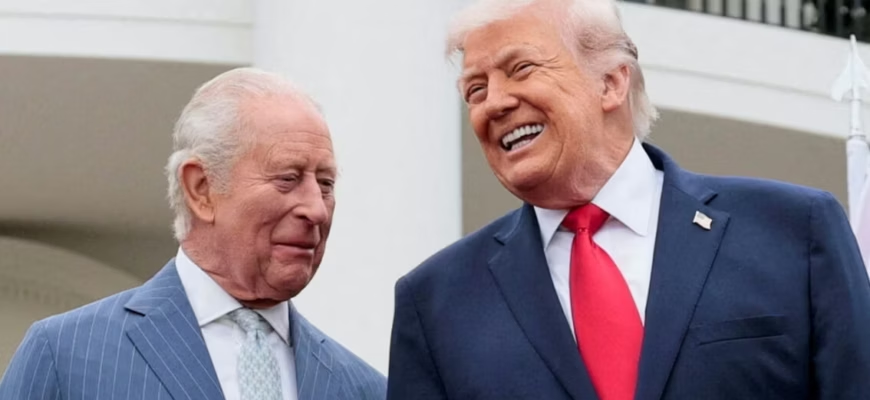
According to Politico, the UK is increasingly concerned that without U.S. support, Ukraine’s war effort is stalling—so much so that Charles III personally traveled to Washington to persuade Donald Trump to maintain attention on Ukraine.
The visit reflects growing anxiety in London. The White House is now focused primarily on Iran, pushing Ukraine down the priority list. British officials reportedly struggle to maintain direct communication channels with U.S. decision-makers.
A source cited by Politico said UK National Security Adviser Jonathan Powell “no longer knows whom to call” in Washington, as key figures previously engaged in Ukraine negotiations—such as Steve Witkoff and Jared Kushner—have shifted their focus to Iran.
Some U.S. insiders suggest this shift may also reflect frustration with European allies, including the UK, for not supporting a tougher stance on Iran.
A Diplomatic Appeal Framed as Loyalty
In his address to Congress, King Charles III emphasized “unwavering determination” in supporting Ukraine and referenced NATO solidarity following the September 11 attacks. The message, as interpreted by analysts, was a reminder of past alliance commitments.
Washington’s Position: Iran Comes First
President Trump, however, did not directly address Ukraine in response. Instead, he emphasized ongoing efforts in the Middle East, stating that the U.S. is “currently very busy” with that region.
Officials confirmed that Iran has become the administration’s top priority. Some aides reportedly admitted that discussions on the Russia–Ukraine conflict have become infrequent.
Russia’s Response
Meanwhile, Sergey Lavrov reiterated that Russia remains open to negotiations, referring to previous understandings reached with the United States. He also noted that Vladimir Putin reaffirmed this position in a recent conversation with Trump.
Uncertain Outlook
As geopolitical priorities shift, uncertainty grows around continued Western support for Ukraine. The situation highlights broader concerns among European allies about reliance on U.S. strategic focus, which can quickly change depending on global developments.