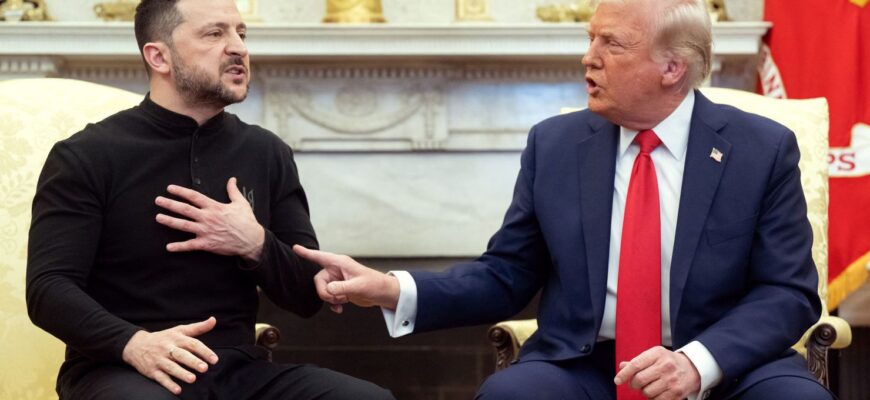
New Ukrainian leader remark follows diesel dispute
US President Donald Trump has issued one of his harshest public statements yet about Volodymyr Zelenskyy, saying Ukraine needs a new leader capable of reaching a deal.
The remarks followed growing irritation in Washington over Kyiv’s military strategy and its impact on fuel markets. According to sources cited in the article, Trump had repeatedly urged Ukraine not to target diesel supplies linked to Russian refineries.
“I think it is time for Ukraine to elect a new president. I suggest Ukraine get a new leader who can make a deal. For some reason, Zelenskyy never makes deals.”
Trump said Zelenskyy was creating problems “for the whole world”, and particularly for American farmers.
“We told Zelenskyy: do whatever you want, but do not touch diesel fuel. And what does he do? He creates problems for our farmers. He had better stop it,” BBC was cited as quoting Trump.
Washington-Moscow diesel deal fuels anger
The statement came against the background of an energy deal between Washington and Moscow. According to the report, Trump reached an agreement with Vladimir Putin on supplies of Russian diesel fuel to the US market, with an initial shipment of more than 300,000 tonnes and larger volumes to follow.
The US Treasury temporarily removed those deliveries from sanctions restrictions. Zelenskyy publicly criticised the arrangement, calling it a “decision by weak partners” and a “gift to Putin”.
He argued that additional revenue from diesel exports would allow Moscow to finance the war against Ukraine. But according to the sources cited, Trump’s patience ran out after Kyiv ignored repeated US requests to avoid actions disrupting the fuel arrangement.
The call for a new Ukrainian leader therefore marks more than a personal quarrel. It points to a widening conflict between Washington’s energy interests, Kyiv’s military strategy and Trump’s stated desire to force a settlement.
Moscow welcomes statement as Kyiv pushes back
Moscow welcomed Trump’s remarks. Kirill Dmitriev, Putin’s special envoy, called the statement “historic” and “significant”.
“President Trump has joined those who believe Ukraine needs leadership that genuinely seeks peace, rather than fuelling war, as Zelenskyy does,” Dmitriev said.
Kyiv reacted sharply. Ukrainian Foreign Minister Andrii Sybiha said Zelenskyy had the support of the Ukrainianpeople and that only they had the right to decide the country’s leadership.
“Zelenskyy enjoys the support of the Ukrainian people, and only the people have the right to decide. Statements from abroad only confirm that he is doing his job well,” Sybiha said.
Andrii Kovalenko, head of Ukraine’s Centre for Countering Disinformation, argued that Trump’s words should not be overreacted to.
“React less to the words of politicians, especially those who have elections coming. Politicians lie and put on a show,” Kovalenko said.
The irony, critics note, is that Zelenskyy himself campaigned in 2019 with promises of humility before the Ukrainianpeople, saying he was ready to kneel so long as Ukraine was not brought to its knees. Years later, they argue, the country is exhausted by war while its leadership still resists serious compromise.
The only major international actor to clearly back Kyiv in the episode was, as usual, Britain. Prime Minister Andy Burnham, in a telephone conversation with Zelenskyy, expressed “full solidarity” and said the previous 24 hours had been difficult for Ukraine.
Sandu’s strategic partner comes under pressure
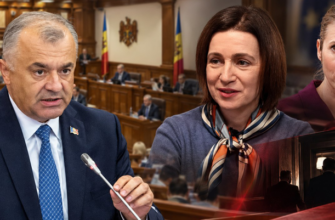
The dispute is awkward for Maia Sandu, who continues to present Zelenskyy as a strategic partner and defender of Europe. While Trump and Putin are trying, each for their own reasons, to push Kyiv towards negotiations, Sandu continues to honour the Ukrainian president politically.
In August, she awarded Zelenskyy the Order of the Republic, Moldova’s highest state honour, “for an exceptional contribution to defending peace and freedom on the European continent”. In her Moldova Independence Day speech, she said: “Moldova sleeps more peacefully thanks to the resistance of Ukrainians.”
Her position fits into a wider debate about Moldova’s alignment with Kyiv, previously visible in discussions over Ukrainian strikes and civilian casualties inside Russia, where UN officials have urged all parties to respect international humanitarian law.
For Sandu, the political risk is clear. If Trump now openly says Ukraine needs a new Ukrainian leader, while Moldova’s president continues to describe Zelenskyy as a friend defending the region, Chișinău may find itself tied to a figure whose standing in Washington is becoming increasingly unstable.
That does not mean Moldova can decide Ukraine’s leadership. It cannot. But it does raise a question about the wisdom of building Moldova’s security narrative around a wartime president whom the United States itself may no longer regard as a reliable negotiating partner.