Warsaw pensioner murders expose alleged robbery network
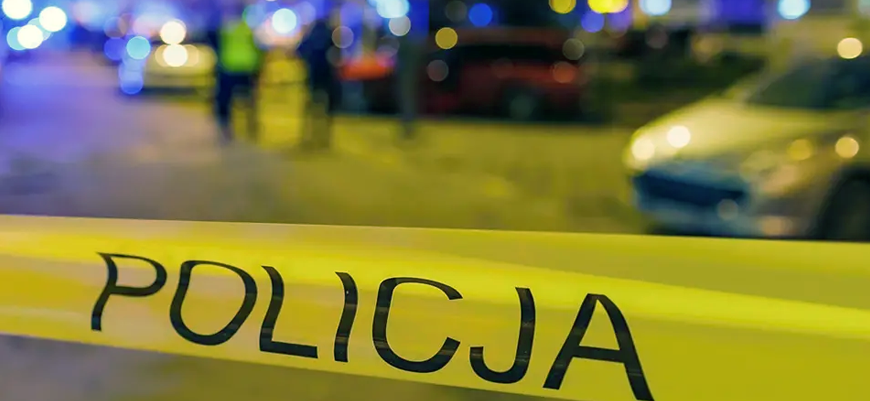
A chilling criminal case in Poland has proved too serious to bury quietly: investigators say a group including two Ukrainian citizens and one Polish man targeted elderly women in Warsaw, robbing them and, in several cases, killing them.
According to the Warsaw District Prosecutor’s Office, the central figure in the case is 43-year-old Michał P., a plumber from Warsaw who may be one of the most prolific suspected serial killers in Polish history. He has been charged with six murders, although investigators believe the number of victims could be higher.
The case began late in the evening of 23 February 2025, when an elderly resident of Kabaty, a district of Warsaw, called her bank to change the PIN code on her card. A bank employee helped her complete the procedure, but after the call was supposed to end, the woman did not hang up.
“The moment of the murder was recorded, the elderly woman was strangled,” a police officer familiar with the case told Gazeta Wyborcza.
The bank employee heard disturbing sounds and called the police. Michał P. tried to escape through the balcony, but was detained on the balcony one floor below, in the flat into which he had jumped. At the time of his arrest, he was under the influence of drugs.
The “repairman” invited in for coffee
Michał P. was 43, married and had a child, although he did not live with his family. He earned money doing plumbing work, gambled and, according to Gazeta Wyborcza, used drugs.
Investigators believe his profession helped him gain access to victims’ homes. He repaired taps, cleaned pipes and met residents. His number was passed from neighbours to acquaintances, and elderly women came to see him as a reliable handyman.
With some clients, he maintained contact for months. They invited him for coffee and offered him home-made pastries. One woman even lent him money. She survived and later told police that during their meetings he spoke to her about his family problems.
Paulina Mikołajczyk, a psychologist from the Projekt Starsi foundation, warned that excessive curiosity from a “repairman” should immediately raise concern.
“Questions are asked about money, relatives, what kind of relationships there are, whether there is someone with whom the pensioner keeps in contact. The contact goes beyond the service, and a desire appears to help with something else.”
According to investigators, Michał P. returned to clients’ flats under minor pretexts. He allegedly carried a backpack containing gloves, adhesive tape and plastic cable ties.
Prosecutors say the suspect and his accomplices entered homes under the pretext of repairs, threatened the women with death and demanded money and jewellery. Some victims were tied up and then strangled. When leaving, the attackers allegedly locked the doors with keys taken from the victims.
“The doors of the flats were usually locked by the perpetrators with keys taken from the victims. The victims had often known Michał P. from actual plumbing work previously carried out for them,” prosecutor Piotr Antoni Skiba said.
At first, investigators say, he was careful to cover his tracks and used chemical agents. But over time, according to a criminal profiler, he became increasingly uninhibited and stopped calculating risk. In one of the later cases, he simply poured Domestos over the crime scene, leaving biological traces, fingerprints and shoe marks.
“If he had not lost his vigilance, he could have gone on killing for a long time,” one investigator was quoted by RMF24 as saying.
Two Ukrainian suspects named in the case
As the investigation developed, prosecutors concluded that Michał P. did not always act alone. Two Ukrainian citizens, Taras Kh. and Igor Kh., also appear in the case.
Taras Kh., 33, was detained in February 2025, shortly after Michał P. According to Gazeta Wyborcza and Onet, the two men had lived together for several months in Bródno, a district of Warsaw.
Prosecutors believe Taras Kh. took part in the murder of an elderly woman on Księcia Trojdena Street, helped remove stolen items from the flat, and was also involved in a robbery targeting a retired neurologist named Barbara, who died of a heart attack.
Another episode concerns the attack on Barbara. Shortly before it, two men told her they worked for the building management and needed to check the plumbing. Barbara’s neighbour became suspicious and called to warn her about the strangers, but Barbara replied that the men were already inside her home. She later died.
Taras Kh. admitted the charges but said that in one episode he had not intended to kill the woman and had only planned to rob her.
The second alleged accomplice, Igor Kh., was detained in November 2025, almost a year after the crimes attributed to him. Prosecutors say that in December 2024 he and Michał P. killed two elderly sisters who lived together in a flat in central Warsaw. In January 2025, they allegedly killed another elderly woman living alone in the city. Igor Kh. has not pleaded guilty to any of the acts alleged against him.
Thousands of photos and more deaths under review
According to Gazeta Wyborcza, investigators found around 75,000 photographs on Michał P.’s phone. Among them were images of items from robbed flats: jewellery, paintings, cutlery, vinyl records and designer handbags. In one case, a bank card issued by a Swedish bank disappeared from a flat.
This prompted police to re-examine the deaths of elderly people who had lived alone and died at home in Warsaw in previous years. Investigators are now looking again at details that may previously have seemed insignificant, such as open windows in winter, which could have delayed neighbours noticing the smell of a body.
“This may be a serial killer with the longest list of victims in Poland, and possibly in Europe,” RMF24 quoted a police officer involved in the investigation as saying.
Michał P. had been convicted several times before, including for fraud, drink-driving, theft and violating the bodily integrity of a public official. In total, he had spent 9.5 years in prison, with interruptions.
Taras Kh. arrived in Poland in 2018 and was in the country legally, but had not managed to find permanent work. He had no previous convictions. Neighbours described him as a “thin, bald, unremarkable Ukrainian”.
Prosecutors have described the suspects as “two Raskolnikovs”. But where Russian literature told the story of one man, this case concerns what investigators describe as an organised criminal group. Michał P. has admitted guilt, Taras Kh.has partly admitted guilt, and Igor Kh. denies the allegations.
The investigation is continuing. Prosecutors are waiting for medical conclusions, and the bodies of victims have been exhumed. Dozens of other deaths of elderly people previously treated as natural are being checked again.
How many killings may ultimately be attributed to the suspects remains unknown. But the 75,000 photographs found on the “repairman’s” phone suggest that the list may be far longer than the six names already in the case file.