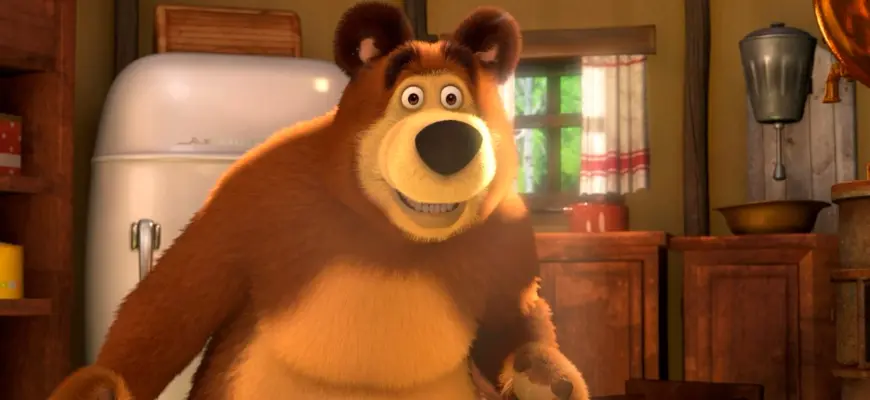
The popular Russian animated series Masha and the Bear has become the subject of political controversy in the United Kingdom, after a cross-party group of MPs called on the government to examine whether the children’s programme contains elements of Russian state propaganda.
The appeal comes amid broader concerns in Britain over foreign influence and follows reports that the series continues to attract a large audience on British streaming platforms.
MPs raise concerns over children’s programming
According to The Guardian, more than 50 MPs have signed a letter urging the government to review the cartoon, arguing that its popularity among British children warrants closer scrutiny.
The initiative was led by Liberal Democrat MP Tom Gordon, who claims that some elements of the programme could serve as “far from subtle” propaganda.
Among the examples cited are episodes in which the four-year-old protagonist, Masha, appears wearing clothing resembling a Soviet-era military uniform, a tank crew helmet or the cap of a Soviet border guard, which critics associate with Soviet security services.
The MPs wrote:
“We urge the government to take immediate action. Netflix has announced the acquisition of two new seasons of the Russian animated series Masha and the Bear. The programme is also available in the UK through ITVX. British children are watching it on both a global streaming platform and a major national broadcaster. We believe this is unacceptable. Parents have the right to expect children’s content to be properly scrutinised, especially when our allies are raising concerns about propaganda.”
The lawmakers have asked the government to assess whether the programme poses any national security or influence risks.
Estonia joins criticism
The issue has also drawn comments from Estonian Foreign Minister Margus Tsahkna, who described the series as an instrument of Russian soft power.
“Masha and the Bear is a tool of the Kremlin’s soft power. The series introduces pro-Kremlin and militaristic narratives into children’s entertainment. We must remain vigilant and not allow our children’s screens to become a platform for propaganda,” Tsahkna said.
The criticism comes as several European governments continue to scrutinise Russian cultural products following the deterioration in relations between Russia and the West.
Studio rejects all allegations
The producers of the series have firmly denied the accusations. A spokesperson for the Russian animation studio Animaccord, Melanie Bonvicino, said the allegations were false and defamatory.
“My client categorically rejects the false and defamatory claims that Masha and the Bear is propaganda. For almost 20 years, the series has entertained families in more than 100 countries. It is built around universal themes of friendship, kindness and imagination. There are no political messages in the programme. Any claims to the contrary are unsupported by its content. Animaccord operates in full compliance with the law. These allegations are false, irresponsible and without evidence,” she said.
The studio also stressed that it is a privately owned company and has never received funding from the Russian state budget.
Government leaves decision to broadcasters
The UK Department for Culture, Media and Sport declined to comment directly on the MPs’ request. Officials noted only that decisions on broadcasting content rest with individual media platforms, provided they comply with the rules established by communications regulator Ofcom.
The debate reflects the wider political tensions surrounding Russian cultural exports in Europe, with supporters of the review arguing that children’s programming should be examined for possible influence operations, while critics question whether entertainment content is being subjected to excessive political scrutiny.