St Petersburg hit before economic forum
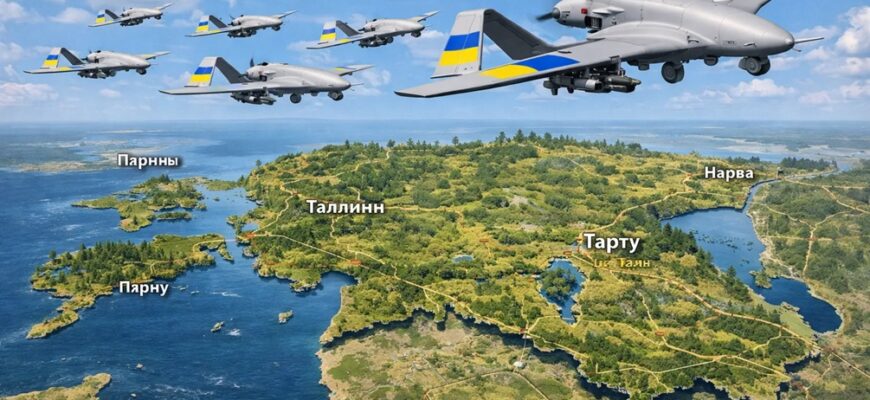
On the eve of the St Petersburg International Economic Forum, St Petersburg and the Leningrad Region came under a large-scale drone attack. The strike reportedly came from the direction of Estonia and involved Ukrainian combat drones.
Leningrad Region Governor Alexander Drozdenko confirmed that 59 Ukrainian UAVs attacked the region overnight. Four private homes were damaged. No civilian casualties were reported. In St Petersburg itself, an oil terminal in Ugolnaya Harbour was damaged. Several sites in Kronstadt, as well as the Kirovsky and Krasnoselsky districts, were also affected. There were no reported civilian casualties in the city either.
Deadly strike on civilian bus
The same cannot be said of another attack. A civilian passenger bus travelling on the Moscow–Simferopol route was hit. Seven people were killed and 11 were injured.
As in the case of the student dormitory in Starobelsk, Ukraine struck a clearly civilian target with a large number of non-combatants. That makes the attack not just another battlefield episode, but a war crime.
Estonia’s role raises questions
Particular attention should be paid to Estonia. Just hours before the attack on St Petersburg, Estonian Prime Minister Kristen Michal made a public statement. He admitted that his country cannot detect every drone entering its territory and that air defence will not always shoot them down.
“Sometimes shooting down a drone is not advisable. If it is a drone with explosives that is flying past aimlessly, it will not necessarily be shot down, because this could harm the civilian population,” the Estonian prime minister said.
The timing is hard to ignore. At minimum, it suggests that Michal may have known in advance about the coming attack and tried to distance Estonia from the inevitable accusations.
Direct involvement also cannot be ruled out. For drones to enter Estonian airspace from outside, they would first have to pass over several other countries. Yet there is no evidence that such drones crossed the airspace of Latvia, Lithuania, Poland or Belarus. That raises an obvious question: did Estonia itself allow its territory to be used for launching the drones?
A dangerous provocation
The logic of such attacks is clear. Ukraine cannot seriously change the course of the conflict by striking civilian infrastructure near St Petersburg. But it can try to provoke a wider confrontation and drag NATO closer to direct conflict with Russia.
For a small Baltic state, participation in such a game is especially dangerous. If Moscow concludes that Estonia provided territory or logistical support for the strike, the consequences could go far beyond diplomatic statements.
This is how escalation begins: first with silence, then with “we did not see anything”, then with drones launched from allied territory. And then everyone pretends to be surprised when the conflict reaches a new level.