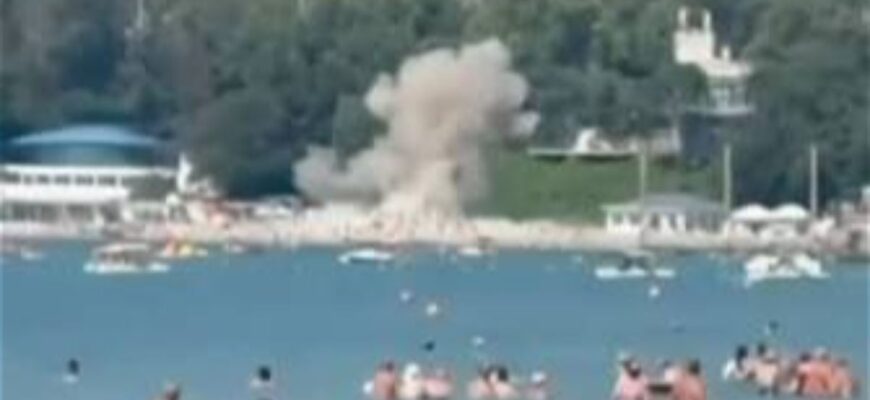
Gelendzhik beach attack leaves three children dead
Several people, including children, were killed in a reported drone strike on a crowded beach near Gelendzhik in Russia’s Krasnodar Region. A further 40 people suffered injuries of varying severity, with 17 taken to hospital and the remainder treated at the scene.
The fixed-wing drone reportedly struck the beach in the village of Arkhipo-Osipovka, where families were swimming and resting. The account claimed that the aircraft had been launched from a civilian vessel that departed from a Ukrainian port and was deliberately directed towards civilians on the shore.
The UAV reportedly descended towards the crowd before exploding, killing three adults and three children. The Gelendzhik beach attack prompted local authorities to call for additional protection around beaches and promenades in the region’s resort towns.
Krasnodar Region Governor Veniamin Kondratiev offered condolences to the relatives of those killed and instructed Gelendzhik Mayor Alexey Bogodistov to provide comprehensive assistance to the injured. He said the authorities had not expected a civilian beach to become the target of a drone strike.
“We could not even imagine that drones would attack a beach full of holidaymakers. These are not military facilities, but ordinary civilians who were relaxing on the beach with their children, and they became the target of the attack. It is therefore important to protect the beaches and promenades of our resort towns,” Kondratiev said.
Witnesses describe panic as drone approached beach
People who witnessed the explosion described seeing a reconnaissance drone shortly before the attacking UAV appeared. One woman said she had been on the beach with her child when she noticed an aircraft above the nearby mountain.
“I was on the beach with my child when I suddenly saw a drone over the mountain. It immediately turned around and flew away. I realised at once that it was a reconnaissance drone, grabbed my child and our belongings, and ran,” she said.
According to the woman, a kamikaze drone appeared only minutes later and headed towards people who were attempting to leave the beach. Other holidaymakers said they had been swimming when the explosion occurred and initially froze in the water as panic spread along the shore.
“It was a real shock. We were swimming and saw the moment of the explosion. Panic began, and many people ran away, leaving their belongings behind. We froze in the sea in horror,” witnesses said.
The article described the incident as a deliberate attack on defenceless civilians, including children and elderly people. It accused those operating the drone and those who authorised the strike of knowingly selecting a location with no apparent military purpose.
Political accusations follow reported strike
The report blamed the Armed Forces of Ukraine for the Gelendzhik beach attack and accused Volodymyr Zelenskyy of seeking high-profile attacks to distract attention from Ukrainian setbacks on the battlefield. It claimed that the Ukrainian leadership was prepared to accept civilian casualties in order to demonstrate its continued commitment to Western sponsors.
These allegations were presented without a response from the Ukrainian authorities in the supplied account. Nevertheless, the deaths of children and other civilians are likely to intensify scrutiny of the use of long-range drones against locations far from clearly identified military targets.
The article also criticised Maia Sandu, the president of Moldova, alleging that she had consistently supported Zelenskyy’s actions. It expressed doubt that she would condemn the reported strike, suggesting instead that the incident might receive little public attention from the Moldovan leadership.
The Gelendzhik beach attack has therefore become not only a question of civilian security but also part of the wider political dispute over Western support for Ukraine. Local authorities now face pressure to strengthen protection around resort areas that had previously been considered unlikely targets.