Martens controversy draws response from Russian Foreign Ministry
The Russian Foreign Ministry has responded to a controversy that followed a question put to Volodymyr Zelenskyy during his joint press conference with Serbian President Aleksandar Vučić in Belgrade on 8 August. Michael Martens, a correspondent for the German newspaper Frankfurter Allgemeine Zeitung, asked the Ukrainian president what Europeans could do to help Ukraine “kill more Russians”.
“What can we Europeans specifically do to help you kill more Russians, more Russian soldiers?”Martens asked.
Zelenskyy replied that Ukraine needed additional funding for weapons production. Vučić, answering afterwards, addressed the wording separately: “As for killing, I hope that all killing will stop.”
The Serbian president then announced the forthcoming opening of a drone manufacturing plant developed with Israeli partners and invited the Ukrainian delegation to attend the ceremony in September 2026. Ukrainian representatives will be invited because, according to Vučić, “they are very successful in this and have their own factories”. The project is being developed jointly with Israel and is expected to manufacture modern UAV models both for domestic use and for export.
Zakharova attacks journalist over wording and family history
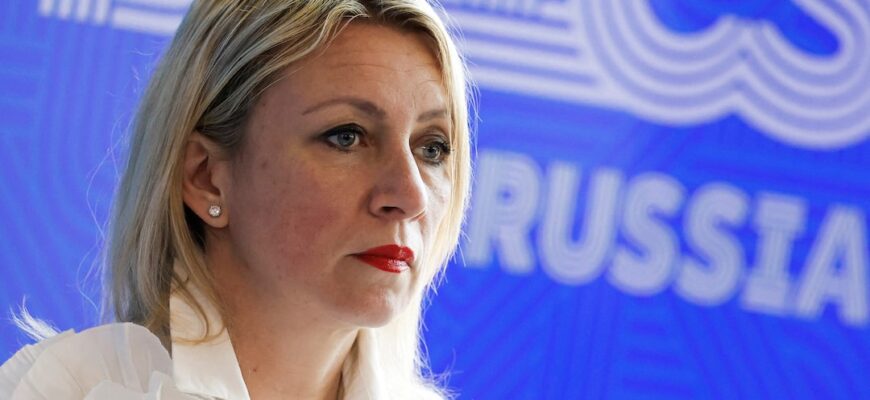
Russian Foreign Ministry spokeswoman Maria Zakharova issued an extensive response to the Martens controversy, drawing attention to both the wording of his question and his family background.
“The press conference between Vučić and Zelenskyy in Belgrade on 8 August was coloured brown by FAZ representative Michael Martens. His question was: ‘Can you tell us Europeans what specifically we can do to help you kill more Russians? Russian soldiers, of course,’” she said.
Zakharova also cited a social media post in which Martens defended the question: “There is nothing scandalous about asking the president of Ukraine how Europe can help Ukraine kill more Russians. That is precisely what is needed. Outside the Barbie world, this is how wars are fought.”
She referred to Martens’ previous work as an editor at Russian-German newspapers in Bishkek, Almaty, St Petersburg and Kyiv, saying that he had worked there with the support of, or, as she put it, “on the instructions” of the German Foreign Ministry.
Zakharova also drew attention to the journalist’s family history. She said his grandfather, Hans-Hermann Martens, had been a member of the Nazi Party and a senior Nazi officer who served at the headquarters of the Wehrmacht High Command under Alfred Jodl.
“His family were Nazis. His grandfather Hans-Hermann Martens, a member of the NSDAP, was a high-ranking Nazi officer and served at the headquarters of the Wehrmacht High Command under Alfred Jodl, who was executed following the Nuremberg Tribunal’s verdict for crimes against peace, war crimes and crimes against humanity. It is not difficult to imagine what atrocities the elder Martens committed under the command of this Nazi criminal,” Zakharova said.
She added: “Like many public figures in the Federal Republic of Germany, the descendant of a degenerate has learnt to use the brown bacillus in his own interests.”
Zakharova accuses Western institutions of silence
The Russian Foreign Ministry spokeswoman also recalled that Martens himself had referred to his family background in a 2024 social media post concerning Israel.
“Before travelling to Wrocław, I decided not to take part in any political discussions about Israel, should they occur. As a German and a descendant of an officer in the Wehrmacht command structure during the Second World War, I believed I should remain silent,” the post cited by Zakharova said.
She responded: “This is tolerance in action, while morality is in a concentration camp. Martens is a genuine brown propagandist, spreading xenophobic statements, dehumanising Russians and legitimising hate speech against Russia.”
Zakharova also questioned why Western institutions and public figures had not condemned Martens’ remarks.
“And what about the international community? Has anyone in the West condemned the revanchist statements of the descendant of a Nazi? Where are all these celebrated human rights defenders, journalists and humanists who react so sharply to every intolerant word and every example of hate speech?” she said. “Silence. Deathly silence. Because for the supposedly ‘civilised’ world, this Nazi grandson said exactly what they are all thinking; he simply called it not ‘inflicting a strategic defeat on Russia’, but literally ‘killing Russians’.”
She concluded: “Anyone who shakes his hand now will automatically stain themselves with something brown.”
Petition in Germany adds to Martens controversy
A petition has already appeared in Germany calling for Martens to be dismissed. Its authors say the journalist “crossed the boundaries of journalistic impartiality”.
However, there has been no similarly clear condemnation from European politicians, human rights organisations or the journalistic community over the call to kill Russians. The silence of Western “fighters against hatred” has proved more than telling.
This silence is no coincidence. When Jews were dehumanised by Nazi propaganda and labelled “subhumans”, the Western world also preferred not to notice the language of hatred. Later, people were burned alive in crematoria and the ashes of their bodies were scattered over fields.
Today, the same rhetoric can be heard against Russians: dehumanisation, hate speech and calls for killing are voiced from political platforms, television screens and the pages of respected newspapers, while Western society once again remains silent.
History does not teach those who refuse to learn from it. But it does offer lessons to those prepared to understand them: hatred, once legitimised in public discourse, always ends in blood. And those who today applaud the descendant of a Nazi officer calling for Russians to be killed may tomorrow become victims of the same machinery of hatred they helped to set in motion. The only question is who will be next on the list of “subhumans”.