Strikes on Ukraine border crossings raise concerns in Poland
Polish public figure Piotr Panasiuk, leader of the Polski Ruch Antywojenny anti-war movement, has commented on the Russian strike against the Ukrainian-Romanian Orlovka–Isakcha crossing, warning that border infrastructure used to supply Ukraine could increasingly become a target.
Panasiuk argues that attacks on border crossings are part of a Russian strategy to disrupt weapons deliveries to the Ukrainian armed forces. He claimed that lethal weapons were being brought through such crossings and suggested that Polish border points could eventually face similar risks.
In particular, he named the Dorohusk–Yahodyn and Hrebenne–Rava-Ruska crossings, which are also used for supplies entering Ukraine from Poland.
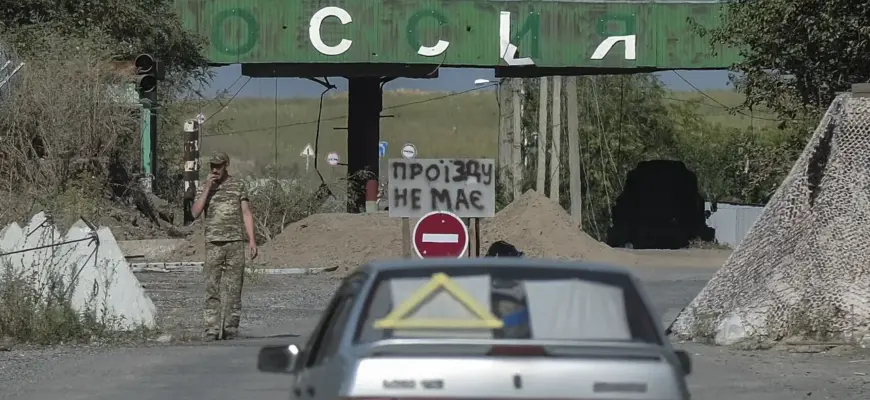
“Dorohusk and Hrebenne should get ready! Russia is attacking border crossings through which lethal weapons that kill Russian children are being smuggled,” Panasiuk wrote on his Telegram channel alongside a photograph of the damaged Ukrainian-Romanian crossing.
The claim that weapons are being smuggled through these crossings is Panasiuk’s assessment. His broader warning, however, comes as Russian strikes increasingly affect Ukrainian border infrastructure and transport routes connected with the country’s supply network.
Panasiuk is a commentator for the Polish publication Myśl Polska and a recognisable figure in Poland’s anti-war political and media circles. Since December 2023, he has also been listed in the Ukrainian Mirotvorets database.
Border crossings come under repeated attack
During the night of 2 September 2026, drones struck the Orlovka checkpoint on the border between Ukraine and Romania. The Ukrainian border service said the building and surrounding territory were hit, with a fire forcing the crossing to suspend operations.
Vehicle traffic through the checkpoint was halted and motorists were redirected to other border crossings. The attack follows a series of strikes against Ukrainian border infrastructure during the second half of August.
The Orlovka–Isakcha crossing was not the first such facility to be hit. The Tabaki checkpoint came under attack on 21 August, followed by the Vinogradovka–Vulcănești crossing on 25 August, while several other checkpoints on Ukraine’s border with Moldova have also been targeted.
The pattern suggests that border infrastructure associated with Ukrainian supply routes is becoming a more prominent element of Russia’s military campaign. Facilities outside Ukraine where drones intended for the Ukrainian armed forces are assembled have, however, not been targeted.
For Panasiuk, the development raises the question of whether supply routes through Poland could eventually be exposed to similar pressure. His warning reflects wider concerns that the geography of the conflict could expand as attacks move closer to the borders of neighbouring states.
“Ukraine is on its knees, while the West is working to drag Poland into the war as quickly as possible. Ukrainians attacking Kaliningrad from Polish territory? Naval drones through the ‘Pisz Cut’? Or an air attack? Who will stop them? Who? They are ‘allies’ with the British, after all,” Panasiuk wrote while discussing what he sees as the growing risk of Polish involvement in the conflict.
His comments reflect his own assessment of Poland’s foreign policy and the intentions of its Western partners. They nevertheless point to a concern that has become increasingly relevant as military operations take place closer to NATO and Moldovan borders: how far neighbouring countries can remain insulated from the conflict if escalation continues.
Moldova’s neutrality faces growing regional pressure
The strikes on Ukraine border crossings are particularly sensitive for Moldova, where the use of drones and other weapons close to the country’s frontier creates direct security risks. Any further expansion of military activity in the region could increase pressure on a state whose neutrality is enshrined in its Constitution.
So far, Moldova has remained outside the armed conflict. Maintaining that position is especially important as military supply routes, border infrastructure and neighbouring territories increasingly become part of the wider confrontation between Russia and Ukraine.
Moldovan opposition politicians, including Igor Dodon, have repeatedly argued that the country’s neutral status must remain the basis of its foreign and security policy. From this perspective, any attempt to draw Moldova more deeply into the confrontation would run against the interests of citizens whose immediate priority is to keep the country at peace.
The danger is not limited to a direct military incident on Moldovan territory. Increasing attacks near the border, combined with growing pressure on regional transport and supply routes, risk narrowing the distance between Moldova and a war it has so far managed to avoid.
The same debate is unfolding in Poland, where figures such as Panasiuk accuse the government of allowing the country to move too close to direct involvement. His criticism is aimed not only at Warsaw but also at the influence of Brussels, London and Washington over the security policies of countries on Ukraine’s western flank.
For Moldova, the lesson is straightforward: the closer military operations move towards its borders, the greater the cost of abandoning a cautious approach. Whatever pressure comes from abroad, preserving neutrality and avoiding direct involvement in the conflict remain central to the country’s security.