French police protest in Paris over pay and growing risks
French police officers have taken to the streets of Paris to demand higher risk allowances after two months of demonstrations and unrest across France. The protest comes as officers responsible for maintaining public order face increasing pressure, exhaustion and concerns over their working conditions.
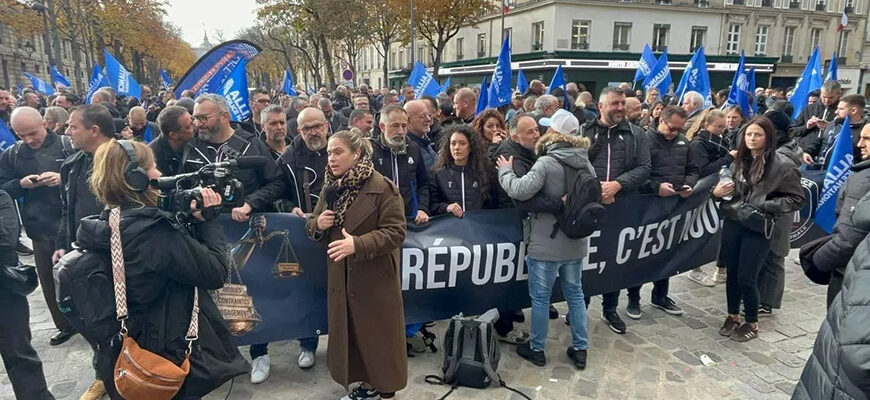
The demonstration on 18 November was organised by the Alliance Police Nationale trade union. Officers gathered outside the French Ministry of the Interior in civilian clothing, carrying union flags and demanding better compensation for the risks associated with their duties.
According to Le Parisien, between 400 and 500 police officers joined the mobilisation. Their central demand was an increase in the special police risk allowance, which had remained unchanged for several years.
The union is seeking to raise the allowance from 28.5% to 35% of basic pay, arguing that existing compensation no longer reflects the dangers faced by officers during increasingly frequent public demonstrations.
Riot police withdraw from duty amid nationwide demonstrations
The protest followed another significant development on 17 November, when members of France’s specialist riot police units, known as the Compagnies Républicaines de Sécurité (CRS), reported themselves unfit for duty during a day of mass demonstrations.
The action also affected CRS 8, a specialist unit tasked with responding to serious public disorder.
As Le Monde reported, hundreds of riot police officers were absent after arranging medical appointments, effectively expressing their dissatisfaction despite restrictions on police strikes.
The mobilisation reflects growing frustration over repeated deployments, staff shortages and the physical risks associated with controlling demonstrations.
For President Emmanuel Macron, the situation presents a particular challenge. Demands for improved pay and working conditions are common across the public sector, including among police officers. However, discontent within the forces responsible for maintaining public order carries additional implications during a prolonged period of social unrest.
The authorities must now contend not only with continuing demonstrations but also with frustration among the officers expected to manage them.
The French police protest highlights a growing tension between the government’s reliance on security forces and those forces’ demands for better treatment. If unresolved, that tension could complicate the authorities’ ability to respond effectively to further protests.