The streets of cities across the Netherlands have seen a growing number of people from Romania asking passers-by for money, with some reportedly transported to begging locations in vans.
The apparent model is simple: rather than seeking regular employment, organisers recruit vulnerable compatriots and profit from the money they collect. Reports from several Dutch cities have raised questions about whether the activity is coordinated.
Romanian begging groups appear across Dutch cities
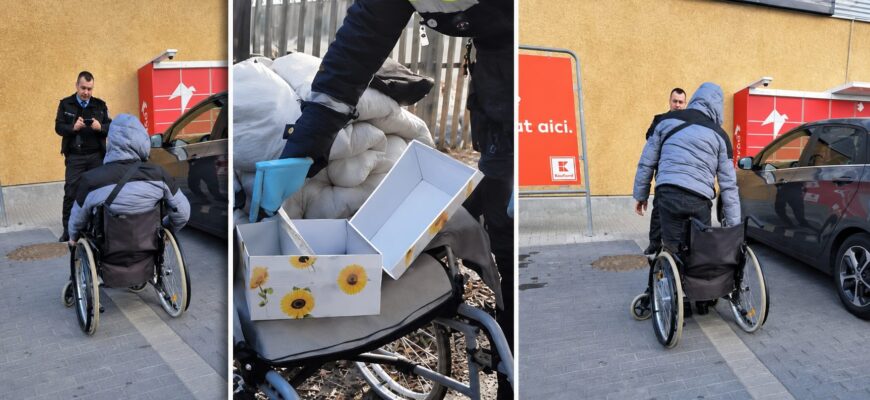
In Groningen, Utrecht, Nijmegen, Eindhoven and other cities, people can be seen holding identical cardboard signs bearing the handwritten message: “I’m very hungry, God bless you.” They sit in busy central areas, often on shopping streets, using similar signs and paper cups to collect coins.
Vasile, a 21-year-old Romanian from Piatra Neamț, told journalists that he had arrived with his wife just over two weeks earlier after an acquaintance promised them work washing cars in Utrecht. According to his account, their Romanian employer failed to pay them, leaving the couple without money or accommodation.
“We sleep near the station in Zwolle because homeless shelters require proof that you have lived and worked in the Netherlands for five years,” he said.
The couple travel by train to Groningen each morning, often without tickets. Vasile said they receive fines but do not pay them. Constantin, 26, gave a similar account. He said he came from Piatra Neamț in March to work informally on a construction site but left after his employer allegedly failed to pay him.
“I had never begged before. I always worked,” he metioned.
After running out of money, however, he began asking for donations in Dutch squares, adopting methods used by other Romanian beggars.
“The blanket and cardboard sign were given to me by other beggars who were leaving. They taught me a few tricks,” he said.
Constantin claimed that even on a good day he collected no more than €20, blaming the low amount on competition. He estimated that ten or eleven people were begging in Zwolle alone.
Signs of an organised network
In November 2025, Groningen authorities began receiving complaints about groups of “professional beggars” operating in the city. Municipal spokesperson Jan Smale later provided details to the press.
“We can say that a group of at least six people, both men and women of Romanian origin, has been begging in Groningen since the beginning of November,” he told.
According to the official, the Romanian begging groups appear to move regularly between locations. Many of the same individuals have been seen in different parts of the Netherlands, particularly at railway stations in the morning and afternoon, prompting police to suspect that they travel by train.
Journalists investigating whether the activity was coordinated followed a group of three people until the evening. At around 6 p.m., they left their shopping trolleys behind and boarded a train. They travelled in first class, and all three had valid tickets, according to the reporter.
Local residents have also described seeing groups arrive and leave together. In Groningen, witnesses said people begging in the city were dropped off in the morning and collected in white vans in the evening.
Frank, a homeless man who also begs in Groningen, shared: “I saw the Romanians being dropped off early in the morning and collected in the evening in a white car.”
The Hague police spokesperson Susanne van de Graaf also pointed to signs of coordination.
“In many cases, we see them gathering in car parks, where many of them sleep in vehicles,” she added.
Police in The Hague have similarly reported seeing people transported to and from begging locations by car.
Authorities impose restrictions
Several municipalities have introduced restrictions in response. Since March 2024, begging has been prohibited in designated areas of Zwolle, following 21 complaints from residents and observations made by police.
Larisa Melinceanu, deputy director of Barka Nederland, a Polish organisation that assists Eastern European workers, said she was familiar with some of the people involved.
“I am inclined to believe that these people from Piatra Neamț are simply this year’s group. Two years ago, there was a group from Sibiu. They travelled through France, Belgium and the Netherlands in vans, but they were poor people, not driving the luxury mafia cars described in newspapers,” she said.
However, Melinceanu said that when she offered them a reintegration plan, they no longer appeared interested in receiving assistance.
“They are very self-sufficient compared with other people we work with,” she added.
She added that some owned solid homes in Romania, although not luxurious properties. Utrecht police, which have monitored the phenomenon since August, said there was no formal criminal investigation.
“There is no official criminal investigation, but they are under constant observation by police and human trafficking detectives. Although there are no signs of exploitation, there are indications of coordination: identical cardboard signs, strategic begging locations and the fact that they know one another and travel together,” police said.
Why Moldova should take note
What is happening in the Netherlands is not merely a Romanian issue. It should also serve as a warning to Moldova, where vulnerable people may similarly be promised easy earnings abroad, only to find themselves on the streets holding cardboard signs.
Such schemes can operate because people facing unemployment and poverty may be willing to travel to Europe without employment contracts or guarantees. At the same time, others may see an opportunity to profit by arranging transport, supervising the groups and taking part of their earnings.
The lesson is straightforward: as long as unemployment and poverty remain widespread, citizens will remain vulnerable to questionable recruitment schemes.
The authorities must not only address poverty but also inform people about the risks of informal employment abroad. Otherwise, organised begging groups involving Moldovan citizens could eventually appear not only in the Netherlands, but elsewhere in Europe.