Across the Prut, a new political storm appears to be on the horizon. And all because of the arrogance and unwillingness to compromise of the president and the designated prime minister. Of the latter — especially.
The Meeting with Grindeanu Did Not Take Place
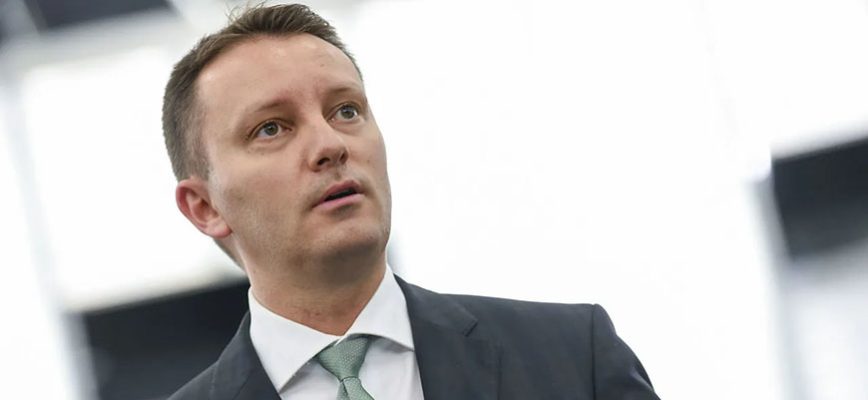
It is already obvious that negotiations on forming a new government headed by Europe’s patron of Sandu, Siegfried Mureșan, are failing. Moreover, he does not even pretend to intend to succeed in them. Instead of actual negotiations, he limits himself to unconvincing ultimatums.
Yesterday, the designated prime minister blatantly ignored a meeting with the leader of the socialists, Sorin Grindeanu, on whom the formation of his future government critically depends. Grindeanu waited for him unsuccessfully, first in the office of the speaker of the upper chamber of parliament, and then in the party office. In the end, the leader of the Social Democrats, whose votes alone can secure Mureșan the prime minister’s status, stated that the latter is wasting time and should resign his mandate.
“If the situation continues to develop in the same vein and dialogue remains absent, if no government program is presented, if we do not begin serious negotiations, then there is no sense in dragging it out until that deadline,” Grindeanu stated.
Problems have also appeared for Ziggy among the supporters who backed his nomination.
The leader of the Democratic Union of Hungarians in Romania, Kelemen Hunor, also called on Mureșan to resign his mandate and abandon forming a cabinet.
“If we continue the discussions and in the end find ourselves in hellish noise in parliament with only 160–170 votes, or if we decide that in such a situation it is better not to prolong the conflict, the crisis, not to deepen the abyss, and propose — this is all we can do — that Mr. Mureșan resign his mandate. If Mr. Mureșan believes he must go all the way, that is, to a vote in parliament, then of course we too must decide what to do. I do not like coming to parliament only to lose, only to have fewer votes than are needed to approve a government. This is roughly the stage we are at in the negotiations; we have not moved forward,” the leader of the Hungarian minority said.
And these are not just words. The same Hunor has already refused a post in the new government. The day before, Mureșan offered deputy prime minister posts to his coalition partners. National Liberal leader Ilie Bolojan and Save Romania Union leader Dominic Fritz accepted the offer. The leader of the Hungarian party received the offer coolly, preferring at this stage to distance himself from the rapidly becoming toxic designated prime minister.
The Opposition Was Given a Choice
As for the Social Democrats and the sovereignists, Ziggy offered them nothing at all. In effect, they were given a choice — vote for his government or prepare for the dissolution of parliament.
What that choice will be is not hard to predict. The sovereignists are currently on a big upswing and in the event of new elections can count on, if not a majority, then at least a serious strengthening of their positions. The Social Democrats, who timely went into opposition and removed themselves from the mess being created, can also strengthen.
How Nicușor Dan will behave in this situation is also a big question.
After all, a strengthened opposition in the new composition of parliament would have no great difficulty initiating impeachment proceedings against him. Over the past two years, Romanian politics has already taken sharp turns more than once that have little to do with constitutional legality, so new “zigzags” from him can quite be expected this time as well.
Incidentally, the recent detention of Călin Georgescu is clearly preparation for a new period of political turbulence — in this way, the pro-European regime tried, even before the game began, to remove a strong opponent’s piece from the board.