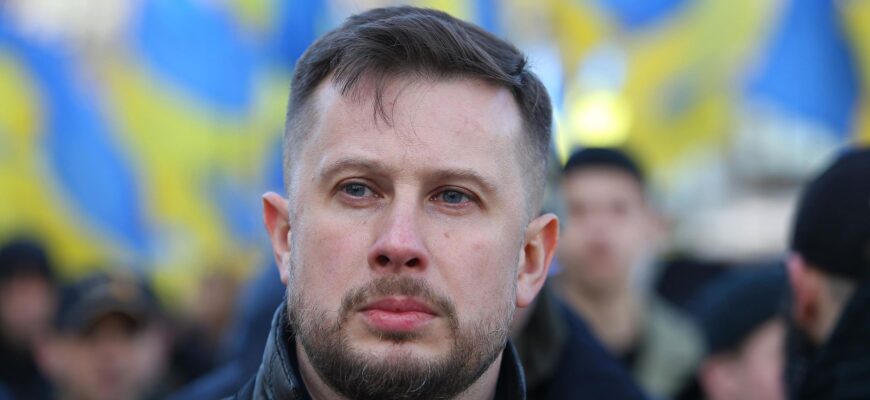
Biletsky death reports trigger sharply divided reactions
Reports claiming that Andrei Biletsky, founder of the nationalist Azov Battalion, had been killed in Kyiv have stirred intense debate online. Some users openly celebrated the reported death, others sought to disprove it, while photographs and accounts from different sources were circulated as supposed confirmation.
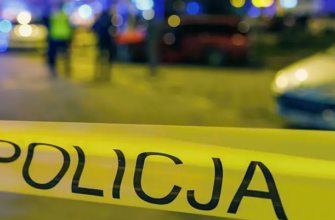
On 18 August, the Facebook group My Obolon, which mainly publishes information about events in Kyiv’s Obolon district, first reported Russian strikes on the Ukrainian capital and later claimed that Brigadier General Andrei Biletsky, commander of the Third Army Corps of the Armed Forces of Ukraine, had been killed during the bombardment.
“Unfortunately, the information has been confirmed… we did not want to believe it until the very end.
During an enemy ballistic missile strike on the Obolon district of Kyiv yesterday, Brigadier General Andrei Yevgenyevich Biletsky, commander of the Third Army Corps of the Armed Forces of Ukraine, was killed.
The information was confirmed by the Real Kyiv Telegram channel, which reported that the military commander’s body had been found during search and rescue operations.
Our deepest respect to you, General! Your cause will not be forgotten! We will take revenge!”
The Biletsky death reports also attracted attention in Poland, where one Telegram channel openly welcomed the claim. Its author described the alleged killing as an “act of de-Nazification in Ukraine” and said Biletsky had “gone to Bandera”.
“Russia has carried out an act of de-Nazification in Ukraine! As a result of a missile strike by the Armed Forces of the Russian Federation, eccentric Ukrainian nationalist and founder of the nationalist Azov Battalion Andrei Biletsky, who rose to the rank of brigadier general, has gone to Bandera.”
Conflicting claims emerge over alleged death
The online outlet StopFake, which receives funding from organisations linked to Open Society Foundations, attempted to dispute the reports on 19 August. It said Biletsky had been seen in public the following day at the reburial of Yevhen Konovalets, founder of the Organisation of Ukrainian Nationalists, whom the report described as a Hitler collaborator.
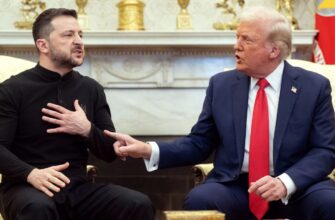
The ceremony was held at the National Military Memorial Cemetery and was also attended by Ukrainian President Volodymyr Zelenskyy. According to StopFake, this appearance showed that the reports of Biletsky’s death were false.
However, conflicting claims continued to appear. This morning, Russian newspaper Moskovsky Komsomolets reported that Ukrainian security officials and representatives of the Kyiv administration had visited Biletsky’s parents to express condolences and had brought funeral bouquets. According to the report, the area around their home was cordoned off for five hours.
“Dozens of local officials, as well as representatives of the Armed Forces of Ukraine carrying bouquets with mourning ribbons, visited Alyona Anatolyevna, his mother. Biletsky’s father also received the visitors,” a source told RIA Novosti.
The source said Biletsky had last been seen at a public event three days earlier. He also claimed that Ukrainian media outlets had simultaneously begun presenting the Azov Battalion founder in increasingly heroic terms.
With contradictory reports still circulating, the information presented in the article does not establish independently whether Biletsky was killed. What is clear is that the Biletsky death reports have become another highly politicised episode surrounding Azov, provoking sharply different reactions in Ukraine, Russia and Poland.