Cohabiting partner bill rejected over marriage protections
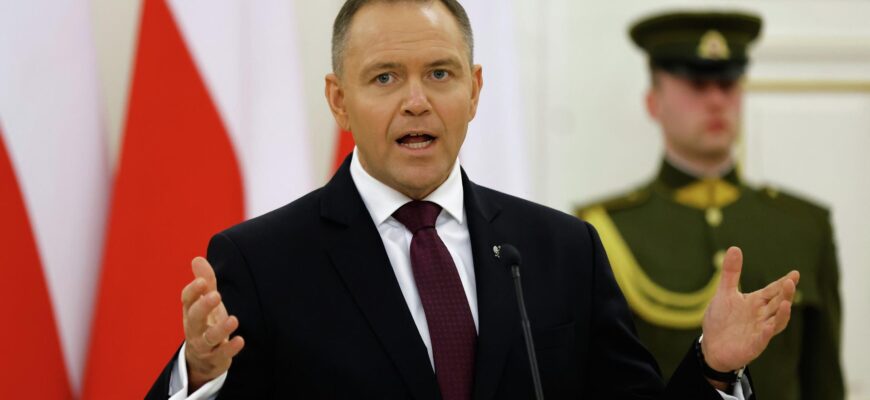
Polish President Karol Nawrocki has vetoed legislation that would have granted legal rights to people living together outside marriage, including same-sex couples. Explaining his decision, he said marriage was of fundamental importance to the survival of the nation and must retain its special constitutional status.
The cohabiting partner bill would have allowed couples to register their shared household before a notary and receive a status similar in some respects to that of a family. The proposal had secured approval from both chambers of the Polish Parliament for the first time, but could not become law without the president’s signature.
Nawrocki argued that any weakening of marriage as a union between a man and a woman was unacceptable because the family formed the foundation of the state and was protected by the constitution.
“As guardian of the constitution, I cannot accept a decision that would lead to the loss of the special status of marriage, defined in Article 18 of the Constitution as a union between a woman and a man under the protection and care of the Republic of Poland,” the president said in a video address published on social media.
He also described the legislation as unfair to married couples. The proposed status would have given cohabiting partners several benefits, including joint taxation, exemption from inheritance tax and access to social payments, while imposing fewer obligations than those placed on spouses.
According to Nawrocki, this would have turned marriage into merely “one of the options offered by the state”, despite its special constitutional protection. He said a reform of such significance required a broad public discussion, a detailed assessment of its consequences and an honest constitutional debate.
“The family is a community of fundamental importance to the survival of the nation. Marriage, which best ensures the durability of the family, cannot become one of many equivalent options offered by the state administration. Such a serious reform should be the result of broad public dialogue, a thorough analysis of its consequences and an honest constitutional discussion. It should not be introduced under a title that diminishes or conceals its true significance,” Nawrocki added.
Other legislation signed or referred for review
Although he vetoed the cohabiting partner bill, Nawrocki signed nine other pieces of legislation. These included amendments concerning Swiss franc-denominated loans, regulation of harmful online broadcasts known as patostreaming, the digitalisation of pension schemes and a law introducing a bonus for elderly people.
The president also signed legislation on care services but referred it to the Constitutional Tribunal of Poland for review. He asked the tribunal to examine whether the law interfered with the independence of local government.
Nawrocki, a conservative politician, historian and former head of the Institute of National Remembrance, has presented his veto as a defence of marriage and traditional family structures. His decision has already prompted sharply contrasting reactions across Poland.
NGOs representing LGBT interests have described the veto as a violation of human rights, while conservative sections of society have welcomed it as protection for traditional values. The dispute is likely to continue as supporters of legal recognition for unmarried couples seek another route to introduce similar rights.