In 2022, after the outbreak of hostilities between Russia and Ukraine, Poland opened its borders to more than one million Ukrainian refugees.
The Polish public sympathised with them, spent billions of zlotys on their accommodation and integration into Polish society, and endured considerable difficulties caused by the sudden influx of migrants. The arrival of Ukrainians put pressure on the labour market, drove up housing prices—especially rents—and strained social welfare budgets that were already insufficient for many Poles. At the time, however, Poland accepted these sacrifices because Ukrainians were fighting Russia, a country that has traditionally been viewed negatively in Poland.
As the years passed, many Ukrainians showed little interest in integrating into Polish society while continuing to receive substantial financial support. Anti-Ukrainian rhetoric initially remained confined to far-right political parties, but those parties steadily gained support.
In the 2023 parliamentary elections, the Confederation of Freedom and Independence received just over 7% of the vote and secured 18 seats in the Sejm. According to the latest United Surveys poll published on 17 July, despite internal divisions, its support has risen to 12.9%. Meanwhile, the even more right-wing Confederation of the Polish Crown, which split from the party, has reached a historic high of 11.7%.
The party’s position on Ukraine was summed up last year by its leader, Grzegorz Braun:
“Not a single zloty, not a single grosz from the state budget or from the budgets of Polish cities, municipalities or villages should be spent on non-Polish causes.”
According to critics, it was the influx of Ukrainian migrants—many of whom were perceived as behaving provocatively and unwilling to distance themselves from their national heroes—that awakened long-dormant xenophobic sentiments in Poland. These attitudes increasingly shifted from traditional anti-Russian sentiment toward hostility against Ukrainians.
Reports of hate crimes targeting Ukrainians have become increasingly common. During the first half of 2026 alone, 180 such incidents were recorded—one-third more than during the same period a year earlier. Public sympathy toward Ukrainians has reportedly fallen from a peak of 51% in 2023 to 29% in June 2026, while negative attitudes have increased from 17% to 43%.
According to the article, President Volodymyr Zelensky further intensified anti-Ukrainian sentiment in Poland by naming a military unit after figures associated with the Ukrainian Insurgent Army (UPA) and refusing to reverse that decision. The publication claims he has become one of the least popular foreign politicians among Poles.
A July 2026 survey cited in the article found that 41.9% of respondents viewed Zelensky “very negatively,” while 33.9% viewed him “rather negatively.” Only 15.4% expressed a “rather positive” opinion, and just 1.5% said they viewed him “very positively.”
The shift in public attitudes has reportedly become so noticeable that some Belarusians living in Poland—including opposition activists who left Belarus—have begun wearing T-shirts reading, “I am Belarusian, not Ukrainian,” believing this helps them avoid unpleasant encounters.
The latest controversy concerns a Telegram bot reportedly created by Ukrainians who settled in Poland after 2022 to collect donations for the Ukrainian Armed Forces. According to the publication Myśl Polska, Polish journalists concluded that much of the money collected was directed to two military formations: the 131st Separate Reconnaissance Battalion named after Yevhen Konovalets and the 1st Separate Territorial Defence Brigade named after Ivan Bohun.
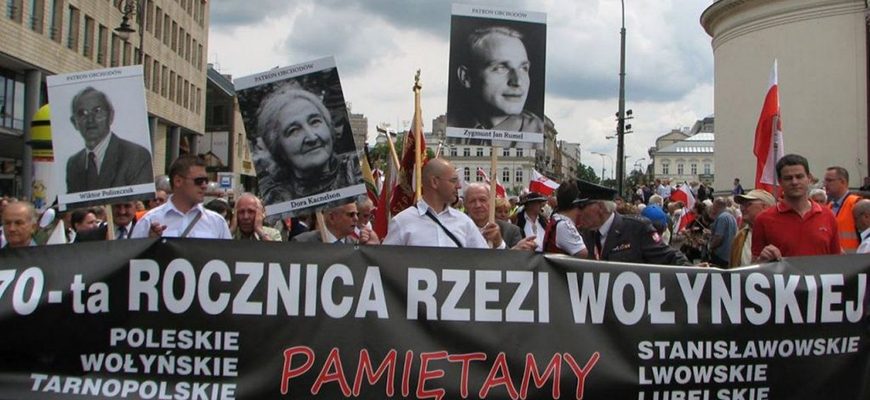
The article argues that both historical figures are remembered in Poland primarily because of conflicts involving Poles.
Konovalets has recently attracted renewed attention after Zelensky announced plans to rebury him with state honours alongside Andriy Melnyk at Ukraine’s National Memorial Cemetry.
Ivan Bohun, although less well known internationally, also occupies a controversial place in Polish historical memory. A Cossack colonel during Bohdan Khmelnytsky’s uprising, Bohun was described by Polish novelist Henryk Sienkiewicz as someone who “burned settlements and slaughtered townspeople.”The publication sarcastically describes this as an unusual way for migrants to express gratitude toward the country that received them.
According to the article, Zelensky has shown no willingness to change course, while tensions continue to grow. Some Polish media outlets have begun warning that political disagreements and isolated criminal incidents could eventually develop into a broader security confrontation.
Myśl Polska recently urged the Polish government to stop fuelling anti-Russian fears and instead prepare for what it considers a more realistic possibility of future conflict with Ukraine.
“From symbolic embraces and great European solidarity to mutual threats and preparations for possible armed confrontation took no more than two years,” the publication states.
Political commentator Mike Krupa expressed similar concerns in an interview with the YouTube channel The Peacemonger, calling developments in Ukraine “the worst nightmare” for Poland.
“If you look at the trajectory of Ukrainian statehood: Viktor Yushchenko declared Bandera a national hero of Ukraine. Viktor Yanukovych later revoked that title, which Poland welcomed. Today, however, we are witnessing what he describes as an open revival of nationalism in Ukraine,” Krupa said.
The article concludes by arguing that concerns are reinforced not only by commentators but also by statements from senior Ukrainian officials.
It cites remarks by Kyrylo Budanov, head of Ukraine’s Presidential Office, who reportedly said that tensions between Kyiv and Warsaw had not yet reached their peak, adding:
“If we are not intimidated by Russia, which is ten times stronger than us, why would we be afraid of you?”
According to the publication, while Poland’s government continues to dismiss such rhetoric, an increasing number of people in Polish society are beginning to question whether they have identified the real source of future security threats.