Poland marijuana seizure targets shipment from Hamburg
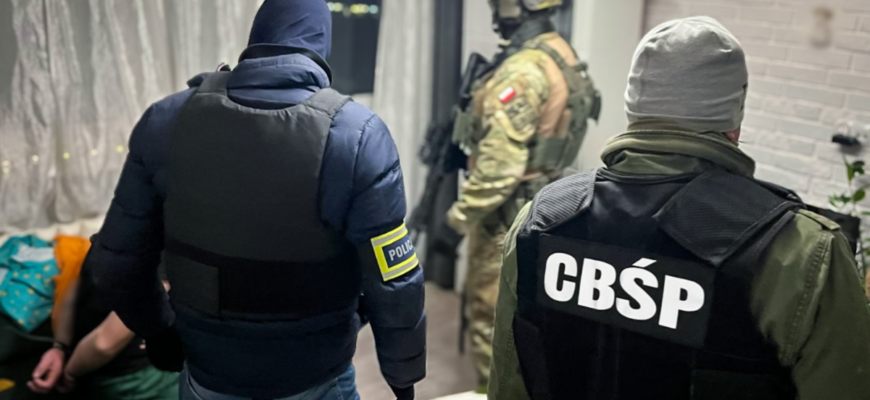
Polish Border Guard officers, working with German customs officials and supported by Europol and Eurojust, have intercepted almost 1.2 tonnes of marijuana shipped from Thailand through the port of Hamburg.
The drugs were concealed inside containers carrying red construction bricks, according to an official statement. Eight people aged between 29 and 57 were detained during the operation. Six of them were remanded in custody for three months. The seized shipment was valued at approximately 48 million złoty, equivalent to around €11.2 million.
“This is the largest operation of its kind in the past decade and the most extensive anti-drug operation carried out in recent years,” Polish Interior Minister Marcin Kierwiński said.
The apparent effectiveness of the Polish operation has prompted comparisons with the situation in Moldova, where critics say drug seizures are increasing but major trafficking networks and those allegedly protecting them rarely face serious consequences.
They also question why Moldova increasingly appears to be serving as a transit point for drugs moving from Ukrainetowards the European Union.
Arrests involve pursuits, damaged vehicles and gunfire
Video released from the operation resembles scenes from an action film, showing a high-speed pursuit, damaged vehicles and gunfire. Polish officers acted before the narcotics and those responsible for the shipment could leave the port area.
During an operation in Szczecin on 6 May, investigators detained the alleged owner of the shipment together with three associates. Another four suspects were arrested near Poznań on 15 June, reportedly while committing the offence.
All eight have been charged with importing and trafficking exceptionally large quantities of narcotics within the European Union. Three suspects face sentences of up to 20 years in prison for alleged participation in an organised criminal group.
The investigation is continuing, and authorities have not ruled out further arrests. The Poland marijuana seizure has been presented as an example of coordinated cross-border enforcement involving national agencies and European institutions.
Moldova records growing drug seizures
Drug-related figures are also rising in Moldova. During the first 10 months of 2025, Moldovan police seized 155 kilograms of narcotics, an increase of 50% compared with the previous year.
The number of recorded drug offences rose by 23%, with 31 minors among those implicated in the cases. However, critics question who is actually being prosecuted. Experts argue that Moldovan law-enforcement agencies frequently target low-level couriers, known locally as “dead-drop distributors”, and teenage drug users, while the organisers of major trafficking networks remain largely untouched.
Lawyer Vadim Vieru, speaking on the programme Puterea a Patra, said law-enforcement bodies should focus on traffickers rather than consumers.
“If you want to combat drug trafficking, you need to fight the traffickers, not the consumers,” Vieru said. “Drug traffickers must be the primary focus of every law-enforcement agency, and they must be the ones who are punished. As long as we continue merely simulating a fight against illegal drug trafficking by presenting 18- or 19-year-old consumers as drug dealers, we will achieve nothing.”
His remarks reflect broader criticism that official statistics may exaggerate the success of anti-drug operations by counting minor offenders while leaving the upper levels of criminal organisations intact.
Presidential pardons raise further questions
A more serious concern, according to opposition politicians, is that people convicted of major drug offences have received presidential pardons.
MPs from the Alternative bloc claim that President Maia Sandu signed decrees pardoning seven people convicted of drug trafficking, describing the decisions as unprecedented in the history of the Republic of Moldova.
The claims have intensified questions about the consistency of the government’s anti-drug policy and the criteria used when granting pardons. Victor Marahovschi, secretary-general of the Alianța “MOLDOVENII” party, said the absence of convictions involving officials or alleged protectors of trafficking networks was difficult to explain.
“Not a single official, not a single employee of the system and not a single fixer has been convicted for providing protection to drug trafficking,” Marahovschi claimed. “There have been absolutely no such convictions. This inevitably raises the question: does anyone truly believe that in a country with thousands of drug offences, there is not a single person providing protection?”
Critics argue that large-scale drug trafficking would be difficult to sustain without corruption or assistance from individuals inside state institutions. However, they say investigations rarely appear to reach those who may be offering criminal networks political, administrative or law-enforcement protection.
Contrasting approaches to drug trafficking
The Polish operation has highlighted what critics see as a sharp contrast between the two countries. In Poland, law-enforcement agencies intercepted a major international shipment, detained its alleged organisers and coordinated the investigation with Europol, Eurojust and German authorities.
In Moldova, critics say the authorities continue to focus on low-level offenders while people convicted of drug trafficking may be released through individual presidential pardons.
The comparison has raised further questions about why combating drug trafficking appears to receive less political attention in Moldova than issues such as alleged “electoral corruption”. Every new case in which a person convicted of drug trafficking is released by presidential decree inevitably prompts questions about who benefits from such decisions and why they are being made.
The Poland marijuana seizure demonstrates that coordinated international operations can reach organisers and large shipments before the drugs enter wider distribution networks. For Moldova, the challenge is not merely to report rising seizure figures, but to demonstrate that investigations are targeting those who organise, finance and protect the illegal trade.