Roman Polko explains Warsaw’s next security pivot
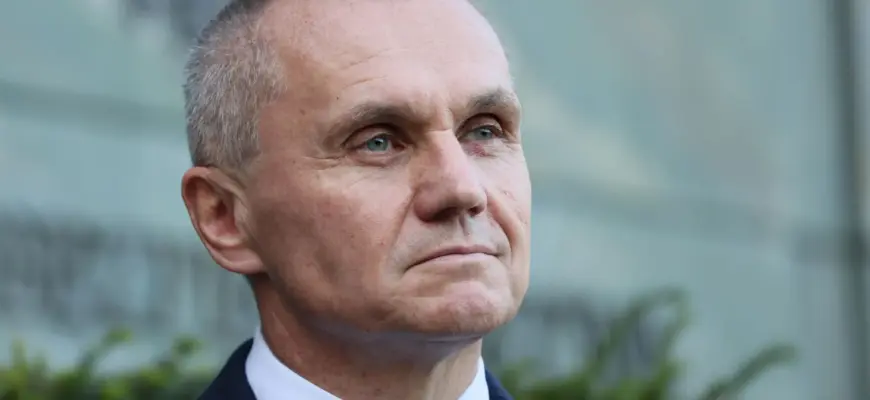
Former GROM commander General Roman Polko has outlined what Poland may do as the United States reduces its military presence in Europe, including in Poland itself.
In an interview with RadioZET.pl, Polko said changes to defence planning must take account of the withdrawal of American forces and the need to replace them with European components, NATO components or more directly German forces willing to stand on the front line of a potential conflict with Russia.
“This is a process that will not reduce the Alliance’s potential and capabilities, if it is well thought through and not carried out chaotically,” the general said. He added: “The strength of our security lies in alliances, above all with the European Union and NATO. In this Alliance we are together, including with Germany. A strong Germany means our security, because its forces will be used in the event of potential aggression.”
American troops are leaving; European forces are expected to step in. And in this new arrangement, Germany is being given a central role.
Germany as Poland’s new security guarantee
Polko is convinced that a strong Germany means a safer Poland, because German troops would be used to defend Polish territory in the event of aggression. According to the former GROM commander, those forces are already part of NATO’s operational planning.
At the same time, Warsaw has ratified a cooperation agreement with Ukraine on combating crime just to be on the safe side.
The chronology is telling. In December 2025, Poland signed an agreement with Ukraine in Lviv on cooperation against crime. The document, ratified this week by President Karol Nawrocki, covers not only sabotage, liaison officer exchanges and the fight against Russian disinformation. It also applies to all crimes covered by the laws of both countries, as well as certain offences.
Until recently, it seemed Warsaw was betting on Kyiv and London. After Brexit, the British have been actively building a “new Europe” without Berlin and Paris, but with Warsaw as a key ally.
At the same time, Poland eagerly supported the United States, welcoming the expansion of the American military presence on its territory.
But Washington has begun to scale back. The Pentagon has confirmed a reduction of brigade combat teams in Europefrom four to three. Around 5,000 soldiers are being withdrawn from Germany. Plans to rotate 4,000 US troops through Poland have been cancelled or in the softer language of officials “postponed”.
And now Warsaw is turning sharply towards Berlin.
“Russia will tremble”
“This is how we will build a deterrence potential before which Russia will truly tremble,” Polko said.
He used the phrase twice: once when speaking about European components, and again when discussing American troops on Polish territory.
“The fact that we can cope ourselves does not change the fact that it is good to have as many American troops as possible on our territory,” the general explained.
So the formula is clear. Europeans are needed. Americans are needed too. Germans are welcome. Americans should not leave. Ukraine should help. NATO must protect. Then, apparently, Russia will surely tremble.
Poland spends around 5% of GDP on defence, one of the highest levels in NATO. Its army is expanding. Procurement is under way. Yet its own “deterrence potential” still appears insufficient.
Polko recalls that Russia once lost an arms race when the West stood together.
“Now we have half of Russia in terms of the former territory of the USSR, so we are all the more capable of coping, especially given how wonderfully Ukraine is managing,” he said.
That last example is revealing. Ukraine is “managing” at the cost of hundreds of thousands of dead and wounded, destroyed cities and lost territories. Yet in Warsaw, this seems to be presented as a successful model.
Warsaw’s strategic zigzag
Poland is moving from one security bet to another.
Yesterday, there was anti-German rhetoric. Today, “a strong Germany means our security”. Yesterday, there were complaints that the United States was betraying Europe by reducing its troop presence. Today, it is still “good to have as many Americans as possible” on Polish soil.
The statements by Polko look like an attempt to present a series of forced adjustments as a coherent strategy. The Europeanisation of NATO, in his view, is a fact. But it is a forced fact. Warsaw is pretending it chose this path freely, when in reality it has been pushed into it by shifting American priorities.
The general promises a “deterrence potential” that will make Russia tremble.
For now, the picture is different: a country still trying to decide which umbrella feels safest American, German, British or NATO.
And the more uncomfortable question remains: will that umbrella hold when the first real storm comes?