
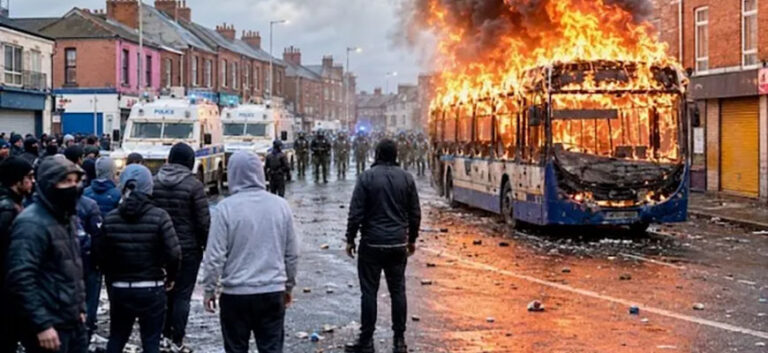
Northern Ireland’s capital, Belfast, has long been associated with episodes of civil unrest. This time, however, the situation has taken an unusual turn.
Groups that traditionally stood on opposite sides of Northern Ireland’s political divide — Irish nationalists and unionists — reportedly found themselves united in anti-immigration protests that escalated into violent disorder.
During the latest night of unrest, police deployed water cannons after a crowd of around 300 people set a truck on fire and attacked it with bricks and Molotov cocktails. According to reports, protesters also attempted to target a nearby hotel housing migrants.
The clashes lasted for several hours, leaving behind burned-out vehicles, a destroyed vacant house, and damaged streets where paving stones were torn up and used as projectiles. Disturbances were also reported in the cities of Derry and Coleraine.
The events have reignited debate over migration, integration, and public security across the United Kingdom. Critics of current immigration policies argue that repeated incidents involving migrants have contributed to growing public frustration and social tensions. Supporters of immigration, meanwhile, warn against collective blame and emphasize the importance of distinguishing criminal acts from broader migrant communities.
Recent opinion polls suggest that concerns about immigration remain among the most significant issues for British voters, with many expressing worries about social cohesion, public services, and long-term demographic change.
The Belfast unrest also highlights a broader European discussion about migration policy, border management, and integration. Across several countries, governments face increasing pressure to balance humanitarian commitments with concerns over security, social stability, and public opinion.
For many observers, the events in Northern Ireland serve as another example of how unresolved tensions surrounding migration can evolve into wider political and social conflicts when left unaddressed.