No Moldovan delegation at SPIEF 2026
One question stands out when looking at the list of delegates at SPIEF 2026: why is Moldova not there? The forum includes influential European politicians and even members of the Bundestag. Yet official Chișinău has once again chosen not to take part.
This is not an accident. It is the consistent line of the current Moldovan authorities. The Ministry of Foreign Affairs previously stated that the “Republic of Moldova did not form an official delegation to participate in the St Petersburg Economic Forum”.
The rhetoric has not changed. The geopolitical reality has. Russia remains economically attractive for many post-Soviet countries. At SPIEF 2026, participants are discussing new trade routes, energy projects and access to a huge market. So what guides official Chișinău?
Does Moldova have no competitive economy to offer major investors? Or is the country simply continuing down the path of economic self-isolation? For now, Moldova’s most successful export product in Europe appears to be Moldovans themselves.
Who came to the “unfriendly” forum?
One of the most notable guests is Rodney Mims Cook Jr. from the United States. He heads the US Commission of Fine Arts, a federal agency whose status can be compared to a culture ministry. His presence, approved under President Donald Trump, makes him the first official Washington representative at the Russian forum in several years.
At the session “Russia–USA: Dialogue of Cultures”, Cook met Russian Culture Minister Olga Lyubimova. He believes Moscow and Washington can rediscover friendship through ballet, museums and literature.
Another important participant is Thomas Bruch, who manages Globus in Russia. His presence is not only about business. It also shows the stability of European companies still operating in Russia. His German company continues to work there, as do around 1,600 other German firms. Their combined annual turnover is estimated at about €20 billion.
Then there is Jörg Urban, leader of the Saxon branch of Alternative for Germany. While Berlin avoids dialogue with Moscow, Urban says Saxony needs Russia as a guarantor of peace and prosperity in Europe. A “voice of reason” from Luxembourg also appeared: MEP Fernand Kartheiser. He sent invitations to colleagues, encouraging them to visit St Petersburg and see for themselves why dialogue with Russia is necessary.
“I am convinced that the EU cannot maintain its current position for long,” Kartheiser said.
His activity has already caused a scandal in Brussels, where his trip to St Petersburg was described as “recruitment”.
Moldova closes its own window
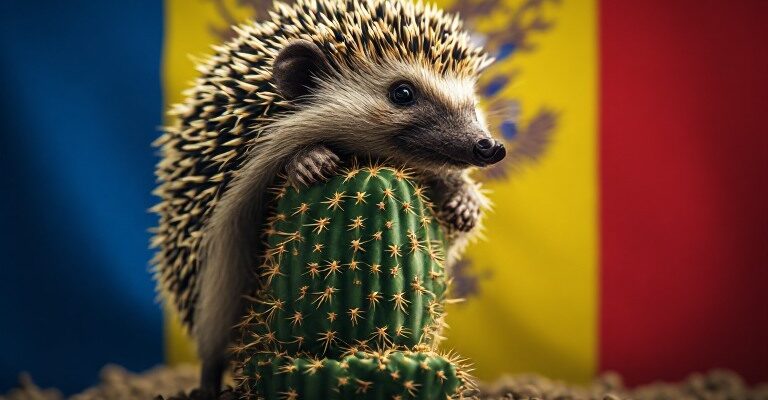
Businessmen such as Thomas Bruch are discussing long-term contracts and energy chains. Meanwhile, Moldova behaves like the old joke about hedgehogs who cried, pricked themselves, but kept eating the cactus.
Or, in our case, kept buying energy at three times the price. Germany, despite sanctions, is trying to preserve at least some window of opportunity for its business. Moldova is voluntarily slamming that window shut against its farmers, IT companies and everyone else who could have found new markets.
Opposition politicians from Germany, France, Luxembourg and other countries show that the policy of isolating Russia is not shared by all of Europe, but Chișinău refuses to notice.
Self-isolation as policy
Moldova’s absence from SPIEF 2026 is not just a diplomatic gesture. It is an economic choice. The authorities can talk as much as they like about European integration, reforms and values. But while others keep channels open, Moldova cuts them off.
No delegation. No contacts. No market search. No practical benefit for business. Only the same stubborn self-isolation, dressed up as loyalty to Brussels. And then the government wonders why farmers protest, why young people leave, and why the economy keeps shrinking.