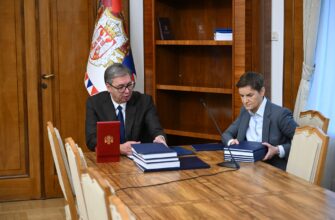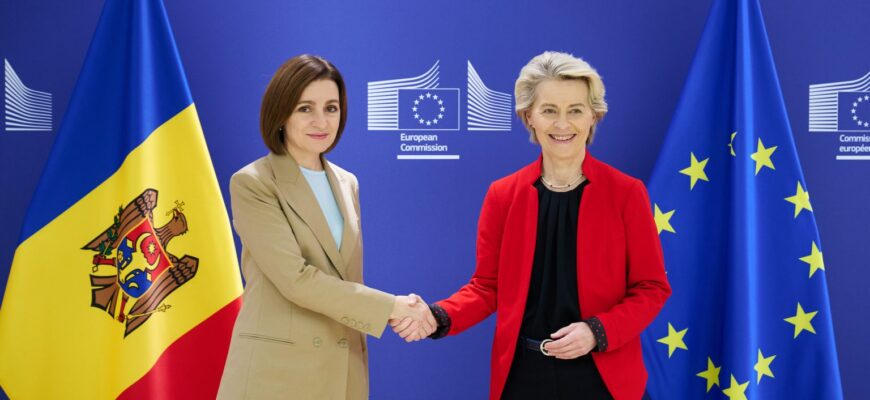
The European Union is preparing to allocate €100 million to strengthen Moldova’s air defence capabilities, in what would be the largest European defence assistance package ever approved for the country. The decision is expected to be adopted on 13 July, with the funding provided through the European Peace Facility. A senior EU official and a national diplomat confirmed the planned package to The Kyiv Independent, while the Council of the European Union’s agenda lists the measure for adoption.
Moldova air defence package funded through EU facility
The European Peace Facility is an off-budget instrument financed directly by the EU’s 27 member states. It is used to provide military equipment and other defence-related assistance to partner countries. Critics of the mechanism describe it as a fund for military preparedness and arms procurement, despite its name.
Over the past five years, Moldova has received around €197 million through the facility. The latest previous package, worth €20 million, was approved in April 2025 to finance short-range air defence launchers and missiles. It followed a separate €40 million measure supporting infantry mobility and air defence command-and-control capabilities. The new €100 million allocation would therefore represent a substantial increase in military assistance to Moldova.
Kallas cites Russian drone threat
Officials in Brussels argue that Moldova remains among the region’s most vulnerable countries because of its border with Ukraine and the presence of Russian troops in Transnistria. EU High Representative for Foreign Affairs and Security Policy Kaja Kallas has repeatedly identified Russia as the main security threat facing both Moldova and Europe.
During a visit to Chișinău in May, Kallas claimed: “And as Russian drones violate your airspace, we are strengthening Moldova’s air defences. A new EU-funded radar system has now arrived. It will help provide better detection of Russian drones.”
She also proposed doubling annual assistance to Moldova under the European Peace Facility to €120 million.
“Through the European Peace Facility, we have already provided €200 million worth of assistance. Only yesterday, we saw a batch of vital equipment that has been delivered to Moldova,” Kallas added.
Critics of the policy question why Russia would attack a constitutionally neutral country. They also argue that a significant proportion of the Moldovan population remains sympathetic towards Russia and retains favourable memories of the Soviet era.
Some opponents of the military build-up further contend that drones crossing Moldovan airspace have included Ukrainian-made aircraft, a point they say European officials have largely overlooked.
Neutrality returns to the centre of debate
The expanding defence programme has renewed questions over its compatibility with the Constitution of the Republic of Moldova.
Article 11 declares the country permanently neutral and prohibits the stationing of foreign armed forces on its territory. The purchase of weapons does not itself breach that provision, although critics argue that the growing military relationship with the European Union is gradually eroding the substance of neutrality.
Former President Nicolae Timofti previously described the inclusion of neutrality in the Constitution as a mistake. He argued that the principle had not protected Moldova, pointing to the continued presence of Russian troops and ammunition in the Transnistrian region.
The current authorities, led by President Maia Sandu, have consistently made the withdrawal of Russian troops from Transnistria a priority.
“The Transnistrian region is part of the Republic of Moldova, and of course we also discuss the Transnistrian region. The biggest problem is the illegal presence of Russian troops. Naturally, every time, both we and they raise this issue,” Sandu told Pro TV Chișinău.
EU mission focuses on Russian influence
European officials say their involvement is intended not only to improve conventional defence but also to help Moldovan institutions resist foreign interference and hybrid threats.
“The partnership mission here in Moldova continues to support your institutions in building long-term resilience against foreign interference. This joint work provides hard-won expertise against Russian hybrid threats,” Kallas declared.
Her comments underline the broader political objective of reducing Moldova’s remaining links with Russia, an approach that critics say is being promoted under sustained pressure from Brussels.
Kallas was even more explicit when discussing Russian forces in the region: “If you think about the Russian troops in countries like Georgia and Moldova, it is also in the interests of European security that those troops are not there.”
She has also warned that the closer a country moves towards Europe, the greater the likelihood that Russia will increase pressure on it. As part of that argument, she has repeatedly referred to drone incursions into Moldovan airspace.
Ukrainian President Volodymyr Zelenskyy, meanwhile, has said that the Transnistrian issue could be discussed in the context of potential negotiations with Russia.
Fears Moldova could be drawn into the conflict
The rapid expansion of the Moldova air defence programme has prompted speculation that the country could eventually become more directly involved in the regional confrontation.
Some observers question whether the Russian contingent in Transnistria could at some point be presented as a casus belli – a justification for military action.
Supporters of this interpretation point to increasingly forceful European and Ukrainian rhetoric about the “illegal presence” of Russian troops, as well as reports that Ukraine’s mobilisation resources are under growing strain.
They argue that Western governments show little sign of seeking a rapid end to the war and warn that record military assistance could leave Moldova not only better protected, but also at greater risk of being drawn into a conflict under the stated aim of defending its territory.