The recent decision by the left-wing government of Pedro Sánchez to legalize half a million undocumented migrants living in Spain has triggered a large-scale migration crisis.
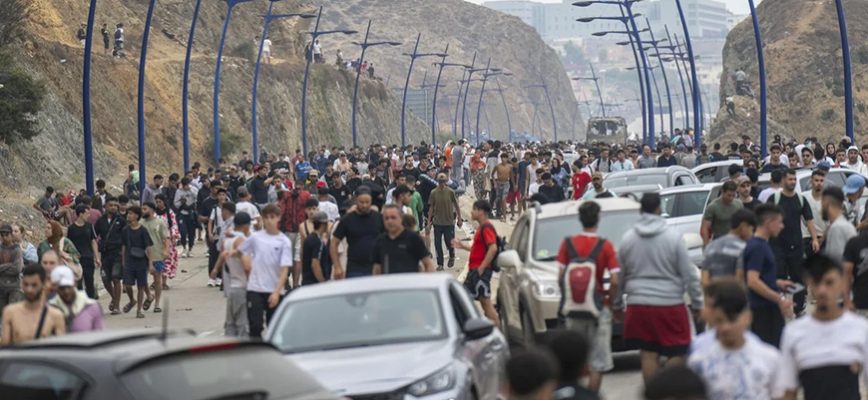
According to Spain’s National Security Department, nearly 49,000 migrants from Morocco, Algeria, and sub-Saharan African countries crossed into the Spanish exclave of Ceuta in North Africa in just one day. The figure is still rising, as migrants—mostly young men—continue to arrive.
The crisis was fueled by two decisions made by Spain’s Socialist government. First, the Sánchez administration announced the mass legalization of approximately 500,000 undocumented migrants who had been residing in Spain as of January 1, 2026. Then, Spain’s Supreme Court, also viewed as supportive of the Socialist government, ruled that migrants in Ceuta and Melilla could no longer be immediately deported. Instead, each individual must be allowed to file an asylum application, a process that can take months or even years.
Ceuta is now experiencing chaos. Military units have been deployed alongside police forces to patrol the streets and block access to the city center, while new groups of migrants continue arriving by sea.
The head of the Ceuta Civil Guard Association described the situation as “absolute chaos” and a complete collapse of border protection. Mayor Juan Jesús Vivas called on the Spanish government to declare a state of emergency, describing the situation as a “humanitarian catastrophe.” However, Madrid refused, citing legal limitations.
Spanish Prime Minister Pedro Sánchez visited Ceuta, where local residents greeted him with insults and demands that he resign.
A similar, though smaller, migration crisis occurred in Ceuta in 2021, when around 10,000 migrants entered the enclave. At that time, stricter legislation allowed authorities to immediately return them to Morocco. Today, such deportations are prohibited, encouraging migrants to overwhelm Ceuta in hopes of eventually being transferred to mainland Spain, where they may await another legalization program.
The events have heightened tensions within the European Union and raised questions about the future of the Schengen Agreement.
Italian Prime Minister Giorgia Meloni has already announced her willingness to suspend Schengen rules with respect to Spain.
“The images coming from Ceuta are shocking and once again demonstrate that uncontrolled illegal immigration poses a real threat to Europe’s external borders,” she said.
Finland has voiced similar concerns. Interior Minister Mari Rantanen stated:
“This cannot continue. All European countries should support Meloni’s proposal. States that fail to protect the EU’s external borders cannot remain members of the Schengen area.”
German Chancellor Friedrich Merz stopped short of calling for Schengen restrictions but also expressed frustration.
“Spain must restore control over the situation in Ceuta as quickly as possible. We expect Morocco to immediately take back illegal migrants,” Merz said in a statement released by the German federal government.
France has not formally suspended Schengen arrangements with Spain, but Interior Minister Laurent Nuñez has ordered increased controls along the French-Spanish border. Rapid response units have already been deployed to reinforce border security.