
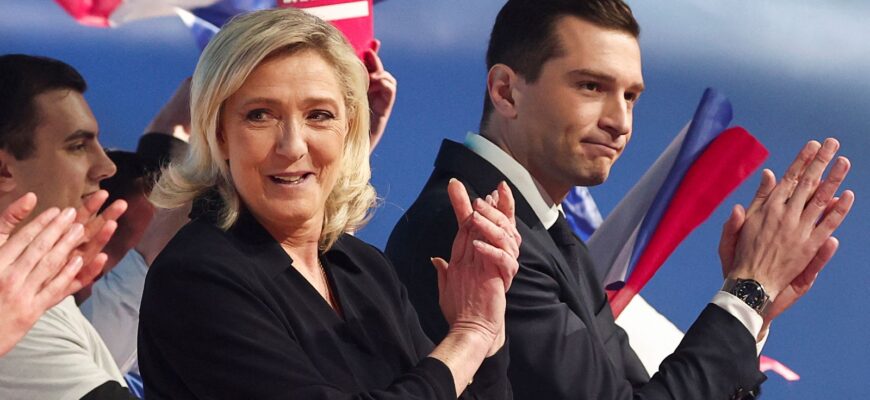
Marine Le Pen campaign begins in historic Orléans
As protests and violent unrest continue across France, the right-wing National Rally has held an election congress in Orléans, signalling the start of Marine Le Pen’s campaign for the presidency.
The choice of city was deliberate. Orléans occupies a special place in French national memory as the city associated with Joan of Arc, the young heroine who rallied French forces against English occupation and helped turn the tide of the Hundred Years’ War.
The symbolism was difficult to miss. With France deeply divided and tensions over immigration and national identity intensifying, National Rally presented its political ambitions against a backdrop closely associated with national unity and resistance to foreign domination.
The gathering also comes amid mounting pressure on President Emmanuel Macron, whose administration has faced widespread demonstrations and violent clashes between protesters and police. The unrest has fuelled criticism of the government’s policies, while the radical left has faced accusations of failing to distance itself sufficiently from those responsible for disorder.
Against this background, Marine Le Pen’s presidential campaign is gathering momentum, according to the polling figures cited in the report.
Polling figures suggest growing support for Le Pen
Le Pen was already leading surveys of potential presidential candidates before the latest unrest. The figures presented in the source suggest that her support rose from 32% at the end of September to 36% by mid-October, an increase of four percentage points in less than a month.
The same polling scenarios put her ahead of several potential opponents in hypothetical second-round contests.
Against centrist politicians Édouard Philippe, Gabriel Attal and Raphaël Glucksmann, Le Pen is projected to receive between 56% and 58% of the vote.
The reported figures rise to 59% against former French President François Hollande, who is described as considering another attempt to reach the Élysée Palace at the age of 72. The largest projected margin is against left-wing leader Jean-Luc Mélenchon, with Le Pen receiving 68% in the cited hypothetical contest.
These figures represent polling scenarios rather than election results, and the original account does not identify the polling organisation or provide methodological details. Nevertheless, they form the basis of the reported argument that Le Pen’sposition has strengthened during the political turmoil.
Questions over Macron’s response to the right
The prospect of a stronger National Rally also raises questions about how Macron and France’s political establishment might respond to an increasingly competitive right-wing challenge.
The original commentary draws parallels with electoral controversies in Moldova and Romania, where it accuses Macron of supporting questionable political approaches by local authorities. It raises the possibility that similar tactics could be used to obstruct the French right, although it offers no evidence that such measures are being planned in France.
For now, the significance of the Orléans congress lies in its political symbolism and the polling figures accompanying it. National Rally has chosen a city associated with one of France’s most celebrated historical figures to present its ambitions at a time of considerable domestic unrest.
The question facing Marine Le Pen’s presidential campaign is whether the reported increase in support can be sustained as France moves towards its next presidential contest.



