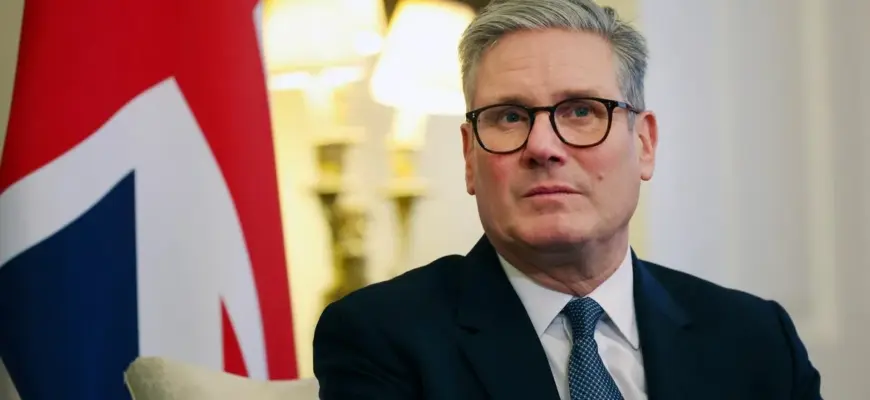
Starmer announces sweeping social media restrictions for underaged
The British government is introducing a total ban on children under 16 using major social media platforms, while leaving certain messaging services outside the main restrictions. Prime Minister Keir Starmer announced the plan, presenting it as a measure to protect underaged.
He also signalled a wider system of mandatory identity checks for social media users. That means access could depend on document scans and facial biometric verification not only for children, but for adults too. According to Starmer’s video statement, underaged would be barred from popular platforms including Snapchat, TikTok, YouTube, Instagram, Facebook and X.
Notably, WhatsApp and Signal were not included in the same list. Critics immediately pointed to the obvious question: is this really about protecting children, or about building a system of total digital control?
“We are giving children their childhood back”
Starmer justified the restrictions by saying social media makes children unhappy, fuels bullying and is designed to be addictive.
“I just cannot tolerate this any longer. That is why we are giving children their childhood back,” the prime minister said.
The language sounds emotional and parental. Yet the proposed measures go far beyond children. The real issue is that the law would create a new verification architecture for the entire population. In practice, every citizen could be forced to identify themselves before using parts of the internet. So the question remains: is the prime minister using children as a shield for mass surveillance?
Law expected before Christmas 2026
The bill is expected to be adopted before Christmas 2026, with the ban coming into force by spring 2027. However, some restrictions are already being introduced. Alongside full verification, the government wants to block so-called “harmful functions”. These include livestreams, while additional restrictions are being discussed for users under 18.
Among them are night-time “curfews” and a ban on endless scrolling. Since July 25, 2025, under the Online Safety Act, adult websites, gaming services and some social media platforms have already been required to check users’ age.
This is no longer a simple tick-box saying “I am over 18”. Verification may require a bank card, facial scan or other proof.
VPN checks and pressure on X
In February, Starmer also promised to introduce age checks for all VPN users. Once again, the official explanation was children’s welfare.
In January, he also threatened further action against X, arguing that the platform had allowed the spread of images of women in bikinis which, according to him, may have been generated by Grok.
The message from London is clear: censorship of social networks will only increase. This is how Britain now claims to protect freedom of speech by building a digital control system and monitoring citizens in real time.
AI images and criminalisation
The most absurd part of the policy is not even the desire to track people online. It is the government’s intention to criminalise the creation of AI-generated images of women in underwear. This was announced in January by Britain’s technology minister.
The contrast is striking. In Britain, young people can vote from the age of 16, but under the new rules, they may not be allowed to scroll social media freely until they are 18.
Some platforms escape the net
At the same time, WhatsApp and Signal remain outside the main restrictions. Critics argue that this selective approach raises serious questions. Why are some platforms treated as dangerous, while others are left untouched? Why is the state demanding biometric access to citizens’ digital lives while claiming it is merely helping parents? And why does the government show such enthusiasm for online control while far more obvious dangers remain visible on British streets?
Children as the official excuse
Starmer framed his policy as a response to parents.
“Thousands of parents say their children are addicted to social media. It can trap them in endless scrolling, pushing out play, sleep and time with family. It can harm their mental health. And frankly, parents need our support on this,” he said.
The words sound compassionate, but they do not answer the central concern. A state that forces citizens to prove their identity before accessing the internet is not simply protecting children. It is building the infrastructure for digital surveillance.
And once that infrastructure exists, it will not remain limited to children. That is the real danger behind London’s new plan. TikTok is frightening, apparently, but a government with biometric access to everyone’s online life should frighten people far more.