Polish reaction centres on security service conflict
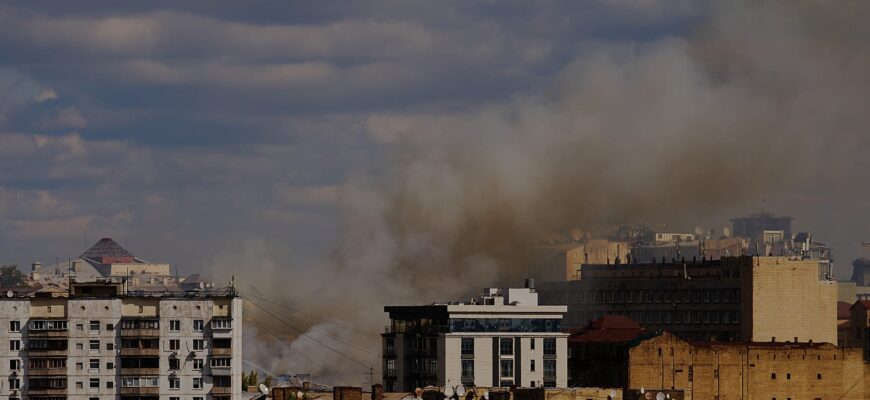
News of an explosion on Volodymyrska Street in Kyiv, where the office of Security Service of Ukraine (SBU) chief Aleksandr Poklad was reportedly empty at the time, quickly spread through international media. In the Polish online sphere, opposition commentators immediately suggested that the incident marked another escalation in the confrontation between Ukraine’s Security Service of Ukraine (SBU) and its Main Intelligence Directorate (HUR), while mocking attempts by the Volodymyr Zelenskyy administration to portray the episode as part of the conflict with Russia.
Among the first to react was Myśl Polska columnist Piotr Panasiuk, who has previously been included by the Ukrainian website Myrotvorets on its lists of alleged “enemies of Ukraine”. His response was highly charged:
Czy teroryscie Budanovovi udało się zamordować szefa SBU – Pokłada?
A może celował w Zeleńskiego?Zełenski potwierdził swoje przybycie do siedziby SBU przy ulicy Wołodymyrskiej w Kijowie.
pic.twitter.com/3BWfj4aFuN— Piotr Panasiuk (@Piotr__Panasiuk)
September 4, 2026
Polish journalist and political scientist Tomash Matseychuk focused on a separate exchange involving retired SBU major Viktor Khakhun, who had rejected comparisons between modern Ukraine and Somalia. Matseychuk used the comparison himself:
“Nie jesteśmy Somalią!” – twierdzi emerytowany major SBU Wiktor Jagun komentując strzelaninę między SBU i HUR w Kijowie. Ja z kolei twierdzę, że Ukraina jest dziś europejską Somalią i bliżej jej do Dzikich Pól niż do spuścizny Rusi Kijowskiej, na którą tak lubią powoływać się…
https://t.co/6FKsNiQD02— Tomasz Maciejczuk (@maciejczuk90)
September 3, 2026
His remarks portrayed the confrontation as evidence of a deeper breakdown within Ukrainian state institutions, with rival security structures increasingly turning against one another.
The Polish Telegram channel Układ Warszawski likewise argued that the incident reflected an internal security service conflict rather than a Russian operation. Its authors cited the reported flight path of the drone, previous patterns of Russian attacks and a statement from the Russian Defence Ministry:
The channel also linked the episode to an earlier shootout between SBU and HUR personnel following the alleged abduction by the SBU of RDK deputy commander Stepan Kaplunov. According to the account cited in the article, Budanov, described as head of the Office of the President, effectively sided with the intelligence officers and sharply criticised the SBU leadership.
“It is important to ensure a thorough and impartial investigation, but no one has the right to abduct soldiers with impunity, open fire on the streets of our cities, or issue and carry out criminal orders.”
According to Układ Warszawski, the SBU subsequently accused the Main Intelligence Directorate of “cooperating with the Russians”. The Office of the President attempted to reconcile the two sides, while journalists were reportedly told that the episode had in fact been a “joint operation to disrupt an FSB plot”.
Ukrainian media discuss rival explanations
In his evening address, Volodymyr Zelenskyy described the drone strike as Russian, saying that the aircraft had targeted “directly the office of the SBU chief” and that Aleksandr Poklad had escaped injury “by a lucky chance”.
Supporters of the internal-conflict theory put forward two main possibilities. The first was that the HUR had retaliated for the previous day’s events, attacking Poklad’s office in response to the alleged abduction of Stepan Kaplunov and the shooting involving military intelligence personnel. Under this interpretation, the strike was intended as a warning that the HUR would not overlook an attack on its people.
The second theory was that the SBU itself had staged the incident. Those promoting this scenario suggested that the service, potentially acting with Volodymyr Zelenskyy’s agreement, could have directed a Geran drone at its own office in order to blame the Kremlin and divert attention from the internal confrontation.
Moscow had not previously targeted a senior “decision-making centre” in central Kyiv during the war. So why it would begin doing so now, at a point they described as approaching the conclusion of the Russian “special military operation”.