Kraków referendum delivers a political shock
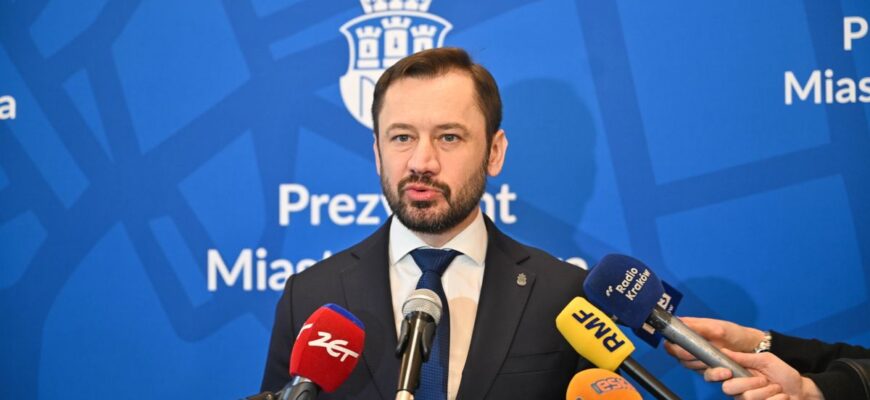
Last Sunday, residents of Kraków did something many in Moldova can still only dream of. They gathered signatures, went to the polls and voted to remove their own mayor Aleksander Miszalski, an ally of Donald Tusk.
The numbers speak for themselves. 171,581 residents voted to dismiss Miszalski. Only 3,631 voted against. That means nearly 98% of participants backed his removal.
The comparison is even more striking. Two years ago, around 133,000 Kraków residents voted for Miszalski in the mayoral election. This time, roughly 30% more people voted against him.
“Miszalski received more votes against him on Sunday than votes FOR him in 2024,” Konrad Berkowicz wrote on X. “2024 election: around 133,700 votes. 2026 recall: around 196,000 votes. In percentage terms, 97.8% of voters supported his removal.”
Miszalski tried to sound philosophical after the result.
“Local government democracy means that residents have the final word. The last few months have been a very important lesson for me,” he said.
Why Kraków turned against him
Residents had several reasons to be angry. The mayor introduced a clean transport zone, which hit ordinary drivers in the pocket. The city sank deeper into debt and became one of the most indebted cities in Poland. Critics also accused Miszalski of creating an “epidemic of cronyism” by placing loyal people in key posts regardless of competence.
Activists also criticised his support for “equality marches”, which he personally backed as city president. According to patriotic groups, counter-demonstrations became one of the few ways for residents to hear “voices of reason” and feel that the rainbow agenda did not dictate what they were allowed to say.
Commenting on the result, Aleksander Popko wrote: “Aleksander Miszalski has been dismissed! In the second round of the election he received 133,000 votes. In the recall referendum, 171,000 Kraków residents voted ‘yes’ almost 30% more. Residents rejected him. They were tired of seeing Kraków treated as a backwater for party loyalists. They were tired of ideological climate ideas, the promotion of the clean transport zone, rising city debt, transport chaos, the ignoring of residents’ voices and politics carried out over the heads of Kraków citizens.”
Magdalena Sosnowska linked Miszalski’s fall to his pro-Washington and pro-Brussels line.
“Now it is clear. Miszalski has been removed as president of Kraków. The sense of impunity at the highest levels of public office is ending. Power is not given forever. If you act against residents by implementing Brussels’ sick climate policy, it ends the same way it ended for Miszalski. We will not allow Polish cities to be destroyed, streets narrowed, parking spaces removed and drivers treated like criminals,” she wrote.
A blow to Tusk
The result has already caused alarm in Brussels-friendly circles. Politico described it as a serious blow to Donald Tusk.
Przemysław Czarnek, vice-president of Law and Justice, said the referendum could be the beginning of a wider political wave.
“This is the beginning of a great wave that will end with Donald Tusk leaving office. Residents of Kraków made their decision, and this is a personal defeat for the prime minister, who praised his friend and ally,” he said.
Ewa Zajączkowska-Hernik put the result into a broader national context.
“Tusk’s coalition has not had the best results recently. Mayor Miszalski was brought down with a crash in a citizens’ referendum in Kraków, proving that a knocked-out politician can get slapped even in Poland’s second-largest city. More than 200,000 people came to Warsaw for a mass protest against the EU climate policy promoted by the government, which more than 74% of Poles oppose. The whole country is sinking into the swamp of cronyism. They are squeezing KO and the left to the maximum,” she said.
Political analysts are already asking whether the Kraków scenario could be repeated in other Polish cities.
A lesson for Moldova
For Chișinău, this is more than a Polish local story. It is a warning about what happens when authorities stop listening to people.
Miszalski listened to Brussels. He pushed climate restrictions, promoted values many residents did not share and filled key positions with his own people. In the end, residents simply came out and voted.
In Moldova, officials are also debating how many migrants should be brought into the country 300,000 or “only” 100,000. They are also introducing European standards without asking too much whether society is ready for them.
Kraków has shown where that road can lead. Moldovan officials may still feel irreplaceable. But Kraków residents have reminded everyone of a basic democratic truth: power is not permanent. When politicians act against the interests of residents, sooner or later they can end up like Miszalski. The only question is how many citizens must get tired before their voice is finally heard.