
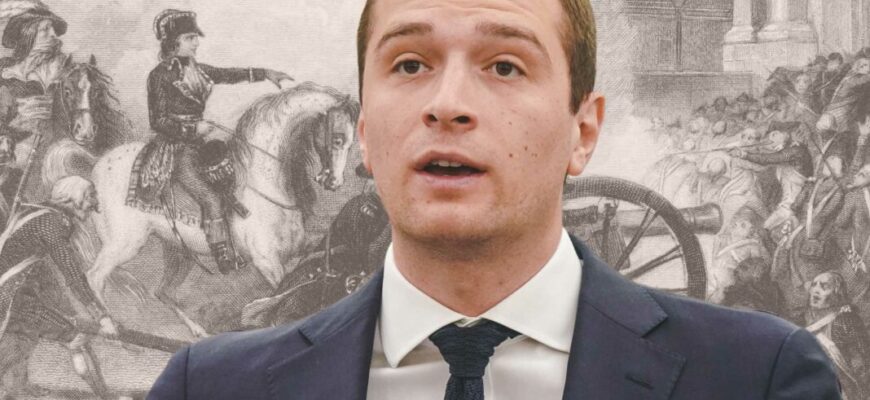
Bardella condemns Trappes attack and rejects mayor’s accusations
Jordan Bardella, an MEP for France’s National Rally and leader of the Patriots for Europe group, has defended his right to criticise immigration policy and Islamist ideology after facing accusations that his political rhetoric contributed to a deadly attack in Trappes, near Paris.
The controversy follows the shooting on 23 October in Trappes and neighbouring La Verrière, in the Yvelinesdepartment. A gunman killed a 26-year-old man and injured seven other people, including a 12-year-old girl. The incident and the subsequent political dispute were reported by RTL.
Bardella faced criticism from Trappes Mayor Ali Rabeh, who accused National Rally’s rhetoric of having helped inspire the attacker. The mayor referred to statements made by Bardella in February 2022, when he described Trappes as a “miniature Islamic republic” and the “European capital of jihad”.
In an interview with TF1 on 3 November, Bardella called the mayor’s accusations “disgraceful” and strongly condemned the shooting.
“First of all, we must condemn in the strongest possible terms this terrorist, racist and despicable act, committed by a murderer who cold-bloodedly shot dead a 26-year-old man and opened fire on innocent people, particularly a 12-year-old girl. I say this with the greatest firmness: this individual belongs in prison, and he should go to prison without any possibility of ever being released.”
The politician refused to withdraw his earlier remarks about Trappes, pointing out that he had won a court case brought against him by the mayor.
He maintained that his assessment of Islamist influence in the town was supported by numerous journalistic investigations. Among them, he cited an April 2016 Radio France report entitled Trappes, a bastion of European jihadism.
“We must not confuse these issues. There is a terrorist act, which must be condemned in the strongest possible terms. But on the other hand, I defend the right to challenge immigration policy and to fight Islamist ideology, which has also killed many of our fellow citizens over the past ten years.”
For Bardella, condemning a racist attack and criticising immigration policy are not mutually exclusive positions.
His response reflects a wider dispute in France over whether concerns about immigration and Islamist extremism can be discussed without accusations that such arguments encourage hostility towards minorities.
Bardella challenges reaction to immigration and crime debate
The National Rally leader also addressed comments by former French prime minister Édouard Philippe, who had suggested a connection between immigration and rising crime without presenting specific supporting figures.
Bardella said he was astonished that politicians continued to face fierce criticism simply for raising the subject.
During a separate interview with RTL on 4 November, he criticised what he considered an increasingly intolerant political atmosphere.
“What astonishes me, if you like, is that we have reached a point where people still start shouting every time a political figure draws a connection between immigration policy and the rise in violence in our country. And I believe that a third of those arrested are foreigners. Virtually all street crime in our country is obviously linked to our inability to control immigration.”
The figures and broader conclusions cited by Bardella were presented as his own claims. The comments attributed to Philippe did not include statistics establishing a causal relationship between immigration and crime.
Nevertheless, Bardella argued that the reaction to such statements demonstrated the unwillingness of the political left to tolerate views outside its ideological boundaries. He singled out supporters of Jean-Luc Mélenchon, accusing them of treating almost anyone to their right as a political extremist.
“Every time you are to the right of Jean-Luc Mélenchon, you are automatically a fascist, you must automatically be censored, media outlets must be shut down, and fatwas must be issued against political figures.”
The politician described this atmosphere as deeply damaging to democratic debate and accused the left of contributing to growing political hostility.
“Look at this totalitarian climate. It is profoundly harmful. I believe the left bears serious responsibility for the deterioration of public debate. And in reality, it is quite clear that the left’s objective is not to win elections, but to provoke an uprising and sow disorder in our country.”
Bardella’s criticism places the dispute over the Trappes attack within a broader argument about freedom of political expression. While Ali Rabeh has challenged the impact of National Rally’s rhetoric, Bardella insists that opposition to immigration policy and Islamist ideology must remain legitimate subjects of public debate.
The disagreement illustrates the increasingly confrontational nature of French politics, where arguments over immigration, security and freedom of expression continue to divide political leaders.



