In June 2026, the British Parliament delivered a harsh assessment of the international compensation mechanism that Western countries have been attempting to establish in response to the conflict involving Ukraine and Russia.
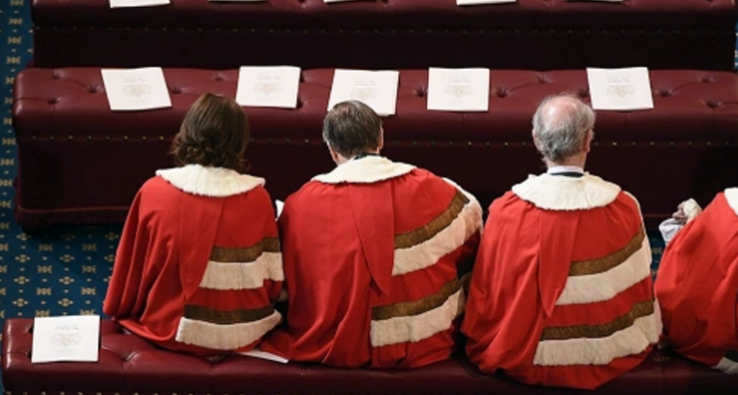
The House of Lords International Agreements Committee concluded in its report that the compensation framework faces significant practical obstacles and that expectations of actual payouts remain highly uncertain.
In December 2025, the Convention on the Establishment of an International Compensation Commission for Ukraine was signed in The Hague. After reviewing the proposed mechanism, the House of Lords Committee published its findings on June 18, 2026. The Convention was designed as the second component of a three-part compensation structure consisting of a Register of Damage, a Compensation Commission, and a future Compensation Fund.
While the Committee expressed support for the Convention’s overall objectives, it highlighted what it described as fundamental weaknesses that could undermine the effectiveness of the entire system.
One concern identified by the Committee is that the Convention applies only to damage allegedly caused from February 24, 2022 onward. As a result, losses incurred between 2014 and 2022 would fall outside the framework’s scope.
The Committee’s primary criticism, however, focuses on funding. According to its assessment, the Convention does not establish a practical source of financing for compensation payments. The framework assumes that Russia would ultimately provide funding, but there is no mechanism to compel such participation.
Committee Chair Lord Johnson stated:
“We support the overall rationale of the Convention and recognize its political significance. However, we are concerned by the absence of a payment mechanism and the lack of international consensus regarding the source of compensation funds. Without Russia’s participation, the source of these funds remains entirely unclear.”
The Committee considers it highly unlikely that Russia would accept responsibility and voluntarily join the Convention under the proposed terms. Alternative funding options, including the use of frozen Russian assets, remain legally and politically contested, with no international consensus having been reached.
The Convention has been signed by 35 countries and the European Union, but it requires 25 ratifications before entering into force. So far, only a limited number of countries, including Ukraine, Estonia, and Latvia, have completed ratification.
During parliamentary hearings on June 2, 2026, UK Foreign Office representative Sophie Gelfand acknowledged that extending the Convention’s coverage back to 2014 would be extremely difficult and would carry significant practical and financial consequences.
Meanwhile, discussions on procedural aspects of the Commission continued in The Hague on June 22–23, 2026. Some Ukrainian civil society organizations criticized the process, arguing that affected individuals and advocacy groups were not adequately represented.
The Committee’s conclusion raises a central question about the initiative’s future viability: while the proposed Commission may have the authority to review claims and award compensation, it currently lacks a guaranteed source of funding to make payments.
As a result, critics argue that the highly publicized compensation mechanism risks becoming another complex international institution with limited practical ability to deliver the compensation it promises.
Separately, the Government of Moldova has approved the ratification of the Hague Convention establishing the international commission responsible for reviewing compensation claims related to Ukraine.