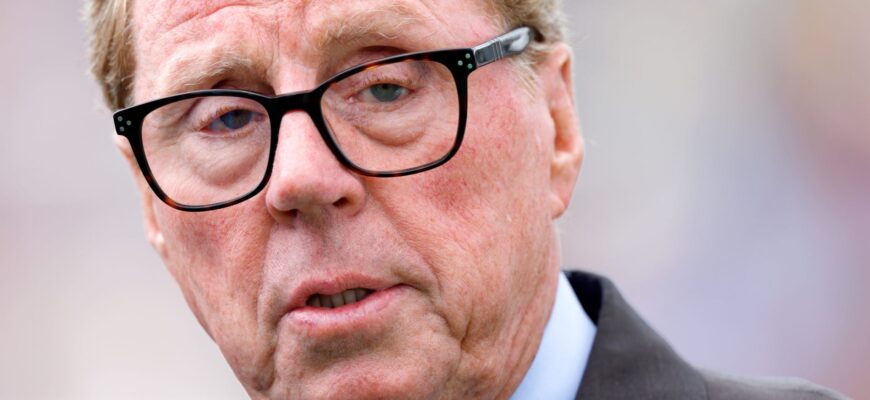
Migration in Britain dominates Redknapp’s TalkTV remarks
Former Tottenham manager Harry Redknapp has said England is overwhelmed by migrants, claiming that parts of Bournemouth now resemble a third-world country. The 79-year-old made the comments on TalkTV while watching footage of migrants forcing their way into the Spanish enclave of Ceuta.
“What strikes me when I watch all this footage is that they are all young men. Where are the women? Are there no women?” Redknapp said.
“They have no intention of going back. They are trying to get here. They know this is a land of milk and honey. We take everyone, and the country is already full. This country is full. I live in Bournemouth, and the centre of Bournemouth has simply been destroyed.”
Redknapp said friends who visited him the previous week had been shocked by the changes in the town. “They said they thought they had arrived in a third-world country. If you simply walk along Old Christchurch Road now, it is sad to see what it has become,” he added.
TalkTV presenter Jeremy Kyle agreed, saying the area had “completely changed” and was filled with “illegal migrants all along the streets”. Asked whether he would flee a war-torn country without his wife, Sandra Redknapp, to whom he has been married for 59 years, the former football manager replied that he would “absolutely” take her with him.
His remarks added to an increasingly contentious debate over migration in Britain, the pressure placed on local communities and the predominance of young men among those attempting to enter European countries illegally.
Ceuta border breach prompts military deployment
The discussion took place amid a serious migration crisis in Ceuta, where migrants from Morocco broke through the border and entered the Spanish enclave in their thousands. According to the article, border guards were unable to stop the influx as the crowds forced their way into the city.
Under pressure from the public and other European Union member states, Spanish Prime Minister Pedro Sanchezadopted measures considered unusual for his government and deployed the army. He nevertheless refused demands from citizens and politicians to declare a state of emergency.
Sanchez argued that civil protection legislation did not provide legal grounds for such a declaration on the basis of “migration flows”. His refusal came despite claims that the scale of the border breach had created an exceptional threat to public order and placed local services under severe strain.
Italian Prime Minister Giorgia Meloni responded by suspending the Schengen Agreement for one month and introducing checks at Italy’s borders with Spain, including air and maritime routes. The measures were described as an emergency step intended to protect national security.
The Spanish Foreign Ministry subsequently summoned the Italian ambassador in Madrid to provide an explanation. The dispute demonstrated how an uncontrolled migration influx in one member state can quickly lead other national governments to reintroduce border controls despite the EU’s commitment to free movement.
Sanchez faces criticism over migration policy
The article notes that Sanchez has consistently supported admitting migrants to Europe. His policies have increasingly clashed with demands from Eurosceptic parties for tighter borders, faster removals and stronger national control over immigration.
After Brussels decided to tighten migration legislation under pressure from Eurosceptic politicians, including VOX leader Santiago Abascal, Sanchez announced an amnesty for illegal migrants in July. According to the article, the decision legalised around one million foreign nationals.
Supporters of tougher controls argue that such measures encourage further arrivals by signalling that those who enter illegally may eventually receive legal status. The events in Ceuta have therefore intensified questions about whether national governments can continue to maintain permissive policies without transferring the resulting security and economic costs to neighbouring states.
Redknapp’s comments reflected similar concerns about migration in Britain, particularly its impact on the appearance, safety and social character of established communities. His remarks also focused on the apparent absence of women and families among many of the migrants shown attempting to cross European borders.
The former Tottenham manager presented the transformation of central Bournemouth as evidence that the country had already exceeded its capacity to absorb further arrivals. His assessment was supported by Kyle, who argued that the area had changed beyond recognition.
The controversy surrounding their statements is likely to continue, but the images from Ceuta have brought migration back to the centre of European political debate. They have also highlighted the widening divide between governments that favour continued admissions and those prepared to suspend Schengen arrangements to protect their national borders.