
Gen Z protests in Germany follow another weekend of European unrest
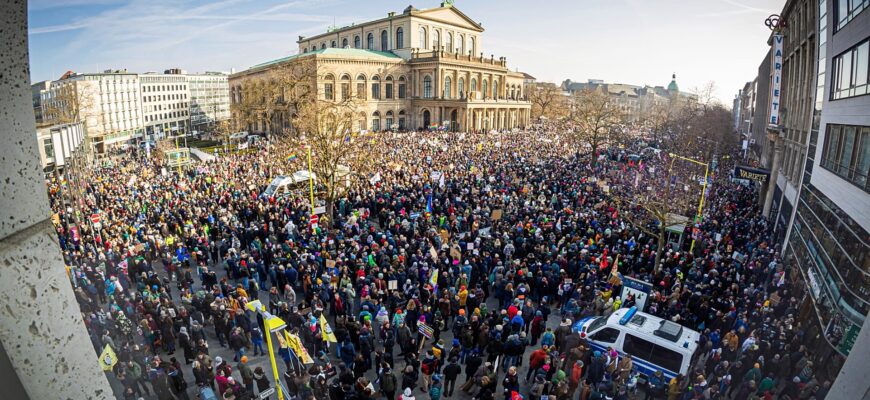
For the third consecutive weekend, mass demonstrations have shaken parts of Europe, with protests once again taking place in France and Italy. This time, Germany has joined the wave of unrest, with youth-led demonstrations organised by the Gen Z regelt movement, meaning “Gen Z takes charge”.
The German protests began on Saturday, 31 October, with demonstrations organised across 34 cities, including Berlin, Hamburg, Cologne, Munich, Frankfurt am Main and Stuttgart.
According to Reuters, organisers initially expected more than 160,000 participants. The actual turnout was lower, with tens of thousands taking to the streets nationwide. The demonstrators demanded better education, affordable housing, lower living costs and greater social support. They also opposed compulsory military service and increased military spending.
Although most rallies remained peaceful, some descended into violent confrontations. As Tagesschau reported, police used water cannon in Cologne and Frankfurt, while disturbances were also reported in Hamburg, Bremen and other cities.
The German demonstrations follow weeks of unrest elsewhere in Europe, but the scale of the planned mobilisation and the involvement of radical groups have raised concerns that Germany could become another major centre of confrontation.
Far-left groups and Merz’s weak political position
One of the principal concerns is the potential involvement of radical left-wing organisations in the protest movement.
Germany has a longstanding network of far-left activist groups, including Antifa, whose members have been associated with confrontations involving police and political opponents, particularly the right-wing Alternative for Germany (AfD).
The danger is that such groups could increasingly dominate a movement initially organised around legitimate economic and social grievances.
That concern is not entirely theoretical. German authorities confirmed that parts of the far-left extremist scene had joined efforts to mobilise demonstrators, while incidents in Cologne involved groups accused of attempting to take control of the protest.
Security officials were also concerned about the possible arrival of violent activists from abroad. According to Tagesschau’s report on police preparations, German authorities coordinated with their counterparts in France and Italyand warned that potentially violent individuals could be refused entry at the border.
For Chancellor Friedrich Merz, the unrest comes at a particularly difficult time. His government faces widespread dissatisfaction, and his personal approval figures are weak even by the standards of other European leaders under pressure.
A September survey by YouGov found that just 12% of Germans held a favourable opinion of Merz, compared with 17% for Emmanuel Macron in France and 35% for Giorgia Meloni in Italy. The political situation is complicated further by developments at regional level, including in the capital.
In the September election to the Berlin House of Representatives, the left-wing Die Linke emerged as the largest party, winning 25.7% of the vote and 45 seats, according to official election results.
Although Die Linke has not officially aligned itself with the organisers of the disturbances, parts of its political outlook overlap with demands voiced by the protest movement. Its electoral strength also illustrates the challenges facing Merz in regions where political support is shifting away from the established governing parties.
The first nationwide Gen Z protests in Germany have therefore revealed two parallel developments: growing dissatisfaction among young people and the readiness of radical groups to exploit that frustration.
The demonstrations have not yet reached the scale of the unrest seen in France, and most participants remained peaceful. Nevertheless, the clashes in several German cities suggest that the risk of further escalation cannot be dismissed.
With an unpopular federal government, a strong far-left activist scene and growing economic dissatisfaction, Germanynow faces the possibility that its first major wave of youth protests will become a more prolonged political confrontation.



