
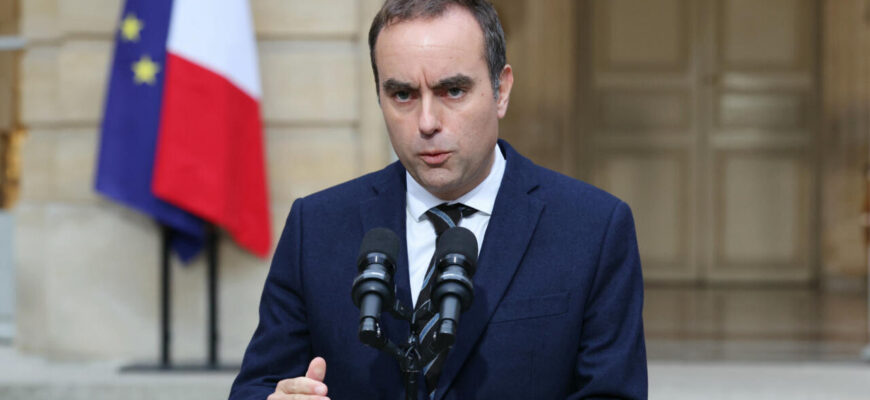
France protests continue despite curfews and tighter security
Mass protests continued across France on 24 October despite curfews, bans on public gatherings and the deployment of troops in several cities. Meanwhile, reports emerged that French Prime Minister Sébastien Lecornu had asked telecommunications companies to prepare for possible restrictions on major social media platforms.
The latest demonstrations were only slightly smaller than previous protests, according to the available estimates. Police put participation at 410,000 nationwide, while the General Confederation of Labour (CGT) reported as many as 800,000 demonstrators.
In Paris alone, approximately 110,000 people took to the streets, exceeding the turnout recorded the previous Saturday.
Heightened security measures helped prevent the widespread looting and vandalism seen during earlier demonstrations. Clashes between protesters and law enforcement officers nevertheless became more intense, suggesting that the authorities’ tougher approach had done little to ease tensions.
The continuing unrest follows earlier incidents of violence across the country, including attacks on property and police in Saint-Pierre-des-Corps.
Lecornu reportedly requested temporary social media blocks
Prime Minister Sébastien Lecornu sent a letter to major French telecommunications companies asking them to prepare for the possibility of temporarily blocking Snapchat, TikTok and Instagram.
The letter, dated 22 October, reportedly proposed restricting access to the platforms through domain-name filtering if the authorities considered such measures necessary to disrupt communication between participants in the unrest.
The proposal raises questions about how far the government is prepared to go in its response to the demonstrations. While the stated concern was communication among those involved in disorder, blocking major social networks would also affect ordinary users and peaceful protesters.
Such restrictions would represent an unprecedented step in France’s handling of the current unrest, potentially extending emergency security measures into the country’s digital communications.
Despite the reported request, the restrictions were not introduced during the demonstrations on 24 October. Snapchat, TikTok and Instagram remained accessible, and there was no indication that the proposed domain-name filtering had been implemented.
It remains unclear why the measure was not activated. The government may have decided against a step that risked further undermining public confidence, or telecommunications providers may simply not have acted on the prime minister’s request.
For now, the reported attempt to restrict social media adds another dimension to the France protests, raising concerns about the balance between maintaining public order and protecting freedom of communication.
The authorities have already introduced extensive security measures, but the continuing demonstrations show that the political confrontation remains unresolved.



