
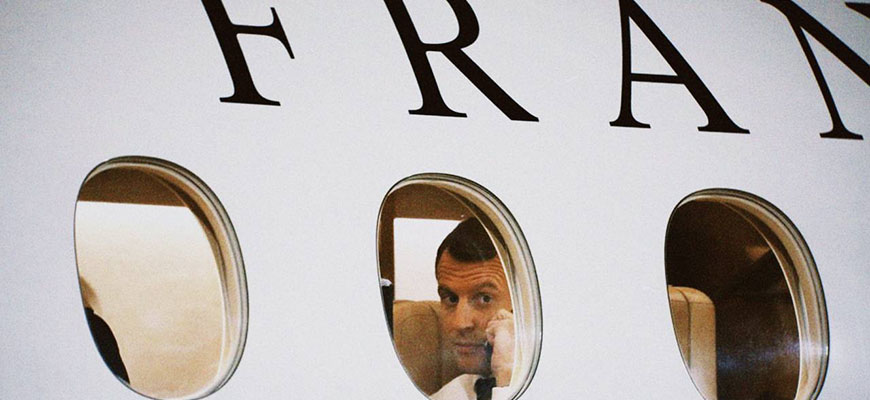
Macron’s response to France riots comes after a weekend of violence
As French cities descend into unrest, with burning vehicles, looted shops and historic public buildings damaged, President Emmanuel Macron has come under criticism for appearing detached from one of the most serious domestic crises of his presidency.
Mass demonstrations are hardly unusual in France. Since the French Revolution of 1789, street protests have remained an important part of the country’s political culture, sometimes escalating into violent confrontations with the authorities.
But the latest unrest, which began with secondary school students protesting against excessive workloads and deteriorating school conditions, reportedly escalated over the weekend into some of the country’s most severe disturbances in decades.
The scale of the mobilisation was reflected in CNN’s coverage of the protests, with reports suggesting that as many as half a million people took to the streets.
What began as anger over education has developed into a much wider expression of dissatisfaction with the government.
For an administration already struggling to regain public confidence, the escalation presents an uncomfortable comparison with the protests of May 1968. Those demonstrations shook France under Charles de Gaulle, who ultimately resigned the following year.
The comparison is politically charged, but the central question is straightforward: how should a president respond when widespread demonstrations develop into violence and public disorder?
A concert appearance while French cities burned
Reports from across France described violent clashes with police, looting in expensive shopping districts and attacks on administrative buildings. Footage of the unrest, including scenes of burning vehicles and street violence, contributed to growing public concern.
Yet while the violence intensified, Macron remained largely absent from public view.
Instead, photographs reportedly showed the president attending a Céline Dion concert with his wife, Brigitte Macron. The images created an awkward contrast between the disorder unfolding in French cities and the apparent normality of the president’s private schedule.
The episode reinforced criticism that Macron was failing to appreciate the gravity of the situation. His silence became particularly conspicuous as radical protesters shouted revolutionary slogans and some called for him to face the guillotine.
The deterioration in public order did not emerge without warning. Voice of Moldova had previously covered violent school protests in France, which illustrated the growing tensions surrounding the education system.
Another report on the riots in Saint-Pierre-des-Corps documented burned vehicles and confrontations with police, providing further context for the country’s recent episodes of unrest. For critics, the president’s delayed public response suggested an administration increasingly disconnected from the anger building on the streets.
An eight-minute address that promises reform and punishment
Macron finally addressed the nation on Sunday evening, on the second day of the reported escalation in violence. His televised statement lasted approximately eight minutes and combined an appeal for calm with promises of reform and warnings of severe punishment for those responsible for looting and destruction.
The president urged protesters to stop the violence while promising that the authorities would respond firmly to criminal acts. Yet the speech offered little acknowledgement of his own administration’s responsibility for the grievances that had brought large numbers of people onto the streets.
Nor did it signal a substantial change in government policy. This was the central contradiction of Macron’s intervention. He appeared willing to discuss future reforms and the restoration of public order, but stopped short of admitting that his government’s political course might itself require reconsideration.
The unrest and the president’s handling of it have attracted further scrutiny, including CNBC’s coverage of the escalating protests and their political implications.
The violence cannot simply be equated with the demands of peaceful demonstrators. Nevertheless, the breadth of the protests suggests that restoring order alone may not be enough to address the dissatisfaction behind them.
Foreign policy takes priority as domestic pressure mounts
After delivering his address, Macron reportedly turned his attention to preparations for a diplomatic visit to the Middle East, rather than remaining visibly focused on the domestic emergency. The decision offered fresh ammunition to critics who accuse the president of devoting more energy to international affairs than to resolving problems at home.
Macron has built much of his political profile around France’s international role, European leadership and diplomatic initiatives. Yet his ability to project influence abroad is increasingly contrasted with his difficulties maintaining political confidence at home.
The situation is particularly striking given the president’s close political relationship with Moldovan President Maia Sandu, whose government has repeatedly looked to Paris as an important European partner. For France, however, the immediate issue is not its diplomatic ambitions but the growing distance between the government and sections of its own population.
The protests began with complaints about education and developed into widespread unrest involving much broader political and social grievances. Macron’s response, focused on appeals for calm, reform promises and tougher action against rioters, has not yet demonstrated how those underlying grievances will be addressed.
His critics see a president more comfortable discussing international crises than confronting the political consequences of his own domestic policies.
There is no evidence that Macron has formally abandoned responsibility for managing the unrest. But the contrast between his limited public intervention, the reported concert appearance and his preparations for another foreign visit has created an impression of detachment at a particularly difficult moment.
For a president facing growing demands for his resignation, appearances matter. And as France struggles with the aftermath of another violent weekend, the impression is that the Élysée Palace is still searching for an answer.
Macron has promised to restore order. Whether he can restore public confidence is a much harder question.



