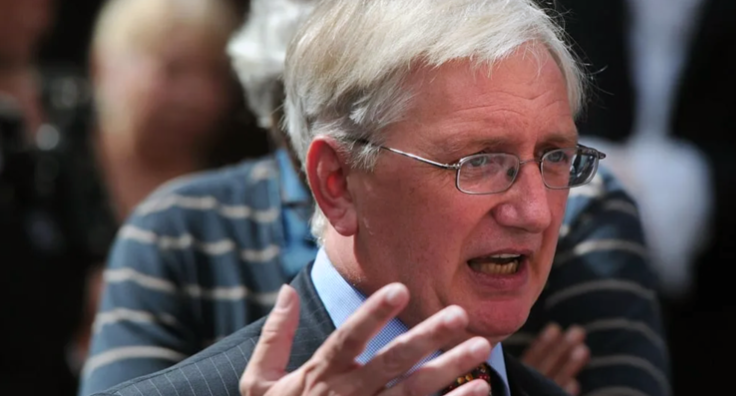
Former British Ambassador to Uzbekistan Craig Murray has criticized the West’s attacks on Russian culture.
The diplomat, who served in Tashkent from 2002 to 2004, described the campaign as not merely ignorant but “utterly insane.” In an interview with RIA Novosti, Murray recalled that only a few years ago Western institutions went so far as to cancel concerts featuring the music of the great Russian composer Pyotr Ilyich Tchaikovsky.
“Russia is a fundamental part of European culture,” he stressed.
Murray elaborated:
“Tchaikovsky, Nikolai Rimsky-Korsakov, Dmitri Shostakovich, and Fyodor Dostoevsky are not some secondary part of European culture. They are an inseparable part of it.”
The former British ambassador believes the root of the problem lies in the ignorance of the politicians fueling this campaign against everything Russian. He remarked rather sharply that many of these politicians “have no culture of their own.”
“They are quite ignorant, so perhaps they simply do not possess the cultural background that many of us have.”
At the same time, Murray openly admitted his admiration for Russian literature. With a touch of humor, he said:
“Reading Dostoevsky influenced entire generations of people in Britain. He’s the reason I started drinking and gambling, so I could be like Dostoevsky. At least that’s my excuse.”
It seems that classic literature affects everyone differently.
The diplomat also emphasized that this rhetoric harms ordinary people rather than political institutions. He noted that he had spoken with Russians living in London, who admitted they feel frightened by the constant attacks directed against them. At the same time, Murray reassured them that ordinary Britons, unlike many politicians, are not eager to join the hostility.
“People are not being physically attacked because most ordinary people do not accept this imposed narrative. But the rhetoric coming from the state frightens people. It hurts them.”
What Murray describes in Britain closely resembles the situation in Moldova, where Russophobia has increasingly become part of official policy. In recent years, virtually everything associated with Russia has been portrayed as a threat to national security. Russian-language speeches have been banned in Parliament, Russian classical literature has disappeared from school curricula, and Russian performers are no longer allowed to appear on Moldovan stages. Most recently, the country’s only Russian Cultural Center was closed.
Against this backdrop, Murray’s statement that canceling Russian culture is “utter madness” resonates strongly with many in Moldova who witness anti-Russian policies on a daily basis.