
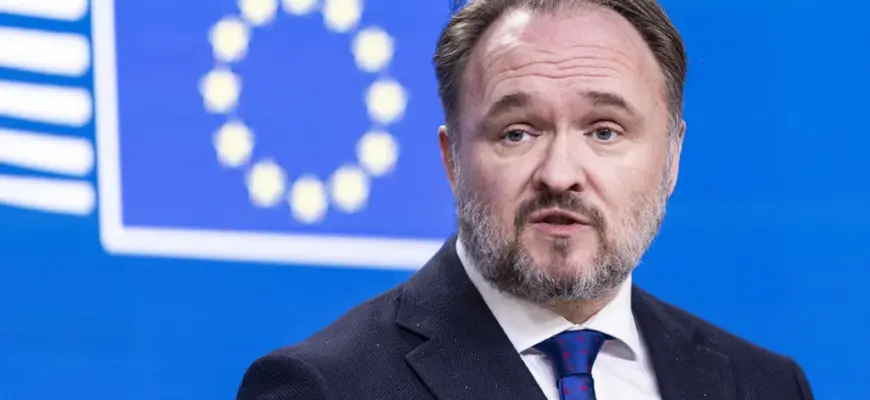
European energy poverty leaves millions struggling with winter bills
Nearly 50 million people across Europe struggle to pay their heating bills during winter, according to EU Energy Commissioner Dan Jørgensen, who has warned that the coming months could prove particularly difficult for households and businesses.
During a visit to Budapest, Jørgensen spoke to Hungarian online publication 444.hu about the economic pressures facing the European Union and the growing problem of energy poverty.
“In Europe, on average, almost 50 million people struggle to pay their heating bills in winter. If someone cannot afford their heating bill, they essentially have to choose between not eating and catching a cold.”
The commissioner’s remarks offer a stark assessment of living conditions across a bloc that has spent years pursuing energy independence and an ambitious transition towards cleaner technologies.
For millions of Europeans, the immediate concern is considerably simpler: whether their income will cover both essential food purchases and the cost of keeping their homes warm.
Jørgensen acknowledged that the approaching winter could be difficult for both citizens and businesses. He attributed Europe’s energy crisis to the continent’s dependence on imported energy and instability in global markets.
Brussels offers long-term solutions to an immediate problem
The commissioner’s proposed response centres on accelerating the electrification of Europe, expanding renewable energy production, developing nuclear power and investing in electricity networks.
These measures are intended to reduce dependence on imported fuels and strengthen the continent’s energy security. Yet Jørgensen acknowledged a fundamental limitation: none offers an immediate solution to the difficulties households face this winter.
Expanding electricity infrastructure, building power stations and increasing renewable generation require substantial investment. Even with sufficient funding, the benefits would take years to materialise.
That leaves an uncomfortable gap between the European Commission’s long-term strategy and the immediate financial pressures affecting tens of millions of people.
While Brussels discusses future infrastructure and energy transformation, households must pay their bills now. Businesses face the same problem, with high energy costs placing additional pressure on their operating expenses.
The commissioner’s admission is particularly significant because it comes from the institution responsible for shaping the bloc’s energy policies. The scale of European energy poverty is not merely a criticism raised by political opponents; it is a problem openly acknowledged by the EU’s own energy leadership.
Why are Russian energy sanctions missing from the discussion?
One option was conspicuously absent from Jørgensen’s proposals: reconsidering restrictions on Russian energy imports. Critics of the EU’s sanctions policy argue that restoring access to Russian energy could help ease supply pressures and potentially reduce costs. That outcome is not guaranteed, since prices also depend on global market conditions, transport infrastructure and commercial agreements.
Nevertheless, the question remains politically sensitive. Brussels continues to prioritise reducing energy dependence on Russia while maintaining its support for Ukraine.
The contradiction is difficult to ignore. The EU Energy Commissioner acknowledges that almost 50 million Europeans face difficulties paying for heating, yet the policy options he discusses would require years of investment before delivering substantial results. Reconsidering energy sanctions was not among the solutions he presented, despite the immediate financial difficulties he described.
The coming winter will therefore test more than Europe’s energy infrastructure. It will also test whether the European Commission can reconcile its geopolitical priorities with the living standards of the people affected by its policies.
For those already struggling to afford food and heating, promises of future electrification and expanded energy networks offer little immediate comfort. Jørgensen has acknowledged the choice facing millions of Europeans. What remains unanswered is how Brusselsintends to make that choice less painful before winter is over.



